
CJC-1295 + Ipamorelin Stack: Synergistic Growth Hormone & Recovery Mechanisms
Introduction: Understanding the CJC-1295 + Ipamorelin Stack 🧬
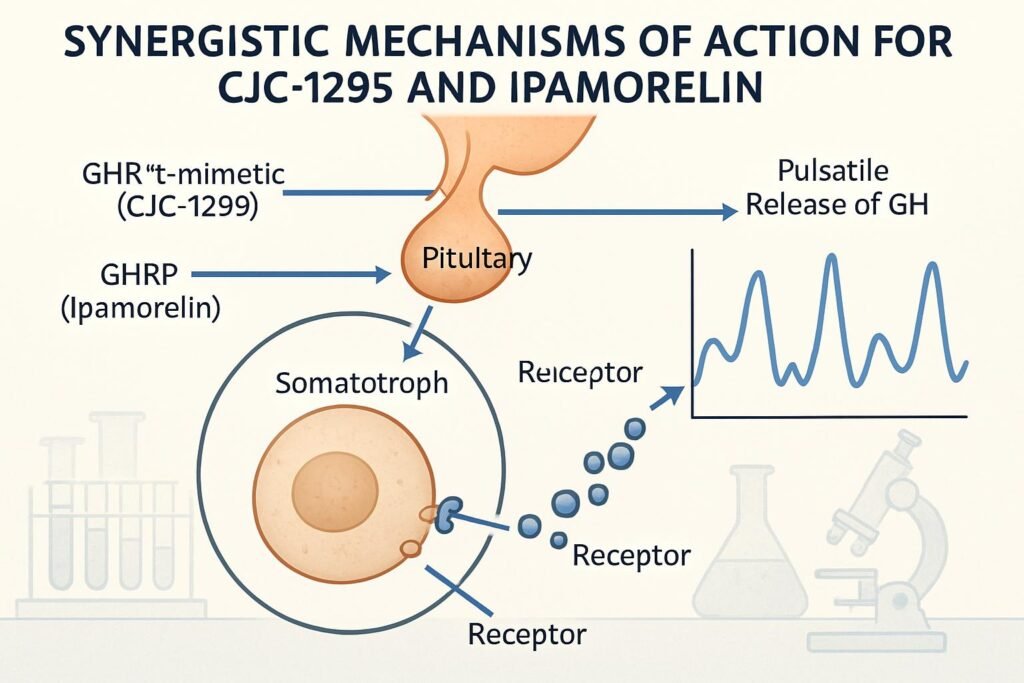
The CJC-1295 + Ipamorelin stack is a frequently discussed combination in peptide research because it involves two different pathways associated with growth hormone (GH) regulation. CJC-1295 is a synthetic analogue related to growth hormone-releasing hormone (GHRH). Ipamorelin is a synthetic peptide that acts on the ghrelin receptor, also known as the growth hormone secretagogue receptor (GHS-R).
Although these compounds act through different receptors, both are studied for their potential effects on growth hormone signaling. As a result, researchers are interested in how their mechanisms may interact and whether the combination produces different effects from either compound alone.
However, there is an important distinction between a proposed mechanism and a proven outcome. The CJC-1295 + Ipamorelin stack has limited clinical evidence as a combined intervention in humans. Claims about improved recovery, deeper sleep, increased lean mass, or reduced body fat should therefore be viewed cautiously.
This guide explores the science behind CJC-1295 and Ipamorelin, the growth hormone and insulin-like growth factor 1 (IGF-1) axis, sleep-related physiology, potential research applications, and current evidence gaps.
The main question: How might two different growth hormone signaling pathways interact, and what does existing research actually establish?
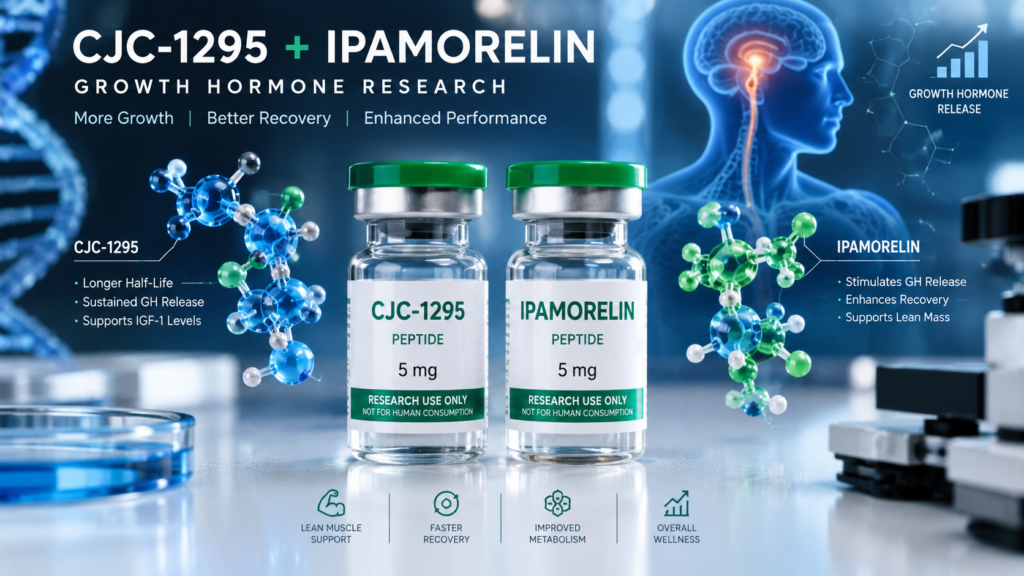
What Is the CJC-1295 + Ipamorelin Stack?
The CJC-1295 + Ipamorelin stack refers to the combined study of two synthetic peptides that influence pathways involved in growth hormone release. They are often discussed together because their receptor targets differ.
Nevertheless, the word “stack” does not automatically mean that a combination has been clinically validated. Researchers must establish its effects, safety, and interactions through controlled studies.
What Is CJC-1295?
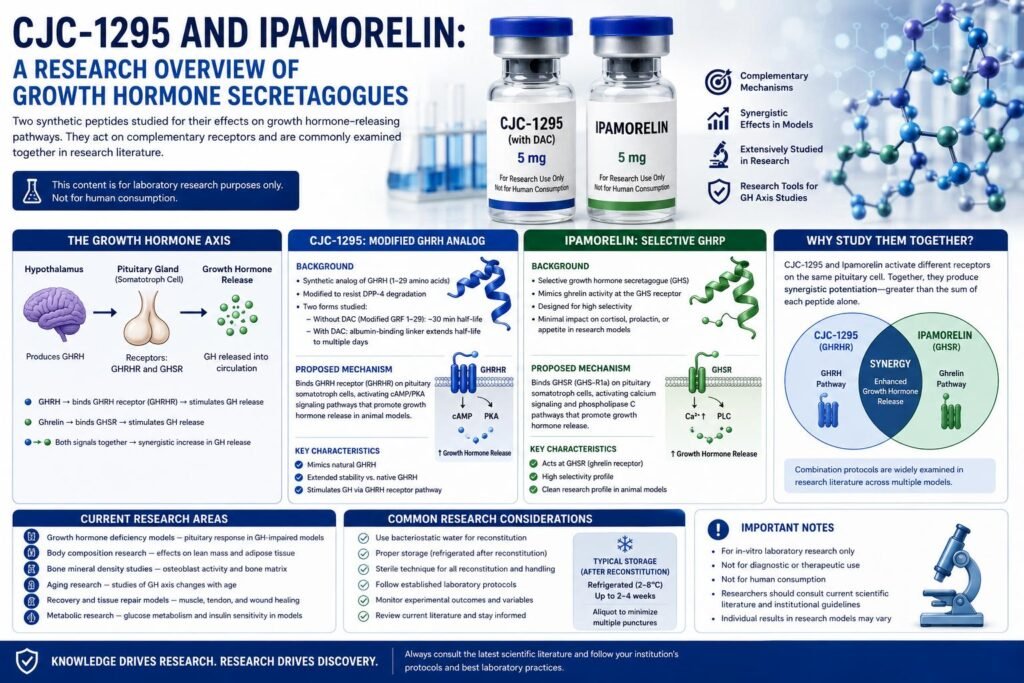
CJC-1295 is a synthetic peptide analogue related to GHRH, a naturally occurring hypothalamic hormone that helps regulate growth hormone release from the pituitary gland.
The compound is designed to influence the GHRH receptor pathway. Certain CJC-1295 formulations can also bind albumin, a protein found in blood, which can extend their persistence in circulation.
The term CJC-1295 can be used inconsistently in commercial descriptions. In particular, CJC-1295 with drug affinity complex (DAC) and products described as CJC-1295 without DAC should not automatically be treated as pharmacologically identical.
This distinction matters because molecular design can influence how long a compound remains in circulation and how its biological effects develop.
What Is Ipamorelin?
Ipamorelin is a synthetic growth hormone secretagogue. It acts on the ghrelin receptor, which participates in the regulation of growth hormone secretion and other physiological processes.
Unlike GHRH-related compounds, Ipamorelin works through a separate receptor system. This makes it scientifically interesting when studying how different signals influence pituitary hormone release.
However, receptor activity alone cannot establish that Ipamorelin improves athletic performance, sleep quality, muscle growth, or recovery in humans.
Why Are These Peptides Studied Together?
CJC-1295 and Ipamorelin influence different signaling pathways associated with growth hormone release. Researchers may therefore investigate whether these pathways interact or produce different responses when studied together.
The key issue is whether the combined response is meaningfully different from the response to each compound alone.
A convincing answer requires controlled comparisons, reliable hormone measurements, and evidence about clinically meaningful outcomes. It cannot be established through mechanism-based explanations alone.
How CJC-1295 and Ipamorelin May Influence Growth Hormone Signaling
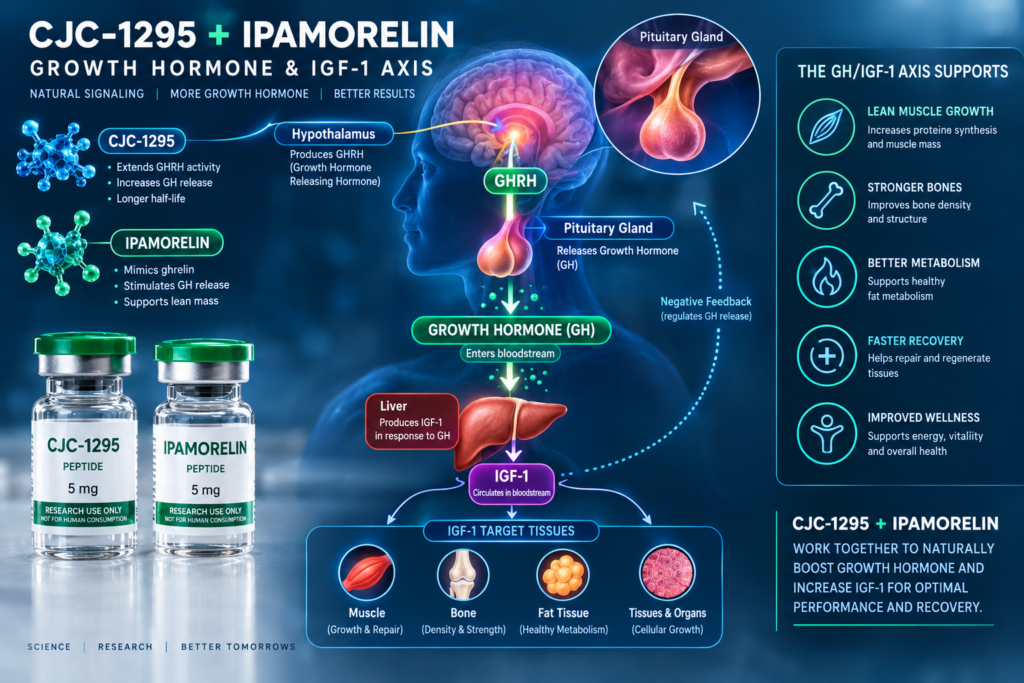
Growth hormone regulation involves several interconnected systems. The hypothalamus, pituitary gland, liver, and peripheral tissues all contribute to this process.
CJC-1295 and Ipamorelin are interesting to researchers because they act through different receptor pathways. Understanding those pathways helps explain why the combination receives scientific attention.
CJC-1295 and the GHRH Receptor Pathway
Under normal physiological conditions, the hypothalamus releases GHRH, which travels to the anterior pituitary gland. There, it activates GHRH receptors on growth hormone-producing cells.
This signaling involves intracellular pathways that help regulate the release and production of growth hormone.
CJC-1295 is designed to interact with this receptor system. Its pharmacological properties, however, depend on the specific compound and formulation being studied.
The distinction between a short-acting GHRH analogue and an albumin-binding analogue is particularly important. Their exposure profiles may differ, so results from one formulation should not automatically be applied to another.
Ipamorelin and Ghrelin Receptor Signaling
Ipamorelin acts on the growth hormone secretagogue receptor. Activation of this receptor can stimulate pathways involved in growth hormone secretion.
The ghrelin receptor is also connected to broader physiological systems, which is one reason researchers must examine more than a single hormone measurement when evaluating a compound.
For example, a change in circulating growth hormone does not by itself establish improved recovery, better sleep, or greater muscle development.
Could the Two Pathways Work Together?
The proposed rationale for combining CJC-1295 and Ipamorelin is that different receptor pathways may influence the same hormone-regulation system.
In theory, signals from these pathways could interact at the level of pituitary hormone release. However, the size, duration, and clinical importance of any combined effect need to be established experimentally.
It is also important to distinguish a biological interaction from proven synergy. Synergy means that the combined effect exceeds what would be expected from the individual effects under an appropriate comparison model.
Without strong controlled evidence, it is more accurate to describe synergy as a research question than as an established property of the stack.
The GH/IGF-1 Axis: Connecting Hormone Signaling and Tissue Biology
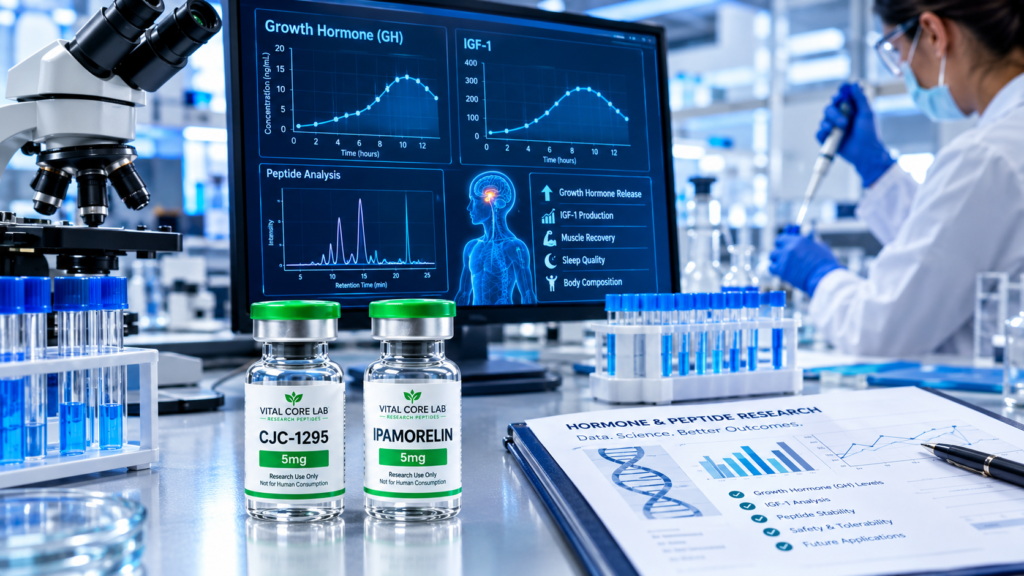
The growth hormone and insulin-like growth factor 1 axis, often called the GH/IGF-1 axis, is central to research on these peptides.
Growth hormone is released by the pituitary gland and acts on multiple tissues. It also influences IGF-1 production, particularly in the liver, although local IGF-1 production occurs in other tissues as well.
IGF-1 participates in cellular growth, development, and metabolic regulation. Its effects depend on tissue type, receptor activity, and the broader biological environment.
Growth Hormone and IGF-1 Are Not the Same
Growth hormone and IGF-1 are related, but they are not interchangeable measurements.
Growth hormone secretion normally occurs in pulses. A single blood sample may therefore provide an incomplete picture of overall secretion.
IGF-1 generally changes more gradually than growth hormone and is often used as a marker of activity within the GH/IGF-1 system. Even so, IGF-1 levels alone cannot prove a particular functional benefit.
Researchers must also account for factors such as age, nutrition, sleep, health status, and the timing of sample collection.
What Does This Mean for the CJC-1295 + Ipamorelin Stack?
The combination is of interest because both compounds are associated with growth hormone signaling. Yet researchers need to determine whether changes in hormone patterns translate into meaningful changes in tissue function.
A rise in growth hormone or IGF-1 does not automatically establish increased muscle mass, faster recovery, improved physical performance, or better sleep.
These outcomes require separate measurements and appropriate study designs.
CJC-1295 + Ipamorelin and Muscle Recovery Research
Muscle recovery is a major reason the combination appears in online discussions. Growth hormone participates in several processes related to metabolism, tissue maintenance, and normal physiology.
However, the relationship between hormone signaling and recovery is complex. It is not enough to identify a pathway that may be relevant to tissue biology. Researchers must show that an intervention changes a measurable outcome.
Growth Hormone and Tissue Maintenance
Growth hormone influences protein metabolism and other processes associated with tissue function. IGF-1 also participates in cellular signaling involved in growth and development.
These mechanisms provide a scientific basis for studying the GH/IGF-1 axis in muscle physiology.
Nevertheless, physiological relevance does not establish that a particular peptide combination improves muscle repair after exercise. Results from laboratory experiments may not translate directly to humans.
What Should Recovery Studies Measure?
A well-designed recovery study should assess defined outcomes rather than relying only on hormone levels or subjective impressions.
Relevant research measures may include:
- Changes in muscle function over time.
- Standardized physical performance measurements.
- Markers of muscle damage, interpreted with appropriate limitations.
- Muscle mass and body composition measured using validated methods.
- Recovery time following a standardized exercise protocol.
- Adverse events and changes in relevant laboratory markers.
No single measurement provides a complete picture. Therefore, several outcomes may be needed to determine whether a biological change is meaningful.
Does the Stack Increase Lean Mass?
Claims about increased lean mass require careful interpretation. Lean mass includes more than skeletal muscle; it can also reflect water and other non-fat tissues.
A change in lean mass does not necessarily mean that contractile muscle tissue has increased. Researchers must consider measurement methods, study duration, nutrition, training, and other confounding factors.
At present, the proposed effects of CJC-1295 and Ipamorelin on muscle development should not be presented as established benefits of the combined stack.
CJC-1295 + Ipamorelin, Sleep, and Slow-Wave Sleep
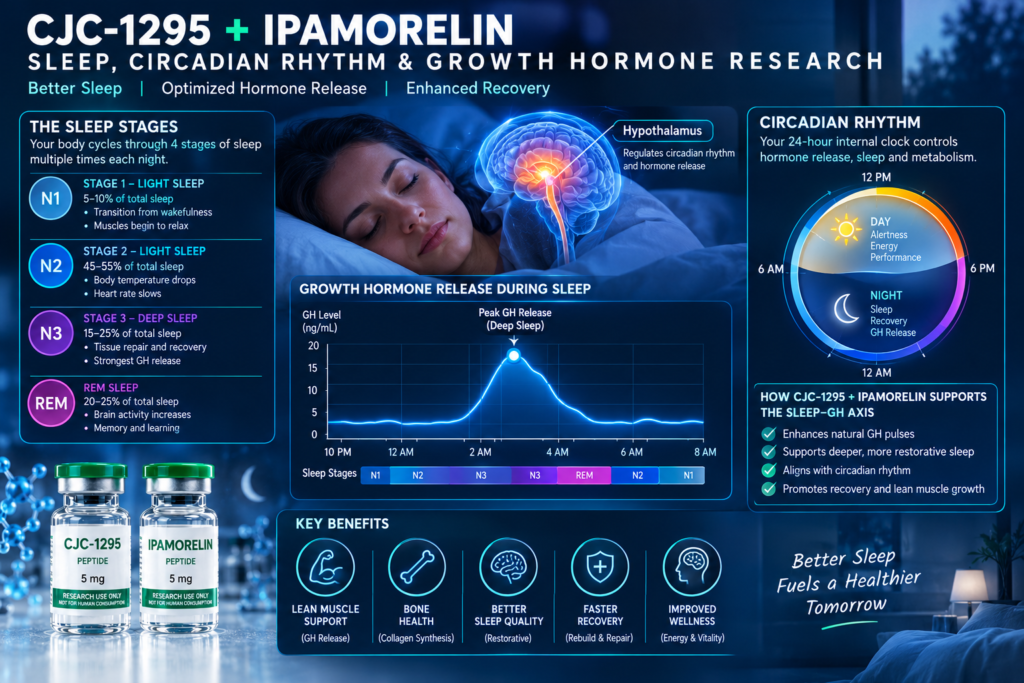
Sleep is another common theme in discussions about growth hormone secretagogues. This interest partly reflects the normal relationship between sleep and growth hormone secretion.
In healthy adults, a substantial growth hormone pulse often occurs around the beginning of deep, slow-wave sleep. However, growth hormone release varies between people and across the night.
How Sleep and Growth Hormone Interact
Sleep is regulated by several interacting systems, including circadian rhythms, sleep pressure, and neural signaling.
Slow-wave sleep is an important stage of non-rapid eye movement sleep. It is associated with characteristic brain activity and several physiological processes.
Growth hormone secretion can coincide with this stage, but the relationship does not mean that every intervention that influences growth hormone will improve sleep.
Can CJC-1295 and Ipamorelin Improve Deep Sleep?
This remains an evidence question rather than a confirmed outcome.
Changes in growth hormone signaling do not prove that a person falls asleep faster, experiences more slow-wave sleep, or feels more rested the next morning.
Reliable studies would need objective sleep assessments, such as polysomnography, along with suitable comparison groups and systematic safety monitoring.
Sleep duration, sleep architecture, and perceived sleep quality are different outcomes. Each requires appropriate measurement.
Why Sleep Claims Need Caution
Online descriptions sometimes present improved sleep as a predictable result of the CJC-1295 + Ipamorelin stack. That conclusion goes beyond what can be established from the proposed mechanism alone.
Sleep is influenced by stress, medication, caffeine, alcohol, sleep disorders, daily routines, and many other factors.
Therefore, the possible relationship between these peptides and sleep deserves further investigation, not assumptions about guaranteed improvements.
Here is the exact comparison table from the CJC-1295 + Ipamorelin Stack blog post.
CJC-1295 + Ipamorelin Comparison: Mechanisms at a Glance
The following table summarizes the main differences between the two compounds and the questions researchers may investigate when considering them together.
| Research feature | CJC-1295 | Ipamorelin | Combined research question |
|---|---|---|---|
| Main receptor pathway | GHRH receptor-related signaling | Ghrelin receptor signaling | Do the pathways interact? |
| Biological focus | Regulation of growth hormone release | Stimulation of growth hormone secretion | How does the combined response compare with either compound alone? |
| Pharmacological considerations | Properties depend on formulation, including DAC status | Distinct secretagogue pharmacology | Does exposure timing affect the observed response? |
| GH/IGF-1 research | Hormone-release patterns and downstream signaling | Hormone-release patterns and downstream signaling | Are changes in hormone markers consistent and reproducible? |
| Recovery research | Outcomes require direct testing | Outcomes require direct testing | Are any changes in function clinically meaningful? |
| Sleep research | Direct sleep outcomes need assessment | Direct sleep outcomes need assessment | Are changes in sleep architecture demonstrated? |
| Evidence limitations | Findings depend on the exact compound and study | Evidence must be assessed by study design and outcome | Combined effects cannot be assumed from separate mechanisms |
The table highlights a central point: CJC-1295 and Ipamorelin have different receptor targets, but their combined effects cannot be predicted reliably from those differences alone.
Safety, Limitations, and Research Quality ⚠️
Any discussion of CJC-1295 and Ipamorelin should include safety and evidence quality. These compounds are not established, risk-free methods for improving recovery, sleep, or body composition.
Their regulatory status and approved uses vary by jurisdiction and product. Neither online availability nor a research-oriented label demonstrates that a product is approved for human use.
Potential Safety Concerns
Growth hormone signaling affects multiple physiological systems. Altering that signaling may have consequences that are not captured by short-term hormone measurements.
Potential concerns include changes in glucose regulation, fluid retention, joint discomfort, headaches, and other adverse effects associated with altered growth hormone activity or peptide use. The actual risks for this particular combination are not well characterized.
Product quality is another consideration. Incorrect labeling, contamination, impurities, and differences between formulations can complicate the interpretation of any observed effect.
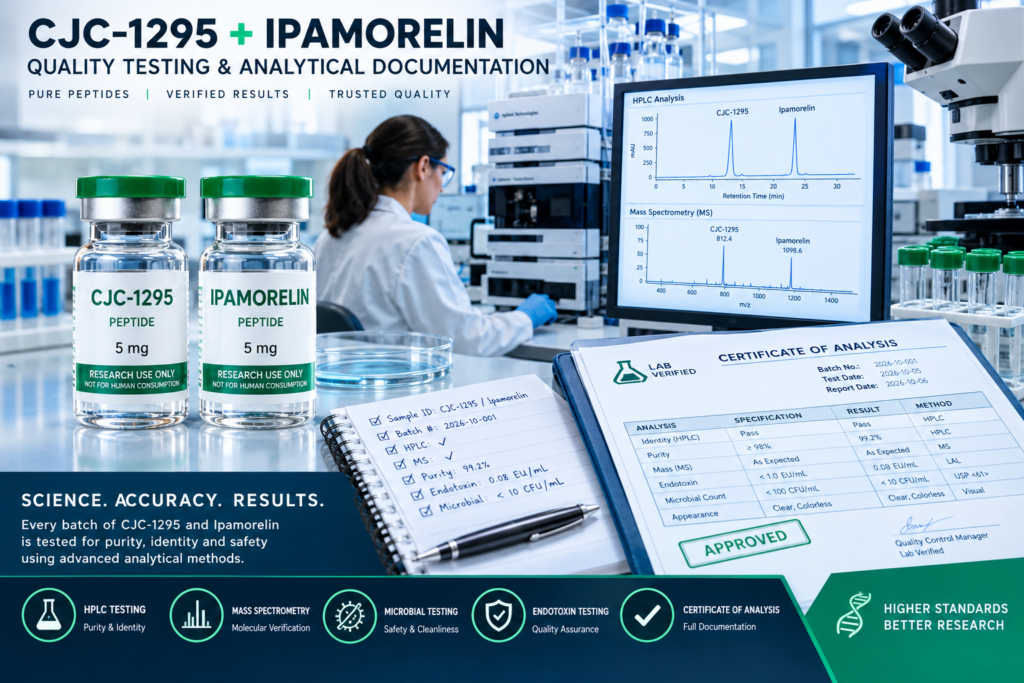
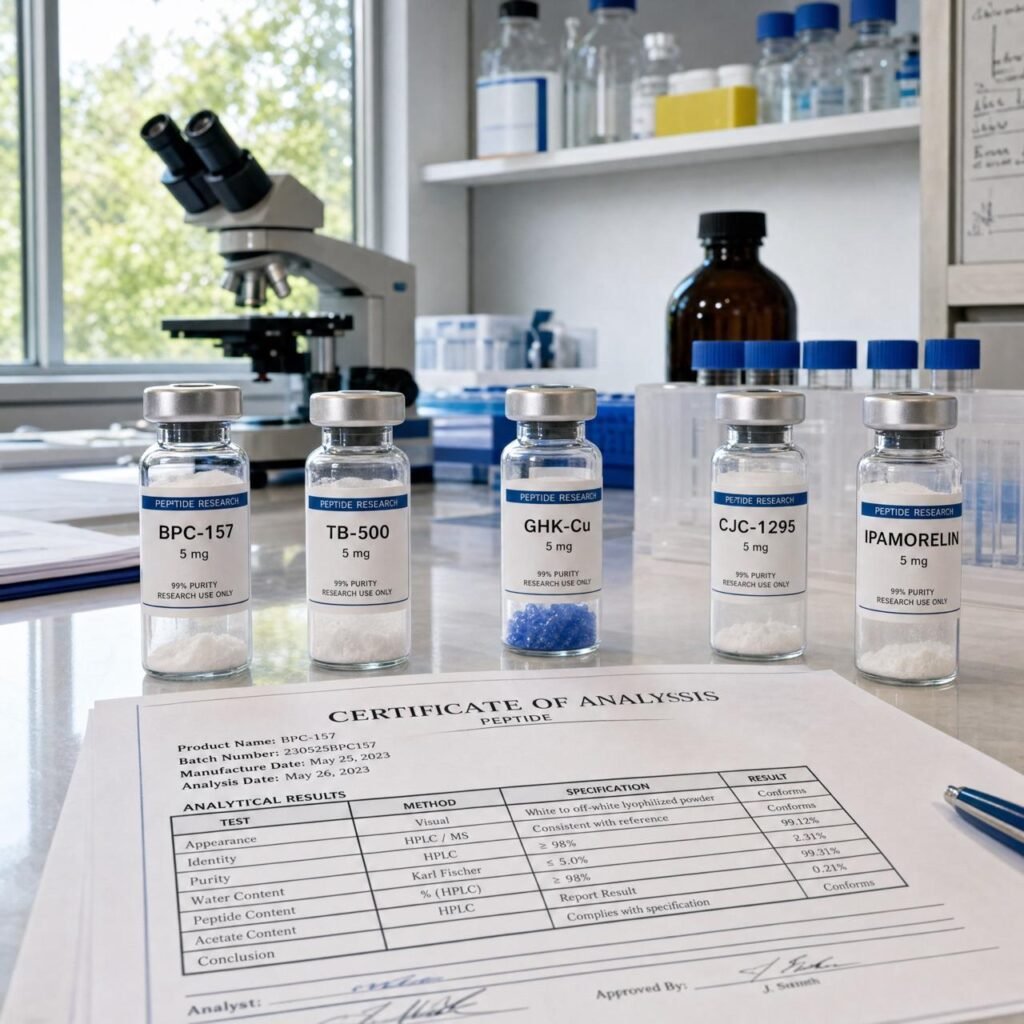
A certificate of analysis can provide useful information about a tested sample, but it does not establish clinical safety, effectiveness, sterility, or suitability for human administration.
Why Human Evidence Matters
Laboratory findings and animal studies can help identify biological pathways. However, they cannot independently establish the safety or effectiveness of a compound in humans.
Well-controlled human studies should examine the exact formulation, appropriate comparison groups, duration of exposure, predefined outcomes, and adverse events.
Research on one compound also cannot automatically establish the effects of a combination. Studies must directly investigate the combined intervention to determine whether its effects differ from those of each compound alone.
Research Use and Responsible Interpretation
Research descriptions should distinguish clearly between experimental interest and established clinical evidence.
CJC-1295 and Ipamorelin should not be presented as proven treatments for low growth hormone, poor sleep, exercise-related injury, or other health conditions based solely on their proposed mechanisms.
This distinction supports more transparent scientific communication and helps readers evaluate claims critically.
What Future CJC-1295 + Ipamorelin Research Needs to Establish
Several important questions remain open. Answering them would help distinguish plausible biological explanations from reproducible evidence.
1. Does the Combination Produce a Distinct Hormone Response?
Studies should compare the combined intervention with each compound separately and with an appropriate control. Measurements should account for the natural pulsatile pattern of growth hormone release.
2. Are Changes in GH or IGF-1 Clinically Meaningful?
Hormone changes should be evaluated alongside clearly defined outcomes. A laboratory marker is useful, but it does not replace direct evidence of a functional benefit.
3. Does the Combination Affect Objective Sleep Measures?
Sleep studies should assess sleep stages, timing, continuity, and relevant daytime outcomes. Subjective reports alone may not establish a change in sleep architecture.
4. Are Recovery and Body Composition Effects Reproducible?
Researchers should use validated measurements, suitable follow-up periods, and consistent study methods. Nutrition, exercise, hydration, and other factors should also be considered.
5. What Are the Short- and Long-Term Safety Profiles?
Systematic safety monitoring is essential. Studies should evaluate adverse events and relevant metabolic and hormonal measures over appropriate periods.
6. Does Formulation Change the Results?
The differences between CJC-1295 formulations, including DAC status, must be considered. Findings should identify the exact compound studied rather than treating every product sold under a similar name as equivalent.
These questions provide a more useful research agenda than assuming that two compounds must produce superior results because they act through separate pathways.
Frequently Asked Questions About the CJC-1295 + Ipamorelin Stack
What is the CJC-1295 + Ipamorelin stack?
It is a combination discussed in peptide research because CJC-1295 is associated with GHRH receptor signaling, while Ipamorelin acts on the ghrelin receptor. Their combined effects require direct investigation.
How do CJC-1295 and Ipamorelin differ?
CJC-1295 is related to GHRH signaling, whereas Ipamorelin is a growth hormone secretagogue that activates the ghrelin receptor. Their receptor targets and pharmacological properties differ.
Does the combination increase growth hormone?
Both compounds are associated with pathways involved in growth hormone release. However, the size, consistency, and clinical importance of the response to the combined stack cannot be assumed without suitable evidence.
Does CJC-1295 + Ipamorelin improve muscle recovery?
That benefit has not been established for the combined stack through strong clinical evidence. Recovery must be evaluated using direct functional measures rather than hormone changes alone.
Can the combination improve deep sleep?
A predictable improvement in slow-wave sleep has not been established. Objective sleep studies would be needed to determine whether the combination changes sleep architecture or daytime functioning.
What is the relationship between growth hormone and IGF-1?
Growth hormone can stimulate IGF-1 production, particularly in the liver. Both participate in interconnected physiological pathways, but their levels do not independently prove a specific health or performance outcome.
Is CJC-1295 with DAC the same as CJC-1295 without DAC?
No. These terms describe formulations with different pharmacological properties. Research findings should be interpreted in relation to the exact compound studied.
Is the CJC-1295 + Ipamorelin stack proven safe?
Its safety profile, especially for combined and longer-term use, is not sufficiently established to describe it as risk-free. Regulatory status, product quality, and individual health factors also matter.
Conclusion: Separating CJC-1295 + Ipamorelin Research From Established Evidence
The CJC-1295 + Ipamorelin stack is scientifically interesting because it brings together two different signaling pathways associated with growth hormone regulation. CJC-1295 is related to GHRH receptor activity, while Ipamorelin acts through the ghrelin receptor.
These mechanisms provide a rationale for investigating the GH/IGF-1 axis, muscle physiology, sleep, and recovery. However, a plausible mechanism is not proof of a beneficial outcome.
The central research questions remain whether the combined intervention produces a distinct hormonal response, whether that response translates into measurable functional changes, and what risks may arise over time.
For researchers and readers exploring peptide science, the most reliable approach is to evaluate each claim against the quality of the available evidence. Clear terminology, accurate product identification, transparent analytical documentation, and careful interpretation are essential.
Ultimately, understanding CJC-1295 and Ipamorelin requires more than examining how their receptor pathways differ. It requires well-designed studies that establish what the combination does, what it does not do, and how confidently its effects can be interpreted.
Vital Core Lab research note: Scientific education should distinguish experimental compounds and proposed mechanisms from established clinical uses. Product descriptions, analytical reports, and research articles should communicate those distinctions clearly.



Excellent breakdown of the CJC-1295 + Ipamorelin synergy! The dual-action mechanism combining a GHRH analog with a selective GH secretagogue (GHRP) is the gold standard for amplifying growth hormone pulse amplitude and frequency without spiking cortisol or prolactin. Appreciate Vital Core Lab highlighting the mechanistic advantages of this stack for tissue repair, sleep optimization, and cellular recovery protocols!
Thank you, Dalene! We’re glad you found the mechanistic breakdown insightful. Highlighting clean, targeted pathways for cellular recovery and pulse amplitude is always our primary goal. Stay tuned for more research guides