
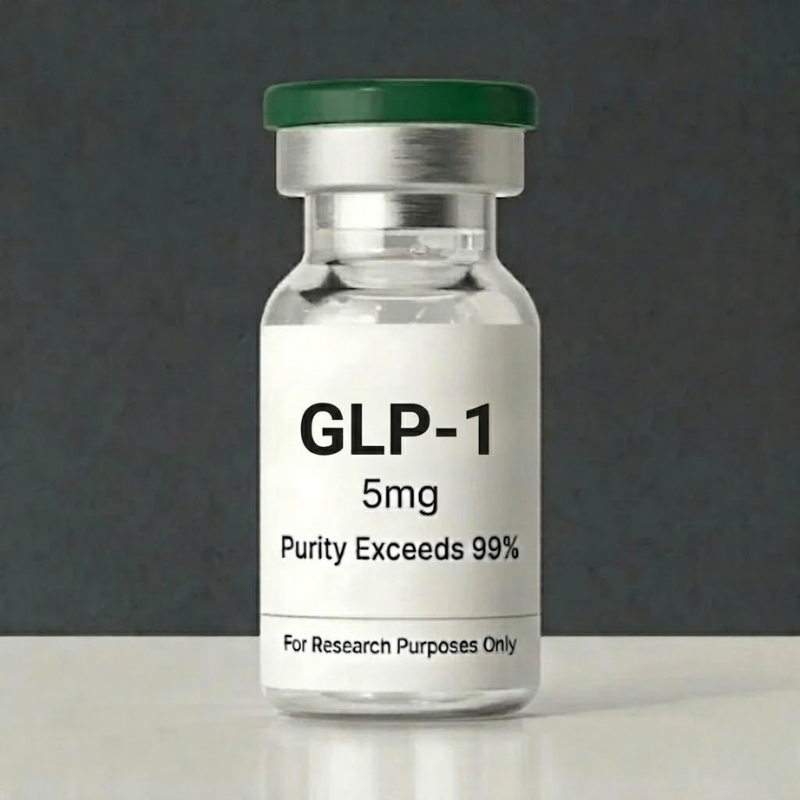



GLP-1 Peptide
🔬 GLP-1 Peptide for Metabolic and Weight Management Research
GLP-1 Peptide is a research peptide supplied in a 5mg × 10 vials kit for laboratory and scientific investigation. The kit contains ten individual vials, with 5mg per vial, for a total listed content of 50mg.
GLP-1, or glucagon-like peptide-1, is a naturally occurring peptide involved in important physiological signaling pathways. Scientific research has examined GLP-1 and the GLP-1 receptor in relation to glucose-dependent insulin release, glucagon regulation, gastric emptying, appetite, and energy balance. Therefore, GLP-1 pathway research remains an important area within metabolic and endocrinology research.
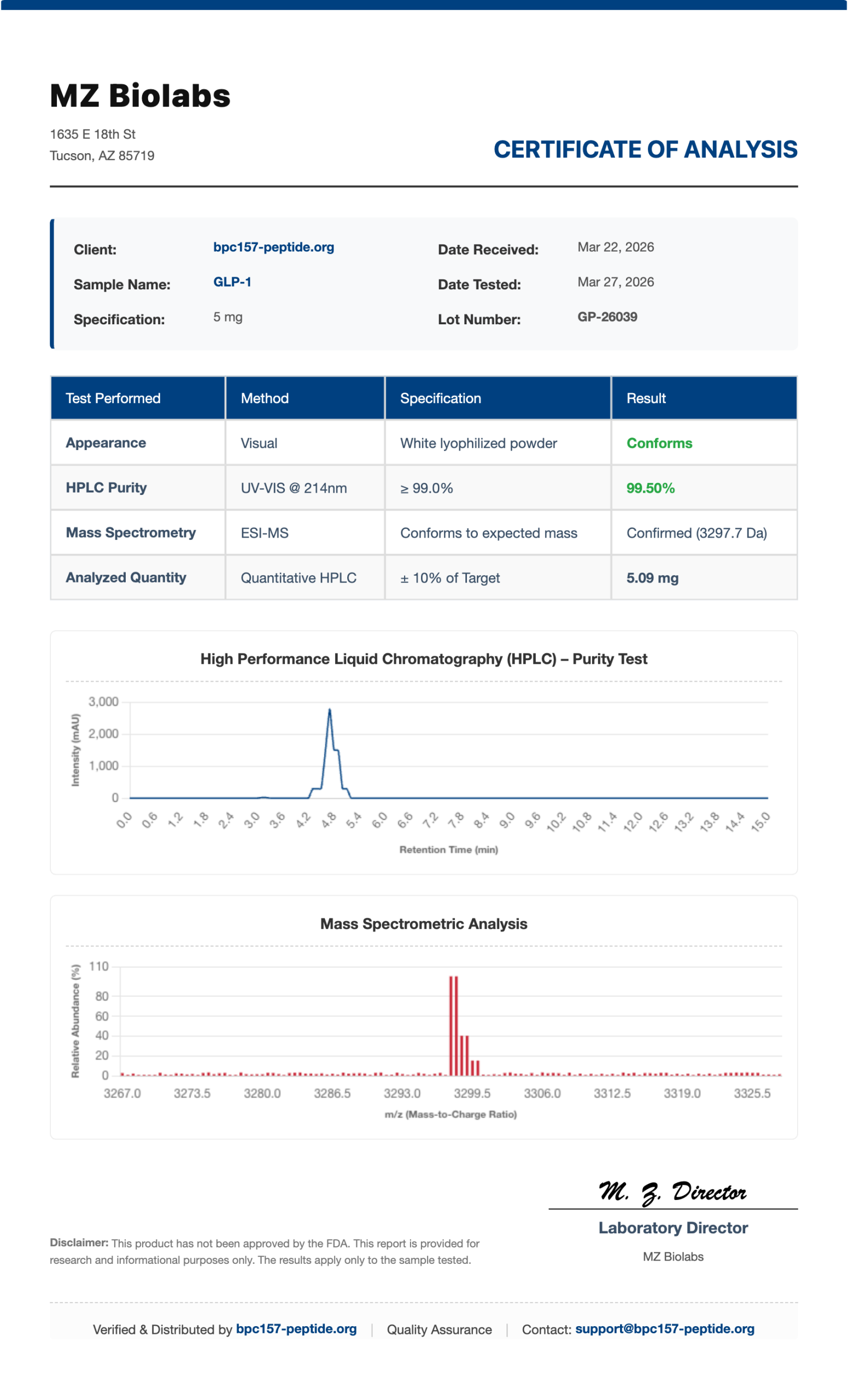
This GLP-1 Peptide is listed at >99% purity, subject to applicable product and batch documentation. Before beginning any experiment, researchers should review the available specifications, batch information, and quality records for the material they actually receive.
Furthermore, the GLP-1 research field includes many different peptide forms, analogs, and receptor agonists. For that reason, researchers should carefully confirm the exact identity and sequence of the product supplied before publishing detailed chemical specifications. Do not assume that all products described generally as “GLP-1” have the same sequence, molecular weight, stability, or research characteristics.
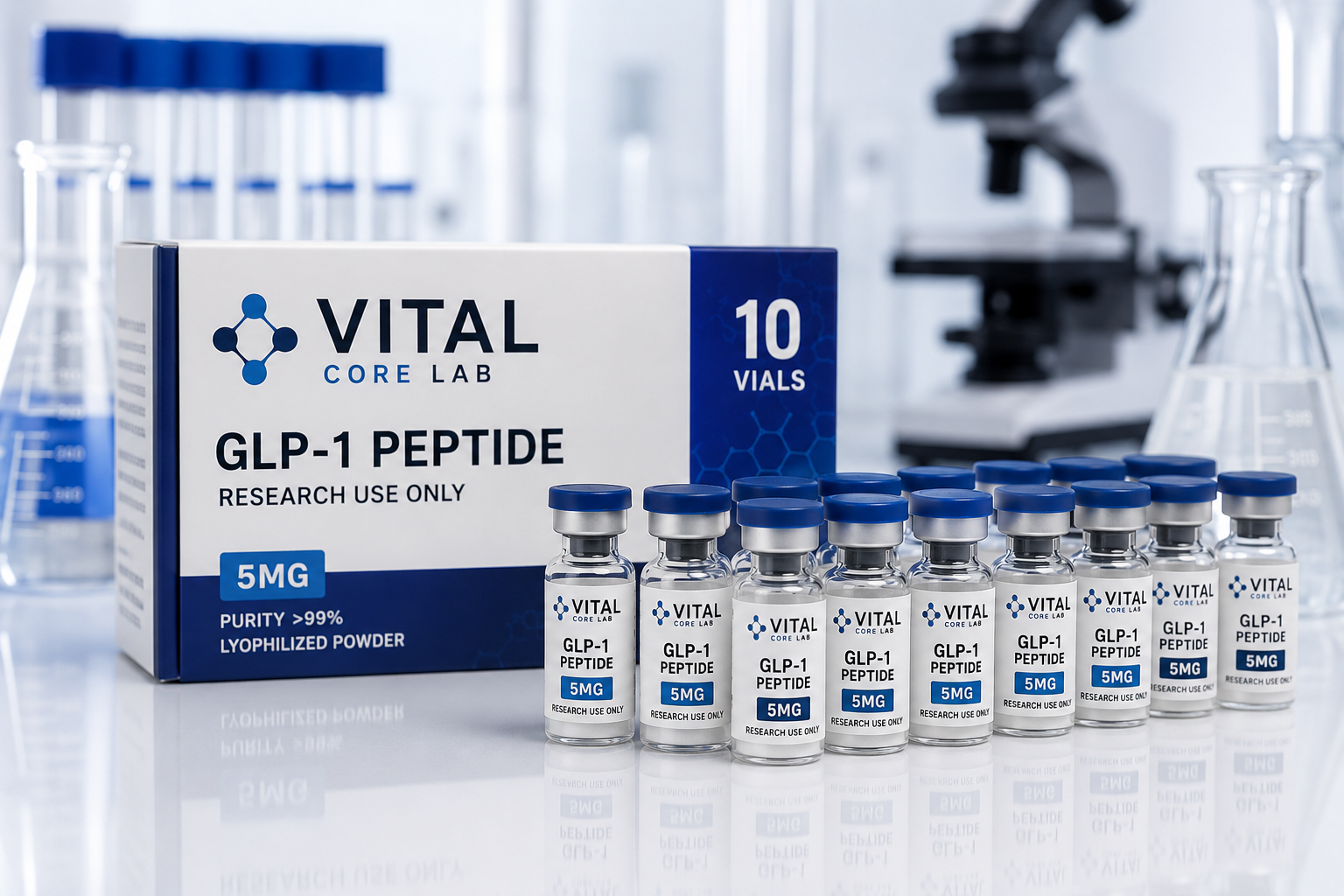
For research and laboratory use only. Not for human or animal consumption.
🧪 GLP-1 Peptide Product Specifications
The specifications below should be verified against your actual supplier records and applicable COA before publication.
| Specification | Details |
|---|---|
| Product Name | GLP-1 Peptide |
| Product Type | Research peptide |
| Format | 5mg × 10 vials |
| Content per Vial | 5mg |
| Total Kit Content | 50mg |
| Purity | >99%, subject to applicable documentation |
| Research Focus | GLP-1 receptor and metabolic research |
| Research Areas | Metabolic, endocrine, and appetite-related signaling |
| Storage | Follow applicable product label and documentation |
| Intended Use | Research and laboratory use only |
Published scientific resources describe GLP-1 as a peptide derived from proglucagon and identify GLP-1 receptor signaling as relevant to insulin secretion, appetite, gastric emptying, and energy balance. However, your product page should distinguish this scientific background from claims about the specific product being sold.
🎯 Why Researchers Study GLP-1 Peptide
🔬 GLP-1 Peptide and GLP-1 Receptor Research
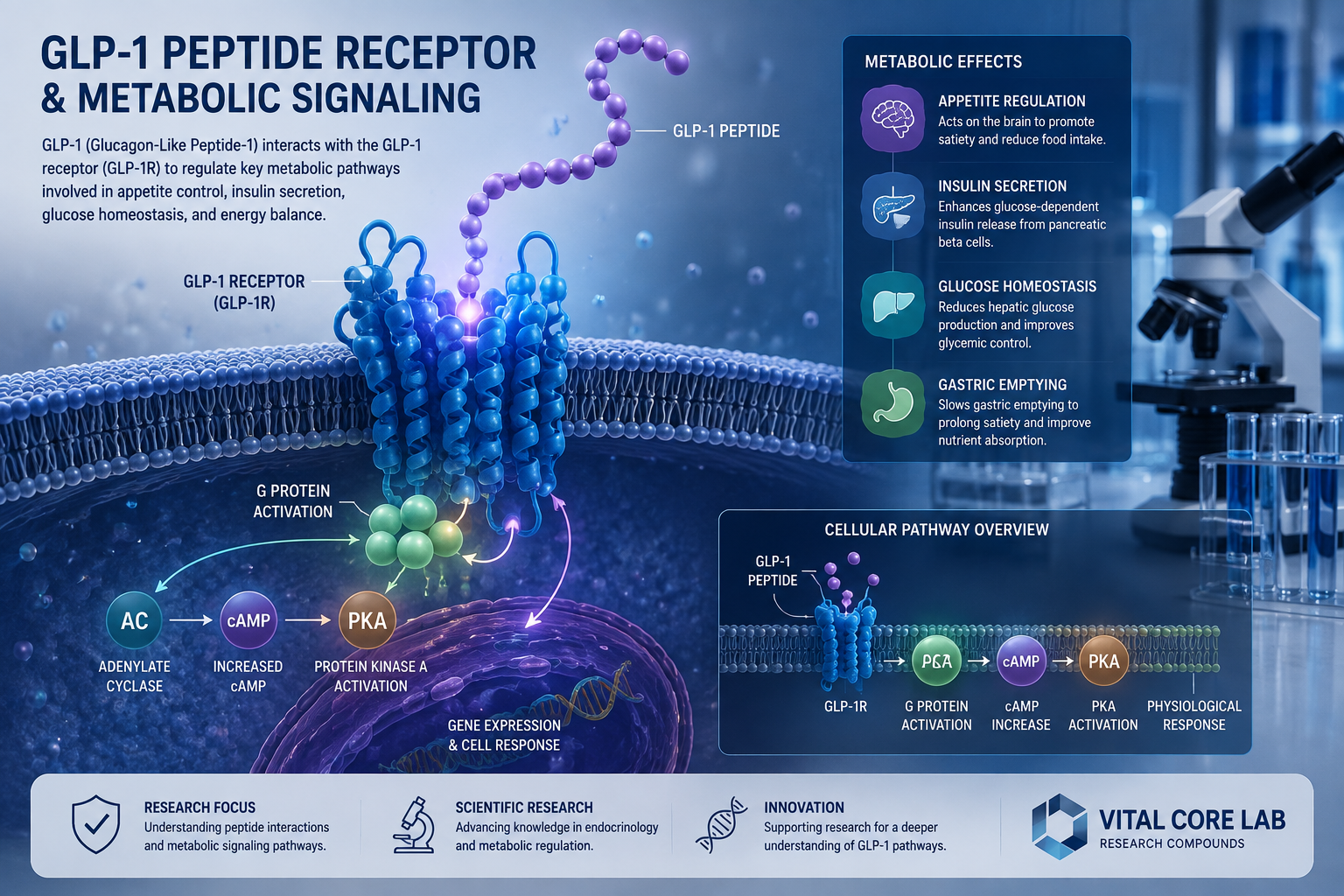
GLP-1 Peptide research often focuses on the interaction between GLP-1 and the GLP-1 receptor, also known as GLP1R. This receptor is involved in several signaling processes. Scientific studies have examined its role in glucose-dependent insulin secretion, appetite regulation, gastric emptying, and energy balance.
Therefore, researchers may investigate receptor-ligand interactions under controlled experimental conditions. Depending on the research model, experiments may examine receptor activation, intracellular signaling, cyclic AMP responses, cellular activity, or other measurable biochemical outcomes.
However, experimental findings depend on the research system used. Cell-based studies, animal models, isolated tissues, and other experimental systems may produce different observations. Consequently, results should always be interpreted within the context of the specific study.
The presence of GLP-1-related scientific research does not mean that a research product is approved for human use. Likewise, laboratory information should not be presented as medical advice.
⚗️ GLP-1 Peptide and Metabolic Research
Metabolism involves many connected biological processes. Scientists study these pathways to understand how cells, tissues, hormones, enzymes, and receptors interact.
GLP-1 Peptide research may examine metabolic signaling under carefully controlled laboratory conditions. For example, researchers may investigate glucose-related signaling, receptor responses, hormonal interactions, or other defined biochemical parameters.
In addition, GLP-1 is part of the broader incretin research field. Published scientific sources describe GLP-1 signaling as being associated with glucose-dependent insulin release and the regulation of glucagon secretion. This makes the pathway relevant to ongoing metabolic and endocrine research.
Researchers may use appropriate controls to compare experimental conditions. They may also examine changes in selected markers over a defined study period. Proper study design remains essential because biological systems are complex.
Furthermore, results from one experimental model should not automatically be applied to another. Each research question requires suitable methods, controls, and analysis.
🧬 GLP-1 Peptide and Appetite Signaling Research
Another important area of scientific interest involves appetite and satiety signaling.
Published research identifies GLP-1 receptor pathways as being connected with biological processes that regulate food intake and energy balance. Researchers continue to study how these pathways interact with different tissues and neural systems.
Therefore, controlled research may investigate:
- GLP-1 receptor signaling
- Appetite-related biological pathways
- Satiety-related signaling
- Energy balance
- Hormonal communication
- Neural and peripheral pathway interactions
- Molecular mechanisms associated with metabolic regulation
These are research contexts only. They are not claims that this specific product causes weight loss or produces a particular outcome.
The phrase Weight Management Research on this product page describes the broader scientific category in which GLP-1 pathways are studied. It should not be interpreted as a guarantee, treatment claim, or personal-use recommendation.
⚙️ GLP-1 Peptide Research Applications
GLP-1 Peptide is intended for controlled laboratory and scientific investigation. Depending on the experimental design, researchers may investigate areas such as:
- GLP-1 receptor research
- Metabolic signaling
- Endocrine pathway research
- Glucose-related signaling studies
- Hormonal signaling research
- Appetite-related biological pathways
- Energy balance research
- Receptor-ligand interactions
- Cellular signaling
- Biochemical research
- Peptide stability studies
- Analytical research
Moreover, researchers may use different laboratory methods depending on the question being studied. These can include receptor assays, biochemical analysis, molecular studies, or other validated research techniques.
The correct method depends on the research objective. Therefore, researchers should select appropriate procedures, controls, equipment, and analytical methods.
No listed research context should be interpreted as an approved medical indication for this product.
🧫 GLP-1 Peptide and Cellular Signaling Studies
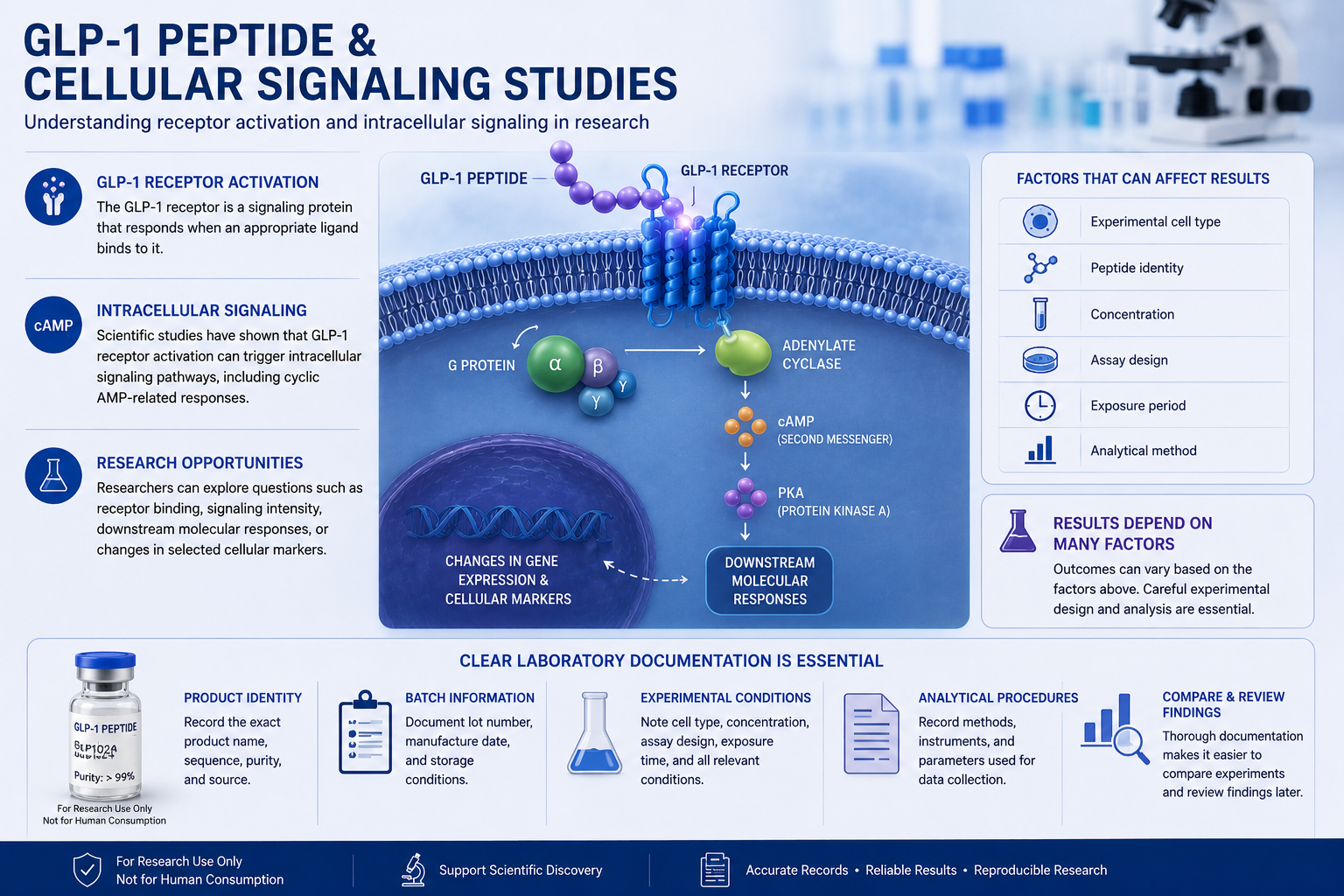
The GLP-1 receptor is a signaling protein that responds when an appropriate ligand binds to it. Scientific studies have shown that GLP-1 receptor activation can trigger intracellular signaling pathways, including cyclic AMP-related responses.
This provides researchers with several possible experimental questions. For example, a study may examine receptor binding, signaling intensity, downstream molecular responses, or changes in selected cellular markers.
However, the results can depend on many factors. The experimental cell type, peptide identity, concentration, assay design, exposure period, and analytical method can all affect the outcome.
For this reason, clear laboratory documentation is essential. Researchers should accurately record product identity, batch information, experimental conditions, and analytical procedures.
Careful documentation can also make it easier to compare experiments and review findings later.
📊 GLP-1 Peptide Research Information at a Glance
| Feature | Product Information |
| 🔬 Product | GLP-1 Peptide |
| 🧪 Format | 5mg × 10 vials |
| 📦 Total Kit Content | 50mg |
| ⚗️ Research Focus | GLP-1 receptor and metabolic signaling |
| 🧬 Research Areas | Metabolic, endocrine, and peptide research |
| ✨ Purity Listing | >99%, subject to applicable documentation |
| 📄 Documentation | Review available batch and quality information |
| 🧫 Research Setting | Laboratory and scientific research |
| ⚠️ Use Restriction | Not for human or animal consumption |
This information provides a general product overview. Nevertheless, final product claims should always match the exact material and documentation available from Vital Core Lab.
📄 GLP-1 Peptide Quality and Documentation
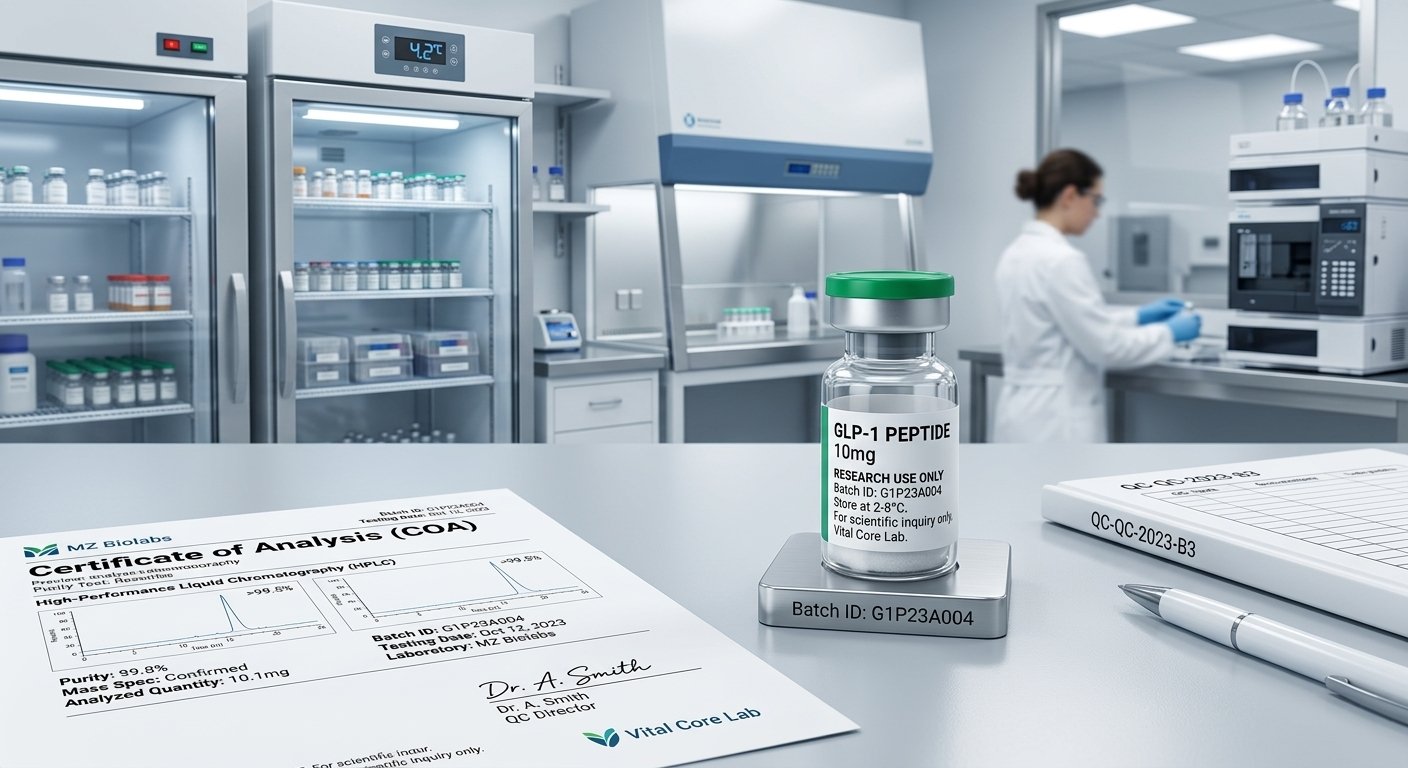
Quality documentation is an important part of responsible research purchasing. Therefore, researchers should review applicable records before beginning experimental work.
Depending on what is available for the actual product and batch, documentation may include:
- Product identification
- Batch or lot number
- Peptide identity information
- Purity information
- Analytical results
- Chromatographic data, where available
- Storage information
- Handling guidance
- Research-use restrictions
The stated >99% purity should be supported by applicable documentation. In addition, any claim about analytical methods should only be published when those records are actually available.
Researchers should not rely solely on a general product description when batch-specific documentation exists. Instead, they should compare the product information with the applicable quality records.
🧊 GLP-1 Peptide Storage and Handling
Proper storage and handling can be important when working with peptide research materials. Therefore, GLP-1 Peptide should be stored according to the instructions provided with the actual product and its applicable documentation.
Researchers should review guidance relating to:
- Storage temperature
- Light exposure
- Moisture protection
- Container integrity
- Product identification
- Laboratory handling
- Batch-specific instructions
Do not publish a specific storage temperature unless it is confirmed by your actual product records or supplier documentation.
Furthermore, laboratories should maintain suitable procedures for handling and documenting research materials. Product containers should remain correctly identified, and applicable records should be retained according to laboratory requirements.
⚠️ Important GLP-1 Peptide Research Use Notice
GLP-1 Peptide is intended strictly for research and laboratory purposes.
It is not intended for human consumption. It is also not intended for animal consumption.
This product is not presented as a medicine, dietary supplement, or approved treatment. It is not intended to diagnose, treat, cure, or prevent any disease.
Furthermore, this product page does not provide medical advice, dosing instructions, administration instructions, or recommendations for personal use.
Scientific research into GLP-1 and GLP-1 receptor agonists is extensive. Some approved medicines act on GLP-1-related pathways. However, those approved medicines are distinct regulated products, and their clinical evidence or approval status must not automatically be applied to a research material sold as GLP-1 Peptide.
Researchers are responsible for determining whether the material is suitable for their intended experimental application. They must also follow appropriate laboratory procedures and applicable laws and regulations.
Always review available product and batch documentation before use.
🛒 GLP-1 Peptide 5mg × 10 Vials Research Kit
This GLP-1 Peptide research kit contains 10 individual 5mg vials, providing 50mg total listed product content.
Before ordering, review the product specifications and applicable documentation. Then, confirm that the exact material is appropriate for your intended laboratory research.
In addition, check available quality records for information relevant to the batch. This can help support accurate laboratory identification and recordkeeping.
The GLP-1 Peptide product is supplied for controlled scientific investigation and laboratory research only.
Reviews
There are no reviews yet.