
TB-500 (Thymosin Beta-4) vs BPC-157: Cellular Migration & Tissue Regeneration Explained
Introduction: Why Compare TB-500 vs BPC-157?
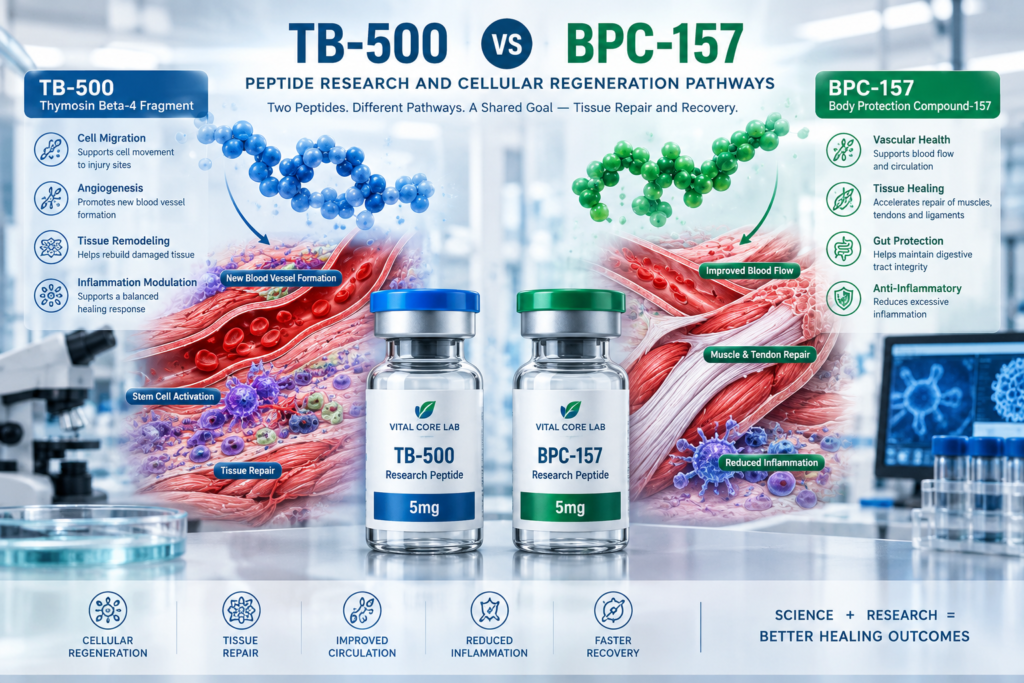
TB-500 vs BPC-157 is a popular comparison topic in peptide research because both compounds are discussed in scientific literature related to cellular activity, tissue biology, and repair processes. However, they are not the same compound, and they should not be assumed to work through identical mechanisms.
To understand the difference, it helps to look at how cells move, how tissues respond to injury, and how new blood vessels develop. These processes involve several biological signals. They also depend on the type of tissue, the surrounding environment, and the stage of the body’s response.
BPC-157 is a synthetic peptide studied mainly in preclinical models involving gastrointestinal tissues, tendons, blood vessels, and other biological systems. TB-500 is a name commonly used for a research product associated with thymosin beta-4 biology. However, the exact identity of a TB-500 product matters because the name does not always mean that the material is identical to full-length thymosin beta-4.
So, what makes these peptides different? The key is their proposed relationship with cellular signaling, actin regulation, cell migration, and tissue responses.
In this guide, we explain TB-500 vs BPC-157 in simple terms. We also examine the scientific evidence, important limitations, and the questions researchers should consider when evaluating either compound.
Important: Much of the research discussed here is preclinical. Findings in cells or animals do not establish safety or effectiveness in humans.
What Is TB-500?
TB-500 is a name used in the research-peptide market for products associated with thymosin beta-4 biology. Before examining its proposed effects, it is important to distinguish the product name from the naturally occurring protein.
Thymosin beta-4 is a small, naturally occurring protein consisting of 43 amino acids. It is associated with actin, a structural protein that helps cells maintain their shape and move through their environment.
Actin is important because cells are not static structures. They change shape, interact with neighboring cells, and move in response to biological signals. These activities are involved in normal tissue development, immune responses, and wound-related processes.
TB-500 and Actin Regulation
One of the best-known functions of thymosin beta-4 is its interaction with actin. Actin helps form the internal framework of a cell, known as the cytoskeleton.
When cells need to move, their cytoskeleton must change. Actin-related processes help support these changes.
Researchers therefore investigate thymosin beta-4 biology in relation to:
- Cellular movement and migration.
- Cell survival and stress responses.
- Changes in the cellular environment.
- Blood vessel development.
- Processes involved in tissue remodeling.
These functions are interconnected. However, a biological mechanism does not automatically translate into a useful treatment or a proven recovery benefit.
Is TB-500 the Same as Thymosin Beta-4?
Not necessarily.
The name TB-500 is used inconsistently in commercial research settings. Some products are described as fragments or derivatives associated with thymosin beta-4, while others may be marketed using the name without enough information to establish their precise identity.
This distinction matters because a peptide’s amino acid sequence, molecular structure, purity, and formulation can affect its biological properties.
Therefore, researchers should not assume that findings involving full-length thymosin beta-4 apply directly to every product sold as TB-500.
Key point: Understanding TB-500 requires identifying the exact molecule being studied, rather than relying on the product name alone.
What Is BPC-157?
BPC-157 is a synthetic peptide consisting of 15 amino acids. Its name is associated with the term body protection compound.
Researchers have investigated BPC-157 in several preclinical models, including studies involving gastrointestinal tissues, tendon-related processes, blood vessels, and other aspects of tissue biology.
However, BPC-157 remains an investigational compound. Its proposed biological effects should not be confused with established clinical benefits.
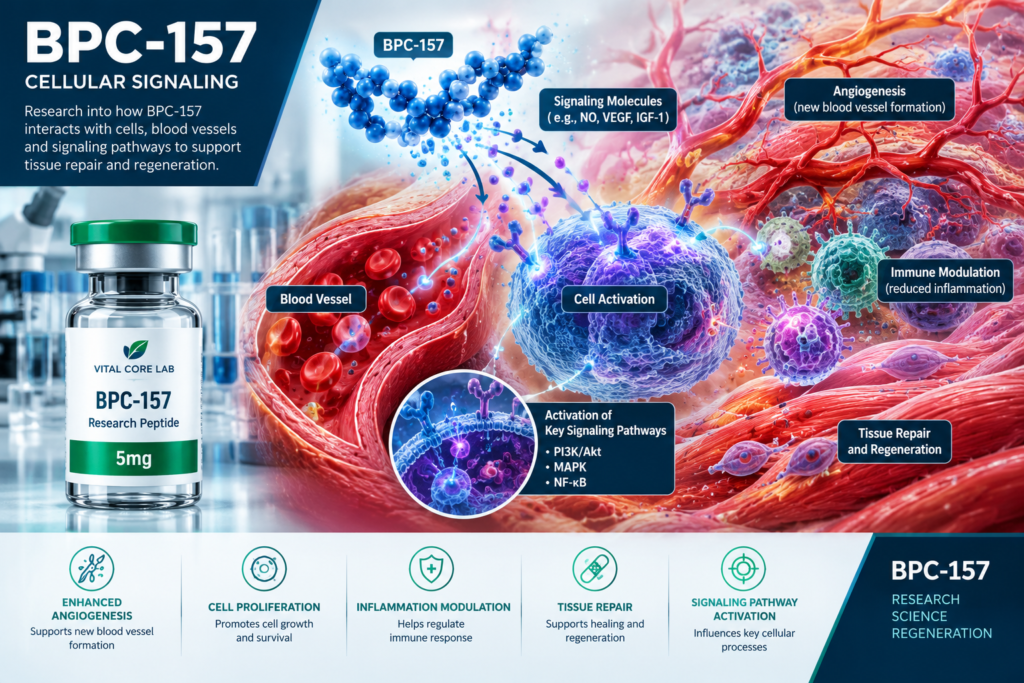
BPC-157 and Cellular Signaling
Research on BPC-157 has explored several pathways that may influence cellular behavior. These include processes associated with blood vessel formation, nitric oxide signaling, and interactions between cells and their surrounding tissues.
Angiogenesis is one important area of interest. It refers to the formation of new blood vessels from existing vessels.
Blood vessels transport oxygen, nutrients, and other substances throughout the body. Consequently, angiogenesis is an important part of normal development and many tissue responses.
Nevertheless, angiogenesis is a complex process. More blood vessel growth is not automatically beneficial in every setting. The timing, location, and regulation of this process all matter.
Why Is BPC-157 Studied in Tendon and Gastrointestinal Models?
BPC-157 has attracted scientific interest because of preclinical observations in different tissue models.
Researchers have examined its relationship with tendon-associated cells, gastrointestinal structures, vascular responses, and other biological processes.
These studies may help generate hypotheses about how the compound interacts with living systems. However, the evidence base is not sufficient to conclude that BPC-157 reliably repairs tendons, heals gastrointestinal conditions, or produces comparable effects in humans.
The distinction between a promising experimental observation and a verified clinical outcome is essential.
Key point: BPC-157 research focuses on several proposed signaling and tissue-related mechanisms, but its clinical effects remain unestablished.
TB-500 vs BPC-157: What Is the Main Difference?
The most useful way to compare TB-500 vs BPC-157 is to examine their molecular identities and the biological processes being investigated.
Thymosin beta-4 biology is closely associated with actin regulation and cellular movement. BPC-157 research, meanwhile, has explored several signaling pathways and tissue-related responses, including angiogenesis and gastrointestinal or tendon-associated models.
These descriptions represent research interests, not exclusive functions. Neither compound should be described as acting only in one tissue or through one pathway.
1. Molecular Identity
Thymosin beta-4 is a naturally occurring 43-amino-acid protein. Commercial TB-500 products may differ in their precise molecular identity.
BPC-157 is a synthetic 15-amino-acid peptide.
These differences are important when comparing experimental results. Studies of two different molecules cannot automatically be treated as evidence for interchangeable effects.
2. Actin Regulation and Cell Movement
Actin helps cells change shape and move. Thymosin beta-4 has a well-characterized relationship with actin regulation, making cell movement an important area of related research.
Cell migration is also important in tissue responses because cells must often move to particular locations before they can participate in remodeling.
However, it would be inaccurate to conclude that all products marketed as TB-500 produce the same effects as full-length thymosin beta-4.
BPC-157 has also been studied in models involving cell behavior and tissue responses. Yet its proposed mechanisms should be assessed individually rather than reduced to one universal explanation.
3. Angiogenesis and Blood Vessel Biology
Angiogenesis involves the development of new blood vessels. It is relevant to normal tissue biology, development, and certain responses to injury.
Both thymosin beta-4-related research and BPC-157 research have explored aspects of vascular biology.
The pathways, experimental conditions, and evidence differ across studies. Therefore, it is too simplistic to claim that one compound is exclusively responsible for local blood vessel growth while the other produces systemic effects.
4. Tissue-Specific Research
BPC-157 has been investigated in preclinical tendon and gastrointestinal models. Thymosin beta-4 research covers a broader range of cellular processes, including migration and tissue-related responses.
These areas overlap, but overlapping research topics do not establish that the compounds work equally well or have the same safety profile.
TB-500 vs BPC-157 Comparison Table
| Research feature | TB-500 / Thymosin Beta-4-related research | BPC-157 research |
|---|---|---|
| Molecular identity | TB-500 naming can vary; thymosin beta-4 is a 43-amino-acid protein | Synthetic 15-amino-acid peptide |
| Major research interest | Actin regulation and cell movement | Multiple signaling pathways and tissue-related responses |
| Cellular migration | An important area of thymosin beta-4 biology | Investigated in selected experimental models |
| Angiogenesis | Studied in thymosin beta-4-related research | Investigated in preclinical models |
| Tissue models | Includes several cellular and tissue-response models | Includes tendon and gastrointestinal models, among others |
| Human evidence | Does not establish the safety or efficacy of all TB-500 products | Insufficient to establish clinical safety or efficacy |
| Key research question | Does the exact molecule produce the observed biological effect? | Are proposed effects reproducible and clinically meaningful? |
The table highlights the main differences without suggesting that either peptide is a proven option for tissue repair.
Understanding Cellular Migration and Tissue Regeneration
To understand TB-500 vs BPC-157, it helps to understand two connected concepts: cellular migration and tissue regeneration.
They are related, but they are not interchangeable.
What Is Cellular Migration?
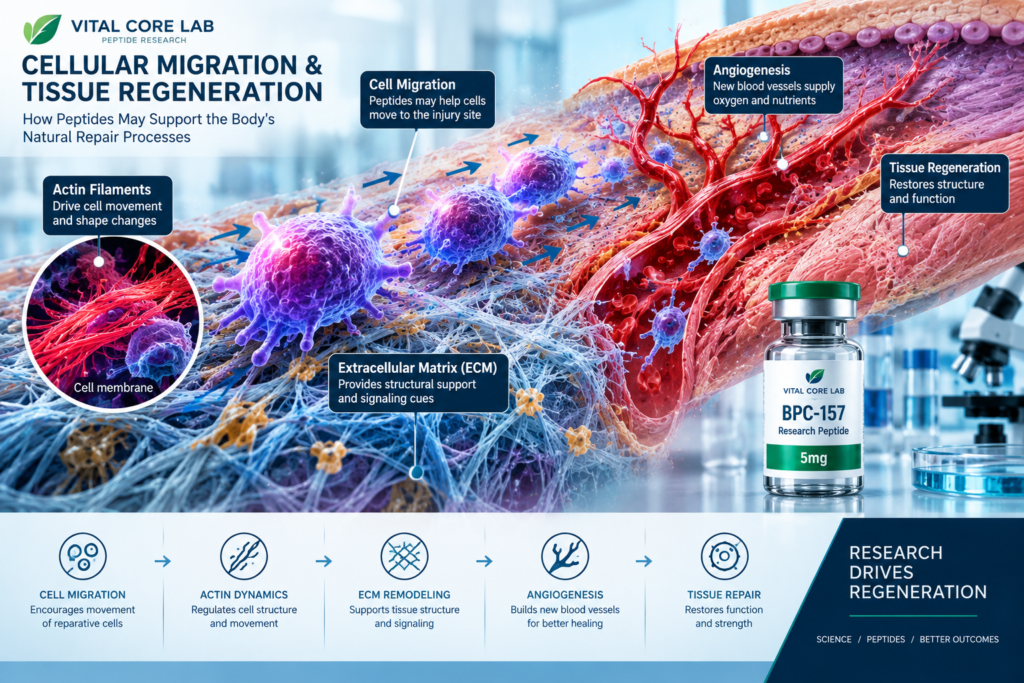
Cellular migration occurs when cells move from one location to another. This movement can occur during development, immune activity, and tissue responses.
A migrating cell must coordinate several processes. It needs to sense signals, change its shape, interact with surrounding structures, and move in a controlled direction.
The cytoskeleton plays a major role in this activity. Actin filaments help cells extend parts of their structure and change shape.
This explains why actin regulation is important in thymosin beta-4 research. However, cell movement alone does not prove that a tissue will regenerate normally or that a compound will improve a health outcome.
What Is Tissue Regeneration?
Tissue regeneration refers to the restoration of tissue structure and function. It may involve cell growth, cell migration, extracellular matrix changes, blood vessel responses, and communication between different cell types.
Some tissues regenerate more readily than others. The outcome also depends on the nature of the damage and the biological environment.
Furthermore, regeneration is not simply about increasing cell activity. Cells must respond in an organized way, and the resulting tissue must develop appropriate structure and function.
Why Are These Processes Relevant to TB-500 vs BPC-157?
TB-500-related research often attracts attention because of thymosin beta-4’s relationship with actin and cellular movement.
BPC-157 research attracts interest because of its proposed effects on several signaling pathways and its investigation in different tissue models.
Yet neither mechanism provides a complete explanation for regeneration. Many biological processes work together, and the same pathway can produce different results under different experimental conditions.
For that reason, researchers should examine the full study design, not just a headline describing a peptide’s proposed function.
What Does the Scientific Evidence Actually Show?
A responsible comparison of TB-500 vs BPC-157 must separate biological plausibility from demonstrated effectiveness.
A mechanism can explain why researchers are interested in a compound. It cannot, by itself, establish whether the compound is safe, effective, or appropriate for use in humans.
Preclinical Research
Preclinical research includes laboratory experiments and animal studies. These methods can help scientists investigate molecular interactions, explore possible biological effects, and identify questions for future research.
However, preclinical results have limitations.
For example, an effect observed in cultured cells may not occur in a complete living organism. An animal study may also differ from human biology in important ways.
The route of administration, exposure level, experimental model, and study duration can influence results. Therefore, a finding from one experiment should not automatically be generalized to another setting.
Human Clinical Evidence
Human clinical studies are needed to establish whether a compound produces meaningful benefits and what risks may be associated with it.
For BPC-157, the available human evidence is insufficient to establish safety and efficacy for tissue repair or other proposed health benefits.
For TB-500, the exact molecular identity also matters. Evidence involving full-length thymosin beta-4 cannot automatically establish the effects of a different fragment or a commercial product sold under the TB-500 name.
Consequently, neither compound should be presented as a clinically proven solution for injury recovery, tendon repair, or tissue regeneration.
Why Study Quality Matters
When evaluating a paper, researchers should consider several questions:
- What exact compound and molecular sequence were studied?
- Was the experiment performed in cells, animals, or humans?
- Was there a suitable control group?
- Were the results independently reproduced?
- Were safety outcomes measured?
- Were the findings published in a peer-reviewed journal?
- Do the conclusions match the data?
These questions help separate reliable observations from unsupported marketing claims.
TB-500 vs BPC-157: What Researchers Should Investigate Next
Although the compounds have attracted scientific interest, several questions remain open.
Molecular Identity and Purity
The identity of the test material is fundamental. Researchers need to know whether the compound matches the stated sequence and whether its purity and composition have been adequately characterized.
This is especially important when commercial naming conventions are inconsistent.
Analytical documentation can help establish what was tested. However, a purity result alone does not prove biological activity, safety, or clinical effectiveness.
Reproducibility
Independent replication is an important part of scientific progress.
If a study reports a biological effect, other researchers should be able to investigate the same question under appropriately controlled conditions.
Reproducible results provide stronger evidence than a single positive experiment. Differences in methods and experimental models should also be documented clearly.
Pathway Interactions
Cellular migration, vascular signaling, inflammation-related processes, and tissue remodeling involve complex networks.
Researchers can investigate whether particular pathways are directly affected by a compound or whether observed changes occur indirectly.
These distinctions matter because a biological response may result from several interacting mechanisms rather than one simple pathway.
Safety and Translation to Humans
Safety questions require direct evidence. Researchers must consider possible adverse effects, interactions, exposure, and differences between experimental models and humans.
A compound’s presence in scientific literature does not establish that it is safe for self-administration. Nor does a proposed mechanism demonstrate that it will produce a useful outcome in people.
Future clinical research would need appropriate study design, ethical oversight, and transparent reporting.
Common Misconceptions About TB-500 vs BPC-157
Several claims about these peptides are repeated online. Understanding the limitations behind those claims is important for anyone studying the science.
Misconception 1: TB-500 and Thymosin Beta-4 Are Always Identical
They should not be assumed to be identical. TB-500 is a commercial name used inconsistently, while thymosin beta-4 refers to a specific naturally occurring protein.
The molecular identity of the material being studied should be verified.
Misconception 2: BPC-157 Only Affects One Local Area
BPC-157 has been investigated in multiple preclinical systems. Its research cannot be reduced to one exclusive location or biological pathway.
However, research across several models does not prove that the compound produces predictable effects throughout the human body.
Misconception 3: More Angiogenesis Always Means Better Repair
Angiogenesis is a normal biological process, but its effects depend on context. Blood vessel growth must be regulated and coordinated with the surrounding tissue.
A higher level of one biological activity does not automatically indicate better tissue function.
Misconception 4: Promising Animal Results Prove Human Benefits
Animal studies can support further investigation, but they do not establish human effectiveness.
Differences in biology, experimental conditions, and exposure can affect how results translate. Proper human studies are necessary before drawing clinical conclusions.
Misconception 5: Combining Both Peptides Must Produce Better Results
A combination of two investigational compounds is not automatically more effective or safer than either compound alone.
Potential interactions, independent effects, and combined risks would need to be investigated. Marketing claims about a combination should not be treated as clinical evidence.
How to Evaluate TB-500 and BPC-157 Research Materials
For laboratory research, documentation and traceability are important parts of a responsible evaluation.
Check the Compound Identity
Look for the stated molecular identity, sequence where applicable, and other information needed to distinguish the material from similarly named products.
For TB-500, pay particular attention to whether the documentation identifies a fragment, derivative, or full-length thymosin beta-4.
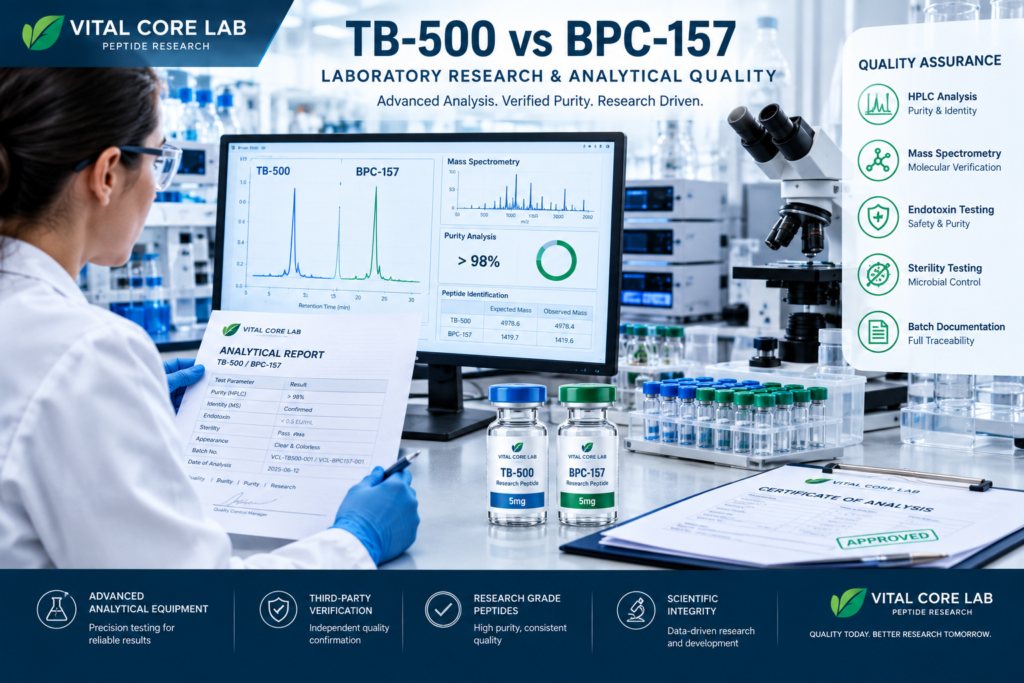
Review Analytical Documentation
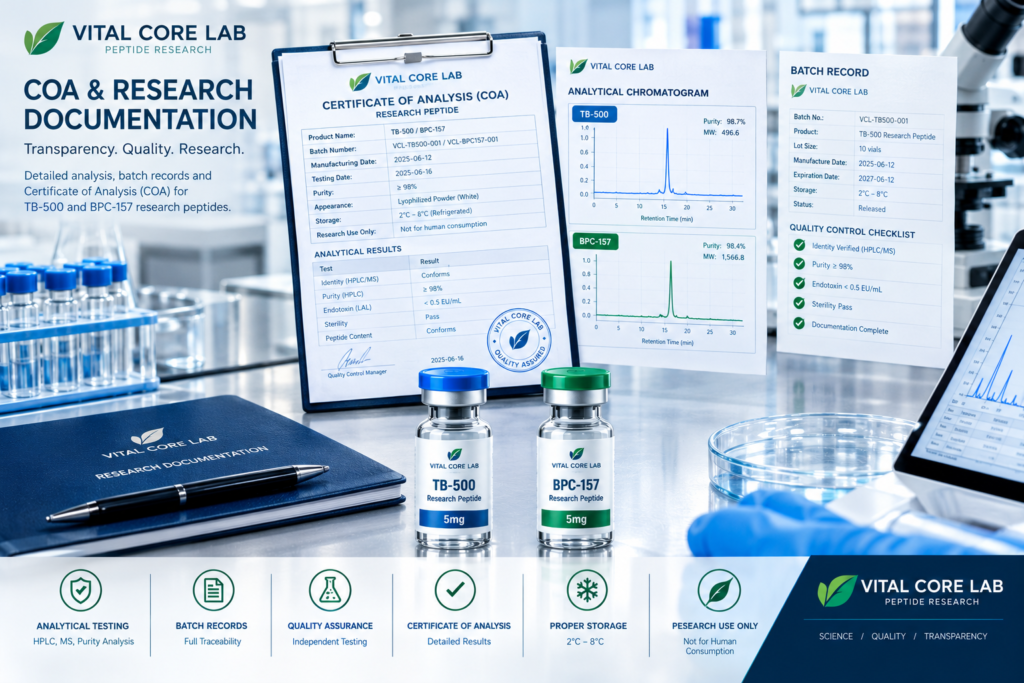
A certificate of analysis, or COA, may provide information about the tested batch. Researchers should examine what was measured, which analytical methods were used, and whether the document clearly identifies the material.
A COA should not be interpreted as proof of clinical safety or effectiveness. Its value depends on the tests performed and the reliability of the reporting laboratory.
Consider Storage and Handling Information
Research materials should be handled according to appropriate laboratory procedures and the manufacturer’s documentation. Requirements can differ by compound and formulation.
Do not assume that two different peptides share identical stability or handling requirements.
Keep Research Claims Evidence-Based
Product descriptions and educational content should distinguish established molecular facts from proposed mechanisms and unconfirmed applications.
Clear language supports better scientific understanding and helps prevent readers from mistaking preliminary research for proven clinical outcomes.
Frequently Asked Questions About TB-500 vs BPC-157
Is TB-500 the same as BPC-157?
No. They are different peptide-related research materials with different molecular identities. Thymosin beta-4 is a 43-amino-acid protein, while BPC-157 is a synthetic 15-amino-acid peptide. Commercial TB-500 naming can vary, so the exact material should be verified.
What is the main difference between TB-500 and BPC-157?
Thymosin beta-4 biology is closely associated with actin regulation and cellular movement. BPC-157 has been investigated in several preclinical models involving tissue-related responses and signaling pathways. These research interests overlap, but neither compound has established clinical effectiveness for tissue regeneration.
What is actin regulation?
Actin regulation refers to processes that control the organization and behavior of actin, a protein that forms part of the cellular cytoskeleton. Actin helps cells maintain their shape, respond to signals, and move through their environment.
What is angiogenesis?
Angiogenesis is the formation of new blood vessels from existing vessels. It is an important biological process, but its role depends on the tissue and biological context. Research into angiogenesis does not automatically establish a clinical benefit.
Does BPC-157 repair tendons in humans?
Current evidence is insufficient to establish that BPC-157 reliably repairs tendons or improves recovery in humans. Preclinical findings should not be presented as proof of human effectiveness.
Does TB-500 improve tissue regeneration?
Research associated with thymosin beta-4 has investigated cellular migration and other tissue-related processes. However, findings involving thymosin beta-4 cannot automatically be applied to every product marketed as TB-500. Clinical benefits and safety must be established through appropriate evidence.
Can TB-500 and BPC-157 be combined?
Claims that combining these compounds improves outcomes are not established by reliable clinical evidence. Combining investigational substances can introduce additional uncertainties, including potential interactions and safety risks.
What should researchers look for in a peptide COA?
A useful COA should identify the tested material and batch, describe the analytical methods and results, and make clear what the testing does and does not establish. Purity alone does not demonstrate clinical safety or biological effectiveness.
Final Thoughts: TB-500 vs BPC-157
The comparison of TB-500 vs BPC-157 highlights two different areas of peptide research. Thymosin beta-4 biology is strongly associated with actin regulation and cellular movement, while BPC-157 has been investigated across several signaling and tissue-related models.
Both topics raise important questions about how cells communicate, move, and respond to their environment. Nevertheless, proposed mechanisms must be distinguished from verified outcomes.
The most reliable approach is to examine molecular identity, study quality, reproducibility, and the limits of the available evidence. Researchers should also avoid assuming that results from animal models apply directly to humans.
Ultimately, understanding TB-500 vs BPC-157 requires more than comparing product descriptions. It requires careful attention to the science, transparent documentation, and a clear distinction between experimental findings and established clinical knowledge.
Explore More Research Education
Vital Core Lab encourages readers to explore peptide science through clear, evidence-conscious educational resources. Continue learning about molecular signaling, laboratory analysis, and the research methods used to investigate peptide-related biological processes.
Research disclaimer: This article is for scientific and educational purposes. It does not provide medical advice, establish the safety or effectiveness of any peptide, or recommend self-administration. Investigational compounds should not be treated as approved therapies on the basis of preliminary research.



Great breakdown of these two research peptides! The distinction between BPC-157’s localized action (like targeting tendon/ligament repair and NO/angiogenesis pathways) versus TB-500’s systemic actin-regulating and cell migration properties is crucial. It really shows why combining them in a stack provides such comprehensive coverage for soft tissue recovery models. Looking forward to seeing more high-purity research articles like this on Vital Core Lab!
Thank you for the feedback, Mary! You captured the key distinction perfectly. BPC-157’s localized angiogenic and tendon/ligament pathways complement TB-500’s systemic actin-sequestering mechanisms seamlessly. Analyzing how these two distinct mechanisms work together offers incredible insights into comprehensive soft tissue recovery models. We appreciate your kind words and support