GHK-Cu Copper Peptide
GHK-Cu Copper Peptide: Understanding the Science of Skin and Hair
GHK-Cu Copper Peptide is a copper-binding tripeptide studied for its role in skin biology, extracellular matrix activity, and cellular signaling. Also known as copper tripeptide-1, GHK-Cu combines a short peptide sequence with a copper ion. Together, these components have attracted interest in cosmetic science, dermal research, and studies of tissue remodeling.
But what makes GHK-Cu Copper Peptide scientifically interesting? Researchers are examining how it interacts with biological pathways linked to collagen, cellular responses, and the surrounding tissue environment. In addition, its potential relevance to hair follicle biology has attracted attention in cosmetic research.
This guide explains the science behind GHK-Cu Copper Peptide in clear language. It explores collagen types I and III, extracellular matrix organization, inflammatory signaling, dermal remodeling, and hair-related research. It also explains the limits of current evidence and why laboratory findings should not automatically be treated as proven human benefits.
What Is GHK-Cu Copper Peptide?
GHK-Cu Copper Peptide is a complex formed when the naturally occurring tripeptide GHK binds copper. GHK consists of three amino acids: glycine, histidine, and lysine. This small peptide has been studied for its interactions with copper and its possible biological signaling functions.
Copper is an essential trace element. It participates in several biological processes, including enzyme activity, connective tissue formation, and antioxidant defense. However, copper must be regulated carefully because excessive amounts of free copper can promote unwanted chemical reactions.
GHK-Cu is interesting because the peptide can bind copper and influence how it interacts within a biological environment. Researchers investigate these properties to better understand the relationship between peptide structure, copper availability, and cellular responses.
How does copper tripeptide-1 work?
Copper tripeptide-1 is the name commonly used for GHK-Cu in cosmetic ingredient terminology. Research has explored several possible mechanisms, including:
-
Extracellular matrix activity: Investigating how cells regulate proteins and other components surrounding them.
-
Collagen-related pathways: Studying signals associated with collagen production and connective tissue organization.
-
Cellular signaling: Exploring how cells respond to the peptide-copper complex.
-
Inflammatory responses: Examining changes in selected signaling pathways under specific experimental conditions.
-
Tissue remodeling: Studying how biological systems regulate the breakdown and replacement of structural components.
These areas remain active subjects of investigation. Moreover, a biological effect observed in isolated cells does not necessarily produce the same effect in intact human skin.
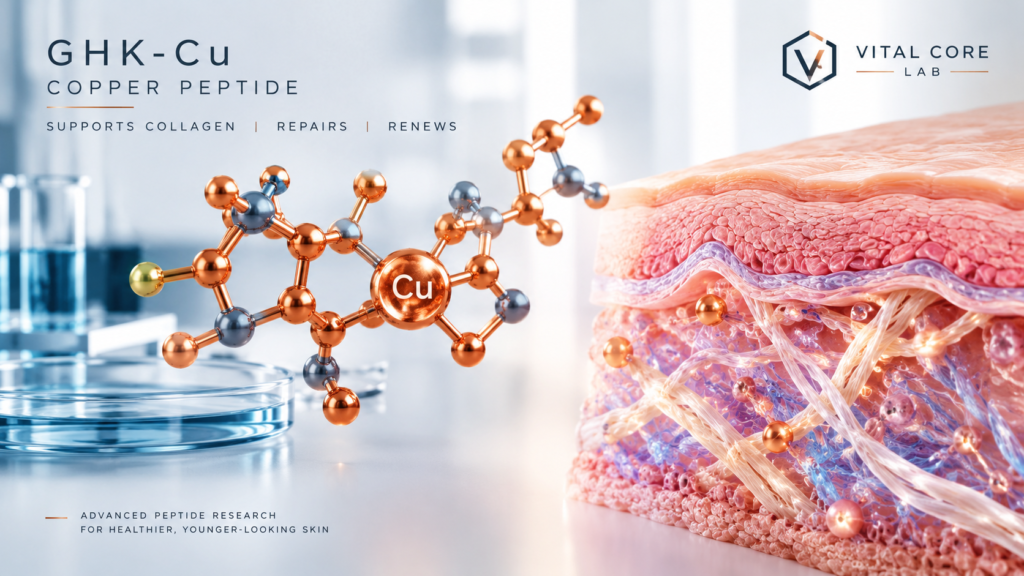
How GHK-Cu Copper Peptide Relates to Collagen Synthesis
Collagen is a major structural protein in connective tissue. It helps provide strength, organization, and support to the extracellular matrix. This matrix surrounds cells and helps create the environment in which they function.
GHK-Cu Copper Peptide has received research attention because some experimental findings suggest that it may influence pathways associated with extracellular matrix proteins and collagen metabolism.
However, collagen biology is complex. Researchers must distinguish between changes in gene expression, changes in protein production, and measurable changes in tissue structure. These are related outcomes, but they are not interchangeable.
Understanding collagen types I and III
Collagen type I is a major structural component of skin and many other connective tissues. It contributes to tensile strength and helps maintain the organization of the dermal matrix.
Collagen type III is also present in connective tissue. It is associated with matrix organization and appears alongside collagen type I in several tissues.
GHK-Cu research sometimes discusses these collagen types because both are relevant to dermal structure. Nevertheless, the presence of a plausible mechanism does not establish that a particular formulation consistently increases collagen I or III in human skin.
Important questions include:
-
Which collagen-related genes or proteins change under experimental conditions?
-
Are those changes reproducible across independent studies?
-
What concentrations and exposure times are involved?
-
Do findings differ between cell cultures, animal models, and human studies?
-
Are the observed changes clinically meaningful?
These questions help researchers evaluate the strength of the evidence instead of relying on marketing language alone.
Why extracellular matrix research matters
The extracellular matrix is not simply a collection of structural proteins. It is a dynamic environment containing collagen, elastin, glycoproteins, and other components. Cells interact with this environment through receptors and biochemical signals.
Consequently, researchers studying GHK-Cu may examine both matrix production and matrix turnover. A balanced matrix requires the coordinated production, organization, and breakdown of its components.
Suggested internal link placement: Add an internal link here to the Vital Core Lab educational category for peptide science or aesthetic and dermal research.
GHK-Cu Copper Peptide and Dermal Remodeling
Dermal remodeling describes the ongoing processes through which connective tissue components are maintained, reorganized, and replaced. It involves interactions between cells, structural proteins, enzymes, and signaling molecules.
GHK-Cu Copper Peptide has been investigated in this context because experimental research suggests possible relationships with several matrix-associated processes. However, the effects may vary depending on the model, formulation, concentration, and biological environment.
What happens during dermal remodeling?
Dermal remodeling involves several overlapping processes:
-
Cells produce structural proteins and other matrix components.
-
Enzymes help regulate the breakdown and replacement of existing components.
-
Cells detect mechanical and biochemical signals from their surroundings.
-
The matrix changes in response to biological conditions and environmental influences.
GHK-Cu research can examine whether the peptide influences any of these processes. Yet, demonstrating a specific effect requires appropriate controls, validated measurements, and reproducible findings.
Skin appearance versus biological evidence
Cosmetic products containing copper tripeptide-1 are marketed for concerns such as skin texture and visible signs of aging. Those product claims should be evaluated separately from laboratory evidence.
For example, an experiment showing changes in a cellular marker does not prove that a topical product reduces wrinkles. Product performance also depends on formulation stability, skin penetration, concentration, application conditions, and the quality of human clinical evidence.
Therefore, it is useful to distinguish between three different types of information:
-
Mechanistic evidence: What happens to cells or molecules in a controlled experiment?
-
Preclinical evidence: What effects appear in laboratory or animal models?
-
Clinical evidence: What outcomes have been demonstrated in appropriately designed human studies?
This distinction makes discussions of GHK-Cu Copper Peptide more accurate and useful.

GHK-Cu Copper Peptide and Inflammatory Signaling
Inflammation is a coordinated biological response involving immune cells, signaling molecules, and changes in surrounding tissue. It plays important roles in normal physiology, although excessive or prolonged inflammatory activity can contribute to tissue dysfunction.
Researchers have explored whether GHK-Cu affects selected inflammatory signaling pathways in experimental settings. Some findings have suggested possible regulatory effects. However, these observations do not establish that GHK-Cu is a proven anti-inflammatory treatment.
How researchers examine inflammatory pathways
Scientists can study inflammatory responses by measuring changes in selected proteins, gene expression, cellular behavior, or biochemical markers. These measurements help researchers identify potential relationships between a compound and a biological process.
However, a change in one marker does not establish an overall beneficial effect. Inflammation involves many interacting pathways, and suppressing one response may not produce the same outcome across different tissues or conditions.
Researchers therefore need to consider:
-
The specific inflammatory pathway being examined.
-
The type of cells or experimental model used.
-
Whether the observed response is dose-dependent.
-
Whether results are reproduced independently.
-
Whether the findings translate into meaningful outcomes in humans.
Why the research context matters
The term anti-inflammatory is often used broadly in commercial discussions. Yet, a compound’s effects can depend on the biological context. Results from one experimental system cannot automatically be applied to every inflammatory process.
For GHK-Cu Copper Peptide, careful interpretation means discussing the pathways being investigated without promising treatment, recovery, or disease prevention.
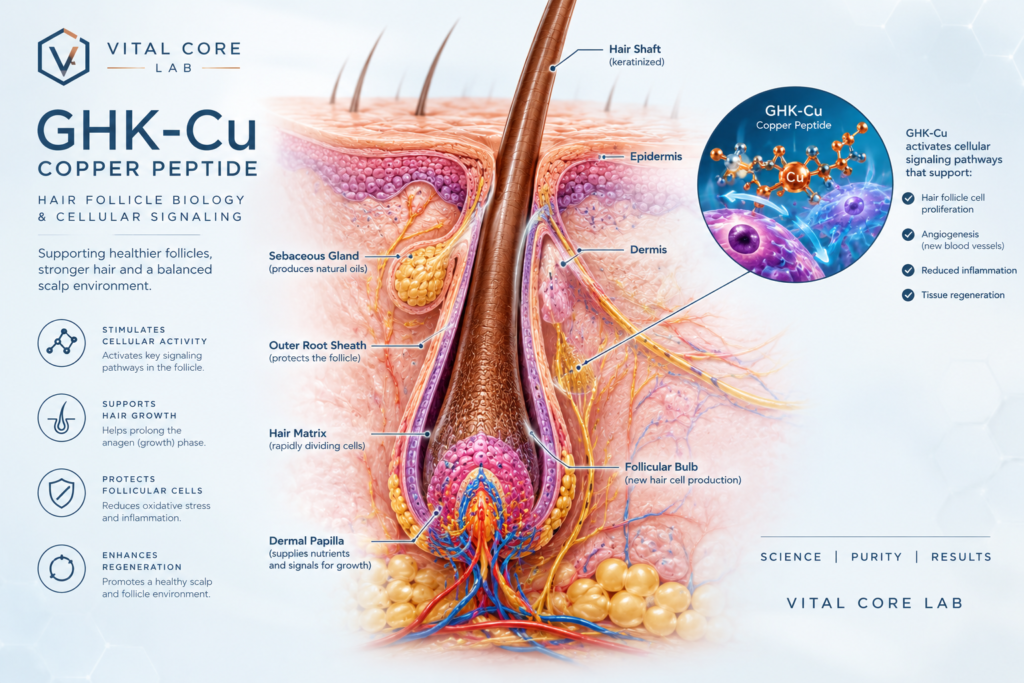
GHK-Cu Copper Peptide and Hair Follicle Research
Hair follicle biology is another area of interest in copper-peptide research. Hair growth involves interactions between follicular cells, signaling pathways, connective tissue structures, and cycles of growth and rest.
The hair follicle is a complex mini-organ. Its behavior depends on multiple biological processes, including communication between epithelial cells and the surrounding dermal environment.
GHK-Cu has attracted interest in cosmetic hair research. Nevertheless, the available evidence must be examined carefully before drawing conclusions about hair growth, hair density, or hair loss.
Understanding the hair growth cycle
The hair growth cycle is commonly divided into three major phases:
-
Anagen: The active growth phase.
-
Catagen: A transitional phase in which active growth winds down.
-
Telogen: A resting phase that precedes the release of a hair fiber.
The duration of these phases varies by hair type, body location, and individual biology. Researchers study the signals that regulate transitions between these phases to understand follicular function.
GHK-Cu research may explore whether the peptide affects selected cellular or signaling processes relevant to the follicular environment. However, this does not prove that GHK-Cu reliably initiates hair growth or treats hair loss in humans.
What should researchers investigate?
A scientifically useful investigation should define its endpoint clearly. For example, changes in follicular cell markers are different from measurements of hair shaft production or hair density.
Research questions may include:
-
Does the experimental model show reproducible changes in follicular signaling?
-
Which cell populations respond to the peptide?
-
Does the formulation reach the relevant biological structures?
-
Are any observed effects sustained over time?
-
Is there credible controlled human evidence supporting the proposed outcome?
These questions help separate plausible mechanisms from established results.
Key Research Areas for GHK-Cu Copper Peptide
GHK-Cu Copper Peptide connects several areas of scientific interest. Although they overlap, each area requires its own experimental methods and evidence.
The following table summarizes major research themes and the questions that help define them.
| Research area | Main scientific focus | Important evidence to examine |
|---|---|---|
| Collagen synthesis | Regulation of collagen-related proteins | Protein measurements and reproducible cellular findings |
| Extracellular matrix | Matrix production, organization, and turnover | Matrix composition and remodeling markers |
| Dermal biology | Cellular activity in skin-related models | Validated endpoints and suitable controls |
| Inflammatory signaling | Changes in selected inflammatory pathways | Specific biomarkers and biological context |
| Hair follicle biology | Cellular signals involved in follicular function | Follicular models and relevant growth endpoints |
| Copper interactions | Copper binding and biological availability | Complex stability, copper availability, and experimental conditions |
The table provides a research framework, not a list of proven clinical benefits. Each proposed effect must be evaluated using the relevant evidence.
GHK-Cu Copper Peptide in Cosmetic Science
Cosmetic science examines how ingredients interact with skin and how formulations perform under defined conditions. Copper tripeptide-1 has gained attention in this field because of its connection to peptide chemistry, copper biology, and skin-related research.
However, an ingredient’s scientific interest does not automatically establish the performance of every product containing it.
Formulation influences performance
A topical formulation may contain several ingredients that affect stability, texture, absorption, and compatibility. Consequently, results associated with one formulation may not apply to another.
Researchers may need to evaluate:
-
Ingredient identity and concentration.
-
Stability during storage.
-
Compatibility with other formulation components.
-
Changes under different temperature and light conditions.
-
The amount of ingredient available under the intended test conditions.
-
The reproducibility of the final product.
In addition, copper-binding behavior matters. Researchers need to understand whether the complex remains stable and how the surrounding formulation affects copper availability.
Laboratory results are not product guarantees
A cosmetic ingredient can have a plausible biological mechanism while still lacking strong evidence for a particular consumer outcome.
For example, an experiment involving cultured skin cells cannot establish that a finished cream improves skin firmness. Likewise, a proposed effect on follicular cells does not establish that a hair product increases hair density.
Well-designed research must connect the experimental findings to the actual product, its formulation, and the outcome being claimed.
Suggested internal link placement: Add a link to the relevant Vital Core Lab category or educational resource about aesthetic and dermal science.
Suggested external link placement: If you choose to add an external reference, place a link here to a peer-reviewed publication or an authoritative scientific database entry for GHK-Cu. Verify the source and the claims it supports before publishing.
How to Evaluate GHK-Cu Copper Peptide Research Quality
Not all research carries the same evidential weight. Some studies investigate basic molecular interactions, while others explore cellular responses or outcomes in living organisms. Each type contributes different information.
1. Confirm the identity of the material
Researchers should establish that the material being studied is actually GHK-Cu or the intended copper tripeptide preparation.
The identity of the peptide, its composition, and the presence of relevant impurities can affect how results are interpreted. A material’s label alone is not sufficient evidence of its composition.
2. Examine the experimental design
A strong study explains its methods clearly. It identifies the experimental model, relevant controls, measured outcomes, and limitations.
Where appropriate, researchers should compare treated samples with suitable controls. They should also report enough detail for other investigators to understand and assess the findings.
3. Distinguish statistical significance from biological relevance
A statistically significant change does not necessarily represent an important biological effect. The size of the change, its reproducibility, and its relevance to the research question all matter.
For example, a small change in a collagen-related marker may be scientifically interesting. However, it does not independently demonstrate a visible change in human skin.
4. Look for independent replication
A result becomes more convincing when independent studies reproduce it using appropriate methods.
Researchers should also examine whether later studies agree with the original findings or identify limitations. Conflicting results can help clarify which conditions are important.
5. Evaluate the limits of the evidence
Cell studies, animal research, and human clinical studies answer different questions. Evidence from one level should not be presented as if it automatically proves an outcome at another level.
For GHK-Cu Copper Peptide, claims about skin appearance, hair growth, and tissue repair should reflect the strength and relevance of the evidence available for each specific outcome.
Copper Peptide Safety, Stability, and Handling Considerations
Copper is biologically essential, but its effects depend on its chemical form, concentration, and environment. This is one reason why copper-containing compounds require careful characterization.
GHK-Cu Copper Peptide should be evaluated according to the intended research setting and the properties of the actual material.
Why stability matters
Peptides may be affected by environmental conditions, formulation components, and storage conditions. Changes in the material can complicate the interpretation of research findings.
Researchers should therefore consult relevant analytical information and validated storage requirements for the specific preparation. General assumptions about one peptide formulation should not replace documented product-specific guidance.
Why purity and identity matter
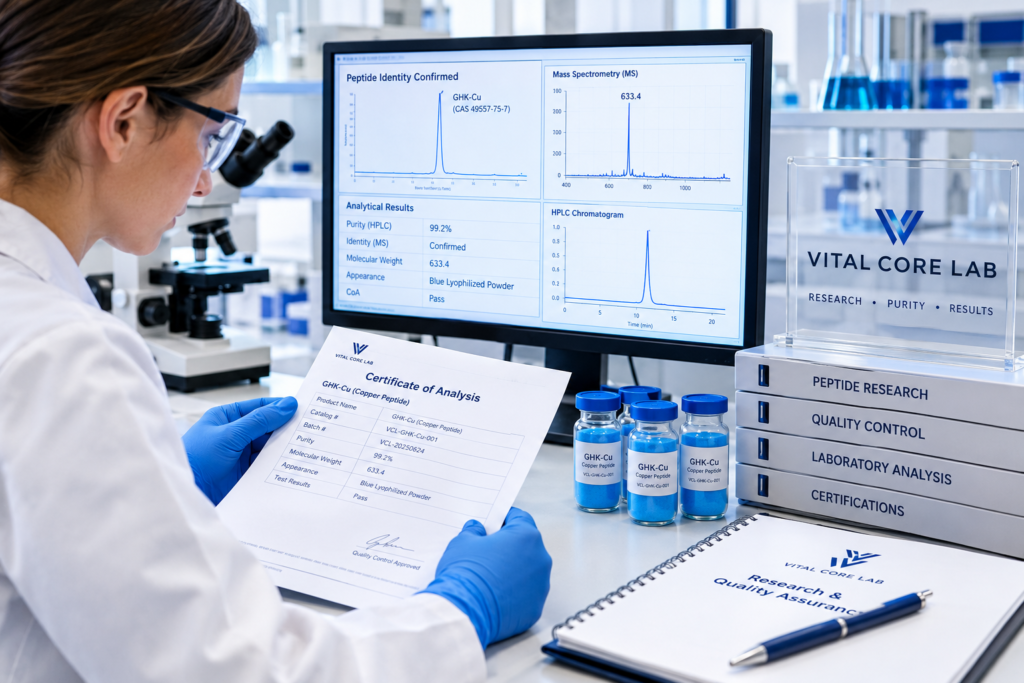
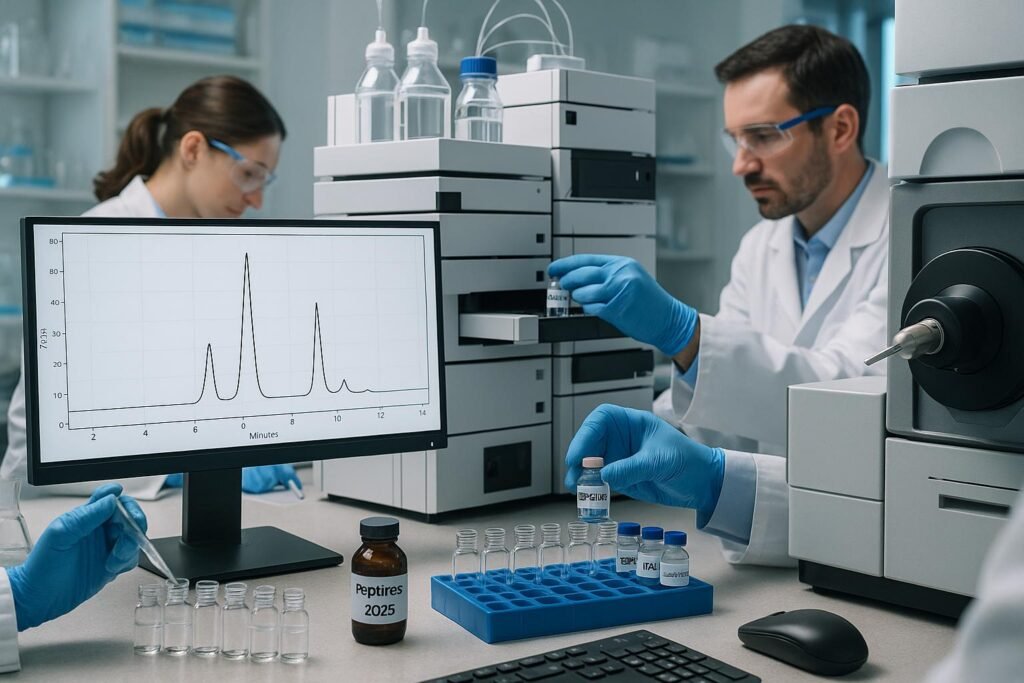
Purity and identity are related but distinct concepts. A purity measurement may indicate the relative proportion of a target component under a specified analytical method. Identity testing helps determine whether the material corresponds to the intended compound.
Neither measurement alone answers every question about quality. Analytical methods, documentation, sample handling, and the limitations of the reported results also matter.
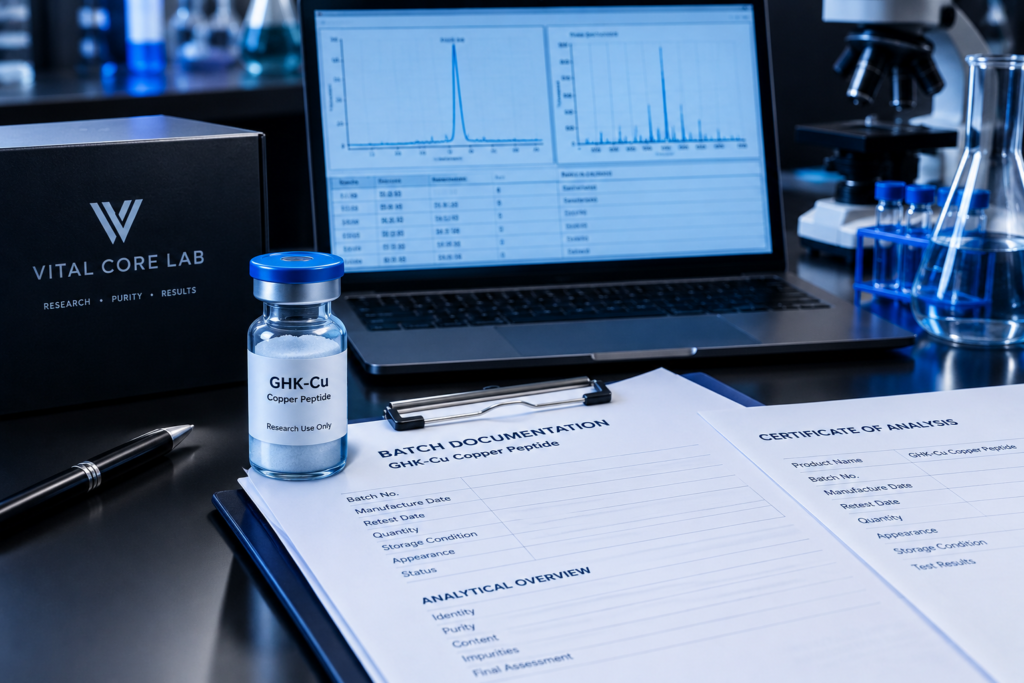
Where available, a certificate of analysis (COA) can provide useful batch-specific information. The actual contents of the document should be reviewed rather than assuming that every product has the same results.
Responsible interpretation of safety information
Laboratory research findings should not be interpreted as proof that a compound is safe for every route of exposure or every intended use.
The safety of a finished cosmetic formulation also depends on its complete composition, concentration, manufacturing quality, and intended application. Research-grade materials should not be assumed suitable for personal or cosmetic use solely because a peptide has appeared in scientific publications.
For these reasons, GHK-Cu Copper Peptide research should prioritize accurate identification, documented quality, suitable controls, and responsible interpretation.
Frequently Asked Questions About GHK-Cu Copper Peptide
What is GHK-Cu Copper Peptide?
GHK-Cu is a copper-binding tripeptide composed of glycine, histidine, and lysine. It has been studied for possible roles in cellular signaling, extracellular matrix biology, and dermal research.
What is copper tripeptide-1?
Copper tripeptide-1 is the cosmetic ingredient name commonly associated with GHK-Cu. It refers to the peptide-copper complex used in certain cosmetic formulations and investigated in related scientific research.
Does GHK-Cu Copper Peptide stimulate collagen?
Some experimental research has explored GHK-Cu and collagen-related pathways. However, the strength of the evidence depends on the specific outcome, experimental model, and study design. A proposed mechanism does not prove a particular clinical effect.
Can GHK-Cu Copper Peptide support hair growth?
GHK-Cu has attracted interest in cosmetic hair research. Nevertheless, laboratory findings should not be treated as proof that it reliably increases hair growth or treats hair loss in humans. Strong conclusions require relevant, well-designed studies.
Is GHK-Cu Copper Peptide an anti-inflammatory treatment?
It has been investigated for possible effects on selected inflammatory signaling pathways. This does not establish that it is a proven treatment for inflammatory conditions. Claims must reflect the evidence for the particular outcome.
Why are peptide purity and documentation important?
Identity, purity, and batch documentation help researchers evaluate whether a material is appropriate for a defined investigation. A COA can provide supporting analytical information, although its value depends on the methods, results, and scope of testing reported.
Final Thoughts: The Science Behind GHK-Cu Copper Peptide
GHK-Cu Copper Peptide is an interesting subject at the intersection of peptide chemistry, copper biology, dermal science, and cosmetic research. Its potential relationship with collagen-related pathways, extracellular matrix activity, inflammatory signaling, and hair follicle biology offers several directions for further investigation.
However, scientific interest and established clinical benefit are not the same. The interpretation of GHK-Cu research requires attention to experimental methods, material identity, formulation, and the relevance of the measured outcomes.
For researchers and readers interested in copper tripeptide-1, the most useful approach is to examine specific findings, compare the strength of the evidence, and avoid drawing conclusions that exceed the available data.
At Vital Core Lab, our educational content aims to make peptide science easier to understand while emphasizing clear product information, responsible research, and transparent documentation.
Explore more research education: Visit the Vital Core Lab blog and research resources to learn about peptide chemistry, molecular signaling, and emerging areas of laboratory investigation.
Educational note: This article discusses scientific research and is not medical advice. Laboratory and preclinical findings do not establish that a compound is safe or effective for human use.