
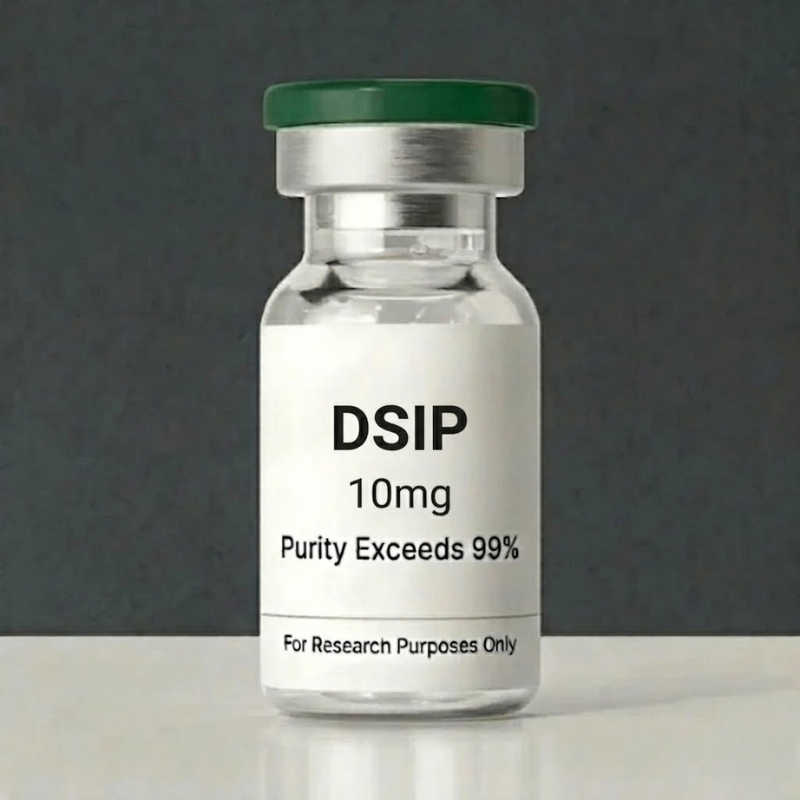
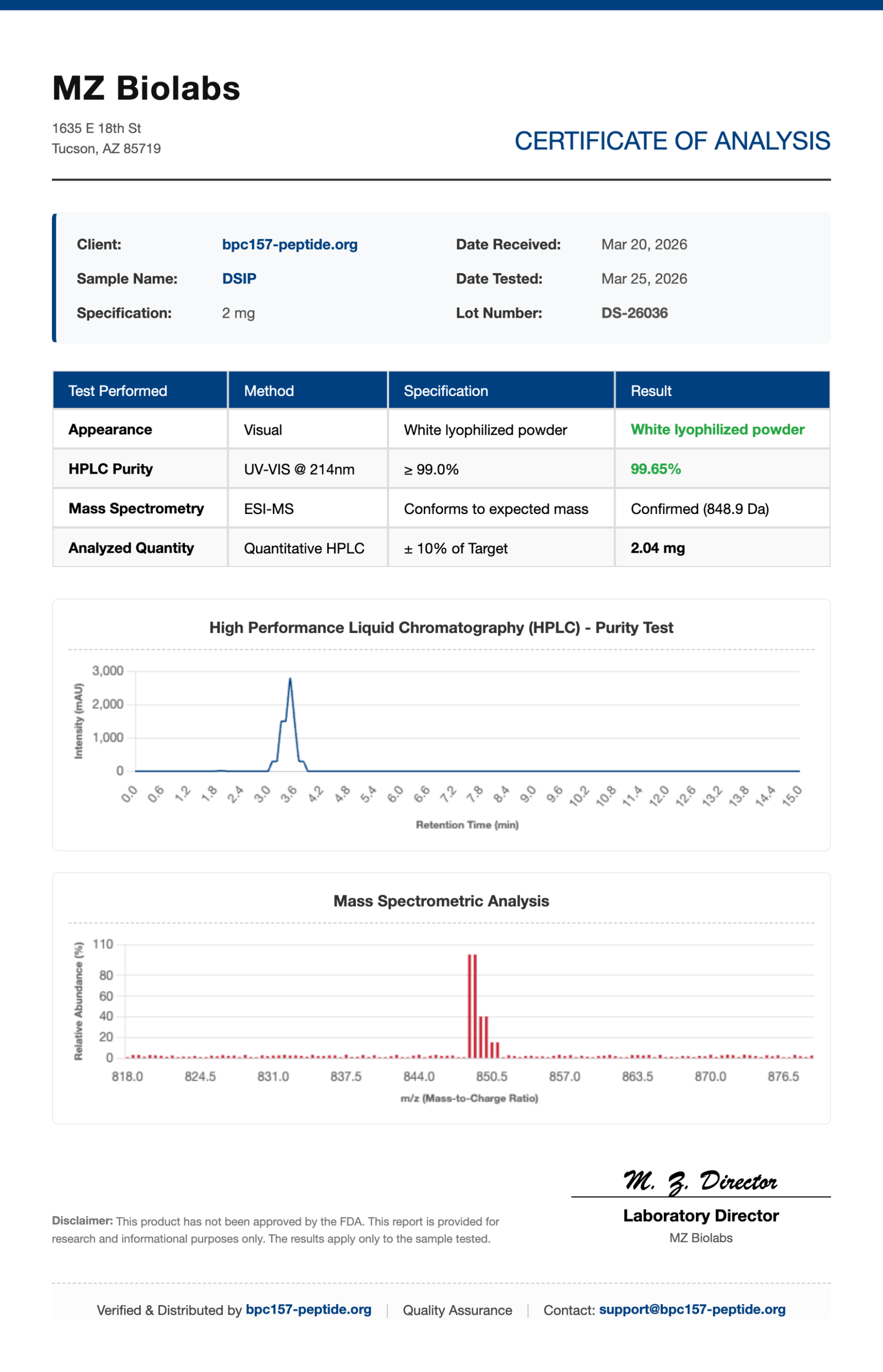



DSIP (Delta Sleep-Inducing Peptide) Research Peptide
DSIP (Delta Sleep-Inducing Peptide) is a peptide research compound commonly studied in laboratory settings because of its reported association with sleep-related biological pathways. At Vital Core Lab, this product is presented for laboratory research and scientific investigation only.
The DSIP research peptide is available in 2mg, 5mg, 10mg, and 15mg vial options, giving researchers several quantity choices for different experimental requirements.
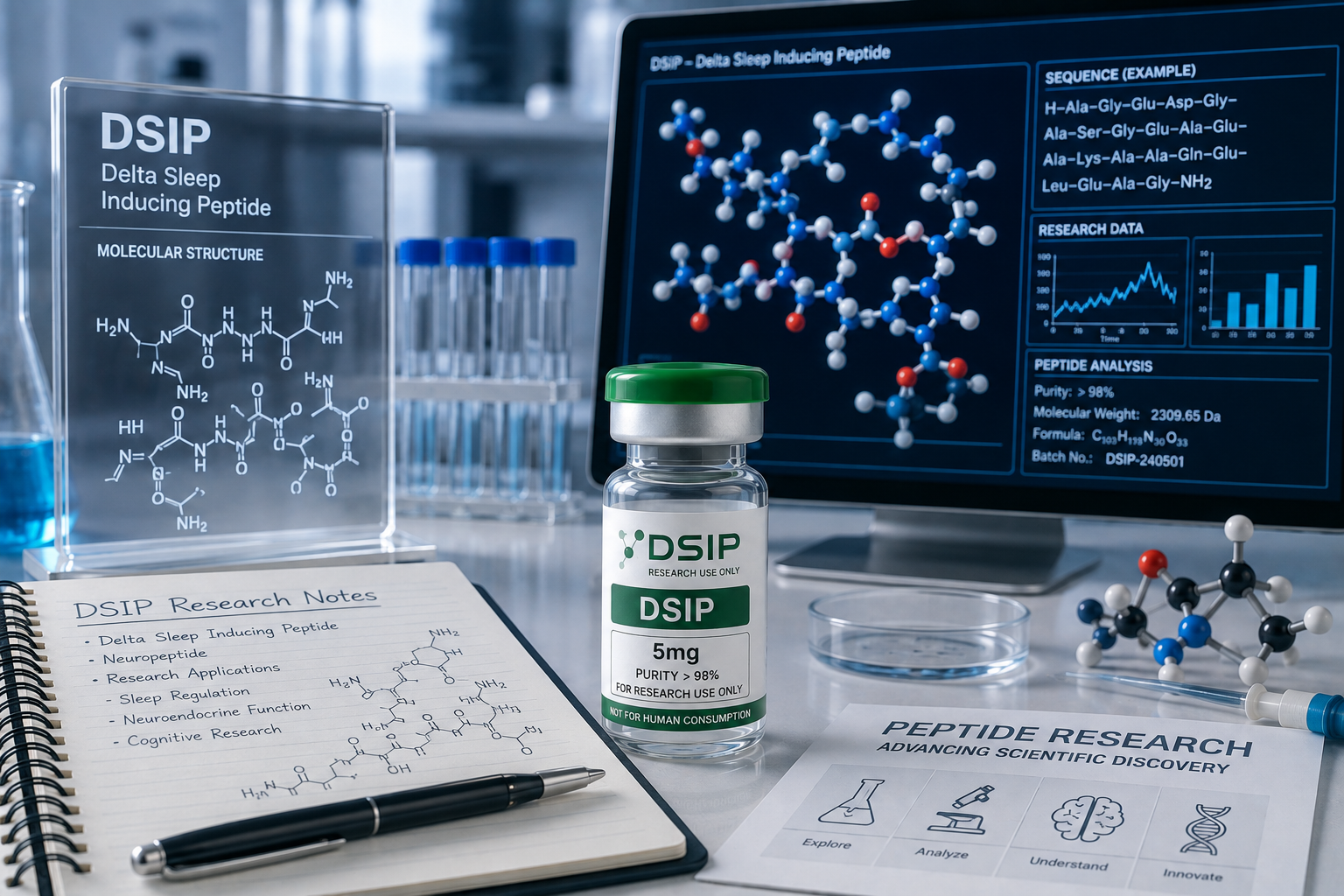
Our DSIP product is listed with >99% purity. Therefore, it is intended for researchers who need clearly identified material for controlled laboratory work.
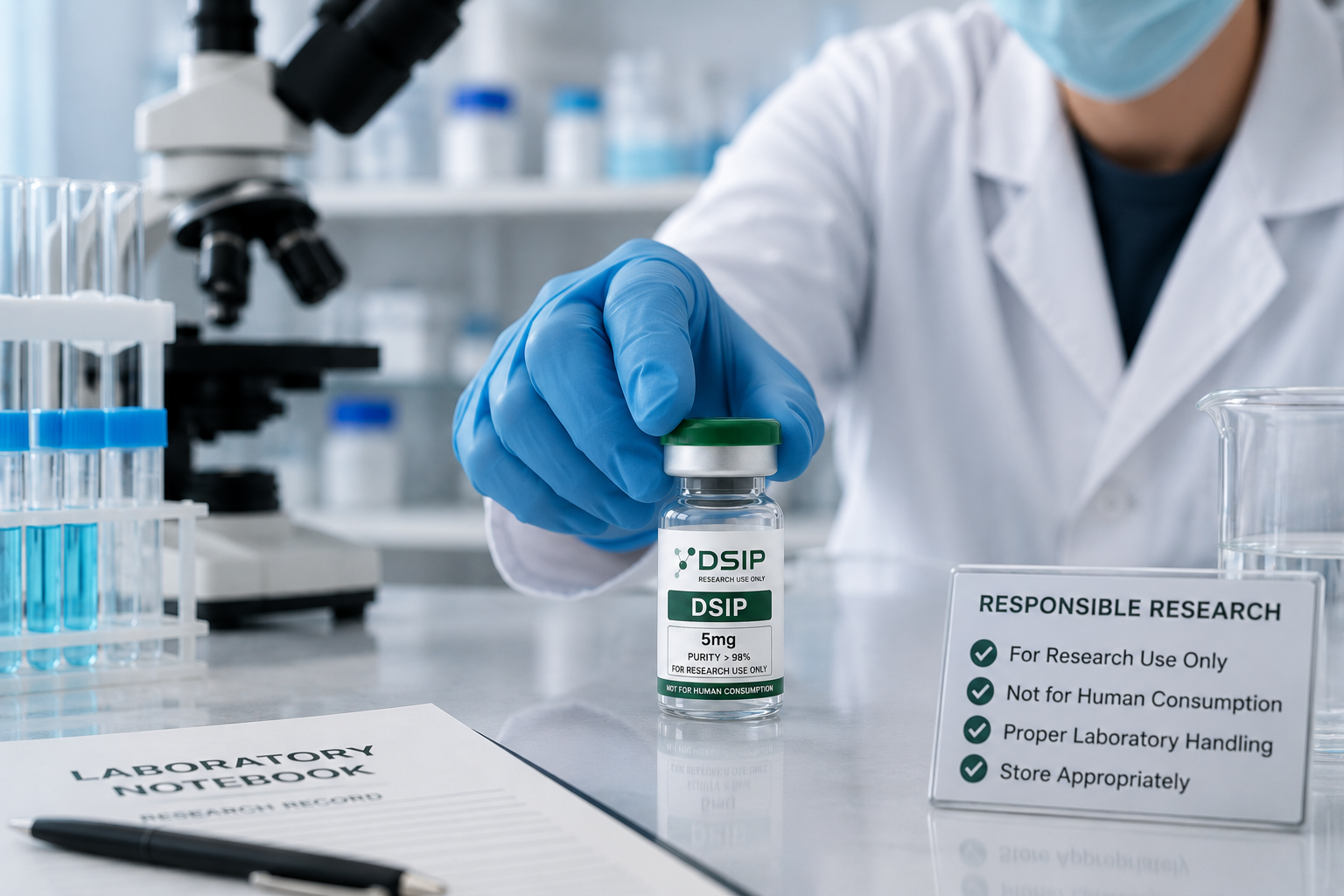
⚠️ Research Use Only: DSIP is supplied strictly for laboratory research, analytical testing, and scientific investigation. It is not intended for human consumption, self-administration, diagnosis, treatment, or prevention of any disease or medical condition.
🔬 DSIP Peptide at a Glance
| Product Detail | Information |
|---|---|
| Product Name | DSIP (Delta Sleep-Inducing Peptide) |
| Research Type | Peptide Research Compound |
| Available Sizes | 2mg, 5mg, 10mg, 15mg |
| Purity | >99% |
| Physical Form | Lyophilized powder |
| Application | Laboratory Research |
| Primary Research Area | Sleep-related biological research |
| Packaging | Research vial |
| Intended Users | Qualified researchers and laboratories |
| Human Use | Not intended for human use |
🧬 What Is DSIP?
Delta Sleep-Inducing Peptide, commonly abbreviated as DSIP, is a peptide that has attracted scientific interest because of its relationship to research involving sleep and biological rhythms.
Researchers have investigated DSIP in experimental models to better understand its potential interactions with physiological processes. However, laboratory observations should not automatically be interpreted as evidence of a medical effect in humans.
For this reason, DSIP is best approached as a research compound rather than a therapeutic product.
Furthermore, researchers may use peptide compounds such as DSIP when examining specific biological pathways under controlled conditions. The goal can be to understand molecular behavior, experimental responses, or interactions within a defined research model.
The scientific value of a peptide therefore depends on proper identification, controlled methodology, accurate documentation, and appropriate analytical procedures.
🔎 DSIP Research Focus
DSIP has historically been investigated in connection with areas such as:
- Sleep-related biological research
- Neurobiology research
- Peptide signaling studies
- Circadian and biological rhythm research
- Experimental physiology
- Molecular research
- Laboratory peptide characterization
- Comparative peptide studies
These research areas are intended to provide scientific context. They should not be interpreted as claims that DSIP produces a particular clinical outcome.
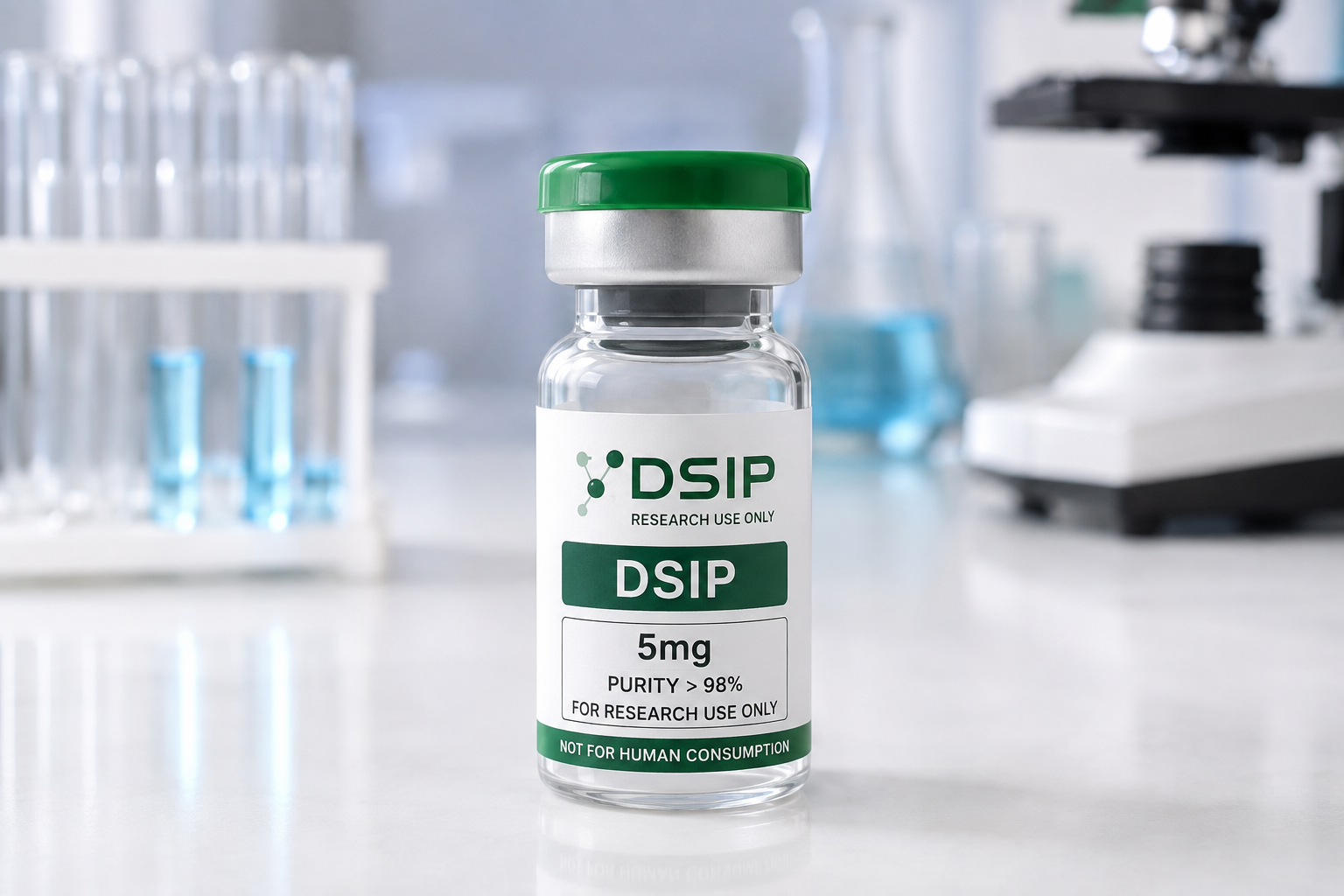
🧪 DSIP Peptide and Laboratory Research
Laboratory peptide research requires a structured approach.
First, researchers need to establish the identity of the material being studied. Next, they need to document the quantity, batch information, purity information, and storage conditions.
DSIP can be included in research workflows where investigators are examining peptide characteristics or sleep-related biological mechanisms.
However, the specific experimental use should always be determined by the research protocol.
A controlled laboratory environment is especially important when working with peptide materials. Researchers should follow appropriate laboratory procedures, use suitable analytical equipment, and maintain accurate records throughout the project.
Moreover, researchers should avoid treating product descriptions as experimental protocols. Product information provides identification and general research context. It does not replace validated laboratory procedures.
📊 DSIP Product Specifications
| Specification | DSIP Information |
|---|---|
| Compound | DSIP |
| Full Name | Delta Sleep-Inducing Peptide |
| Purity | >99% |
| Sizes | 2mg / 5mg / 10mg / 15mg |
| Format | Lyophilized research material |
| Research Category | Peptide Research |
| Research Interest | Sleep and neurobiological studies |
| Use Classification | Laboratory Research Only |
🧫 Why Purity Matters in Peptide Research
Purity is an important consideration when selecting a research peptide.
A stated purity level provides researchers with useful information about the composition of the supplied material. In this case, the DSIP product is listed at >99% purity.
However, purity should always be considered alongside other quality information.
For example, researchers may also review:
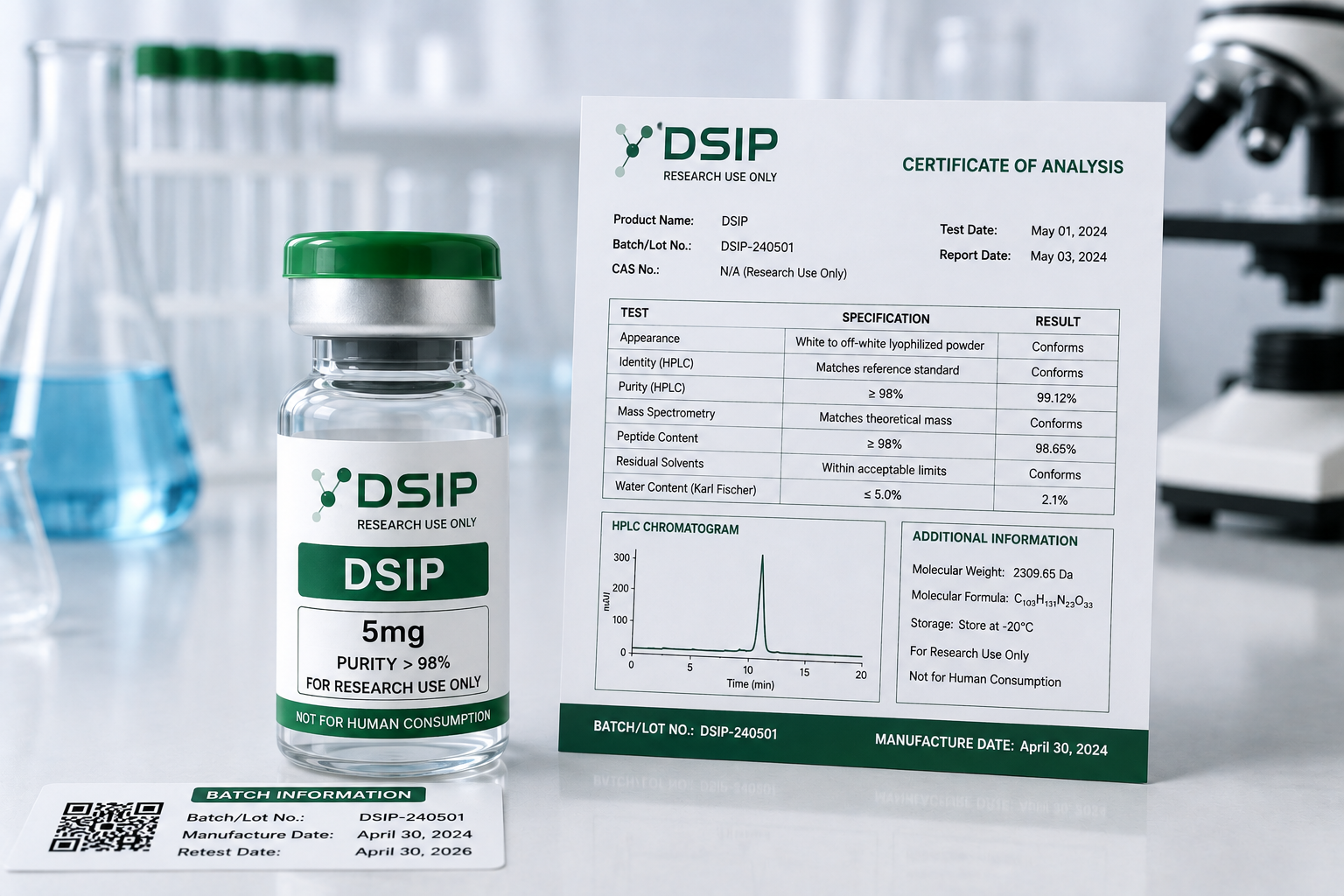
- Batch or lot identification
- Analytical documentation
- Product identity
- Storage requirements
- Manufacturing information
- Testing documentation
- Physical condition of the vial
Together, these details provide a more complete picture of the research material.
Therefore, a purity percentage should not be viewed in isolation. Proper documentation and analytical verification remain important parts of responsible research.
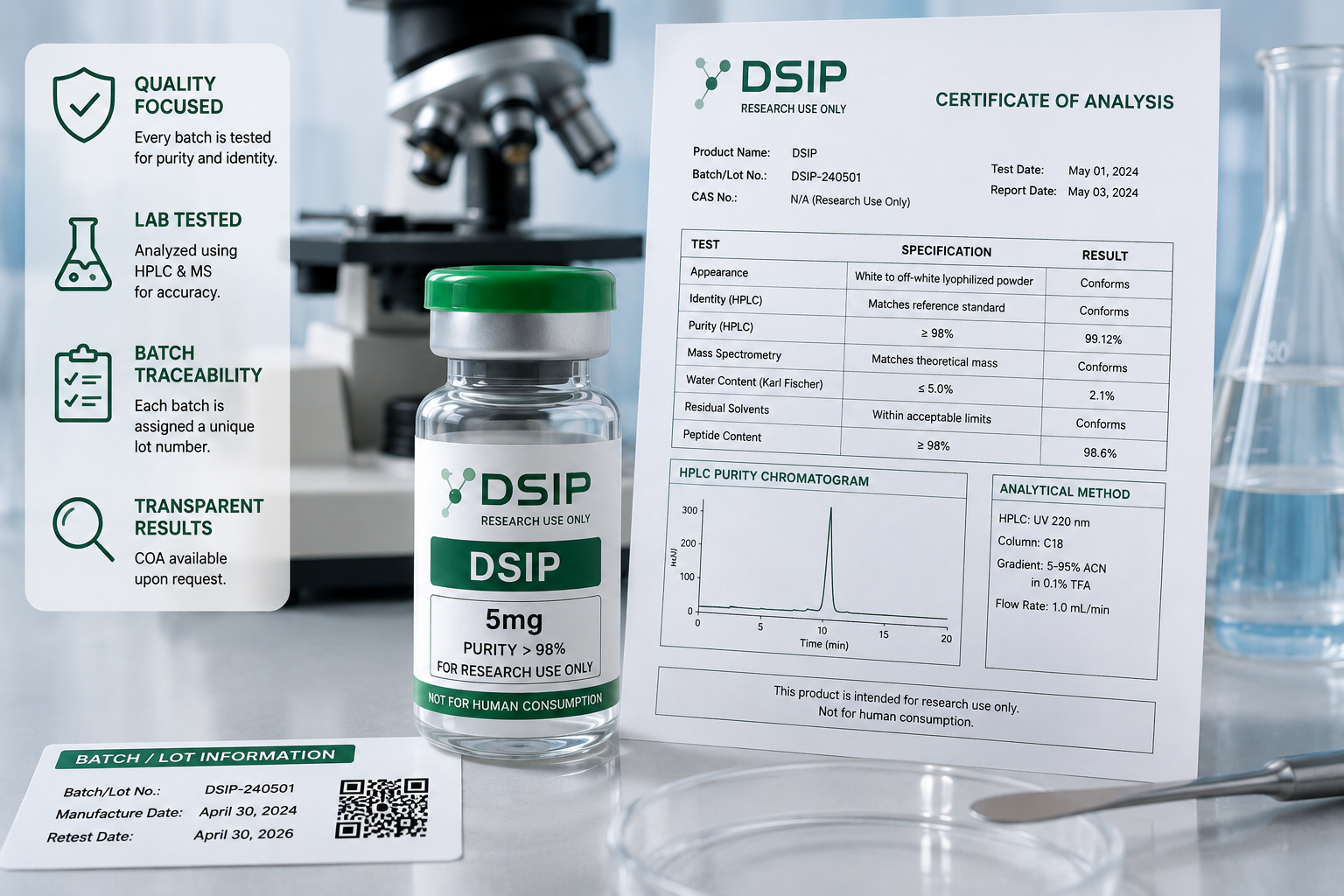
🧬 Understanding the DSIP Research Compound
DSIP is a peptide compound that has been investigated within scientific research relating to sleep-associated biological processes.
The term “delta sleep-inducing peptide” comes from historical research into its potential relationship with sleep-related activity. Because the scientific literature involves experimental models and different research conditions, results should be interpreted carefully.
In addition, peptide research can produce different observations depending on the model, methodology, concentration, analytical approach, and experimental conditions.
That is why responsible scientific communication matters.
Rather than presenting DSIP as a proven sleep treatment, researchers can evaluate it as a compound of scientific interest. This approach keeps the focus on experimentation, observation, and evidence.
🔬 Potential Research Areas for DSIP
1. Sleep-Related Research
DSIP has been studied in experimental research involving sleep-related processes.
Researchers may investigate how peptide compounds interact with biological systems associated with sleep or rest-related mechanisms.
However, experimental findings should remain within the context of the specific model used.
2. Neurobiological Research
Another area of interest is neurobiology.
Researchers studying peptide signaling may examine how compounds interact with biological pathways involving the nervous system.
DSIP can therefore be considered within broader laboratory investigations of peptide-mediated biological activity.
3. Biological Rhythm Research
Sleep is closely connected with biological rhythms.
Consequently, researchers interested in circadian biology may examine compounds within controlled experimental models designed to explore biological timing.
Such research can help researchers better understand complex physiological processes.
4. Peptide Characterization
DSIP can also be relevant to analytical research.
Researchers may examine the characteristics of a peptide material using suitable laboratory techniques.
This can include identity confirmation, purity assessment, stability evaluation, or comparative analysis.
📋 Research Planning Before Using DSIP
Before laboratory work begins, researchers should establish a clear experimental plan.
A simple preparation checklist can help.
| Checklist Item | Status |
|---|---|
| Product identity confirmed | ✓ |
| Quantity confirmed | ✓ |
| Batch information recorded | ✓ |
| Purity information reviewed | ✓ |
| Documentation reviewed | ✓ |
| Storage requirements reviewed | ✓ |
| Laboratory protocol established | ✓ |
| Appropriate equipment available | ✓ |
| Research records prepared | ✓ |
This process can reduce avoidable errors.
More importantly, it helps maintain consistency between experiments.
Researchers should also document relevant observations during the study. Accurate records can make later analysis easier and can help researchers compare results across different experimental conditions.
🧪 DSIP Storage and Handling Considerations
Peptide materials should be handled according to appropriate laboratory procedures and the applicable product documentation.
Storage requirements can vary depending on the compound, formulation, packaging, and research conditions. Therefore, researchers should review the specific storage information supplied with the product.
The vial should also remain properly identified during laboratory storage.
Good research practices include:
- Keeping product labels intact
- Recording batch information
- Avoiding unnecessary exposure to unsuitable conditions
- Following applicable laboratory handling procedures
- Maintaining organized research records
- Reviewing documentation before beginning experiments
Proper handling is important because environmental conditions can affect research materials.
⚗️ DSIP and Experimental Consistency
Consistency is an important part of laboratory research.
When researchers compare results, they need to know that experimental conditions were controlled as carefully as possible.
For peptide research, this may involve documenting:
- Material identity
- Batch information
- Research quantity
- Experimental conditions
- Storage conditions
- Analytical method
- Observation period
- Measurement method
By recording these details, researchers can better understand differences between experiments.
Furthermore, consistent documentation can support reproducibility.
The exact methodology will depend on the research objective and validated laboratory protocol. Therefore, DSIP product information should be used as a reference for material identification rather than as a substitute for experimental instructions.
📦 Available DSIP Vial Sizes
Vital Core Lab offers DSIP in several research quantities.
2mg DSIP Vial
The 2mg option provides a smaller quantity for research projects where a limited amount of material is appropriate.
5mg DSIP Vial
The 5mg option provides an intermediate quantity for laboratories requiring more material for their planned research work.
10mg DSIP Vial
The 10mg option is suitable for research workflows requiring a larger quantity of the compound.
15mg DSIP Vial
The 15mg option provides the largest listed quantity in this product range.
📊 DSIP Size Comparison
| Option | Quantity | Research Consideration |
|---|---|---|
| 2mg | 2mg | Smaller research requirement |
| 5mg | 5mg | Moderate research requirement |
| 10mg | 10mg | Larger research requirement |
| 15mg | 15mg | Highest listed quantity |
Researchers should select the quantity that matches their validated experimental requirements.
🧬 DSIP in Scientific Education
Peptide research is also useful from an educational perspective.
Students and researchers can use peptide compounds as subjects when learning about molecular biology, analytical science, experimental physiology, and laboratory documentation.
DSIP provides an example of how a peptide can become the focus of scientific investigation.
The broader lesson is important: biological compounds should be evaluated using evidence rather than assumptions.
For example, a compound’s name may suggest a biological function, but its name alone does not establish a proven clinical effect.
Instead, researchers should examine published evidence, experimental design, analytical data, and the limitations of each study.
This approach encourages careful interpretation.
🔍 What Researchers Should Review Before Purchasing DSIP
Choosing research material requires more than looking at quantity.
Researchers should consider several factors.
Product Identity
Confirm that the material corresponds to the intended research compound.
Purity Information
Review the stated purity and available analytical documentation.
Quantity
Select a vial size that aligns with the planned research requirements.
Documentation
Review available batch and quality information before beginning laboratory work.
Storage
Understand the applicable storage requirements and maintain appropriate conditions.
Supplier Information
Researchers should also maintain clear supplier and purchasing records.
Together, these steps support better research organization.
📑 Documentation and Quality Information
Documentation plays an important role in responsible peptide research.
A well-organized laboratory record may include product identification, batch information, quantity, purity information, date received, storage conditions, and relevant analytical documents.
For DSIP, these records can help researchers maintain traceability within their laboratory workflow.
Where applicable, researchers should also retain analytical documentation associated with the material.
It is important, however, not to confuse a product description with an independent laboratory report. Claims about analytical results should always be supported by the relevant documentation.
🧪 DSIP Research Workflow
A simple research workflow may follow several stages:
1. Product Selection
Choose the appropriate DSIP quantity for the planned research.
2. Documentation Review
Review product information and available analytical documentation.
3. Material Receipt
Record the product and batch information when received.
4. Storage
Place the material under the appropriate documented storage conditions.
5. Experimental Planning
Establish the laboratory protocol before beginning work.
6. Research
Conduct the experiment using validated laboratory procedures.
7. Documentation
Record observations and relevant experimental information.
8. Analysis
Evaluate results using suitable scientific methods.
This structured approach helps maintain consistency from product receipt through final analysis.
🧠 Responsible Interpretation of DSIP Research
Scientific research requires careful interpretation.
A laboratory observation does not automatically establish a human health benefit. Likewise, findings from animal or cellular models should not automatically be applied to people.
For DSIP, this distinction is particularly important because the compound has been discussed in relation to sleep-related research.
The appropriate approach is therefore to evaluate available evidence within its original experimental context.
Researchers should consider:
- Study design
- Research model
- Experimental conditions
- Sample size
- Analytical method
- Observed outcomes
- Study limitations
- Reproducibility
This helps prevent conclusions that go beyond the available evidence.
⚠️ Important Research-Use Disclaimer
DSIP (Delta Sleep-Inducing Peptide) is offered by Vital Core Lab for laboratory research purposes only.
This product is not intended for human or veterinary consumption or administration.
It is not marketed as a drug, dietary supplement, medical treatment, or therapeutic product.
The term “Delta Sleep-Inducing Peptide” describes the compound’s research identity and historical scientific context. It should not be interpreted as a claim that the product induces sleep or treats sleep-related conditions.
Researchers are responsible for following applicable laws, regulations, institutional policies, laboratory safety requirements, and appropriate scientific procedures.
🧬 Why Choose DSIP for Laboratory Research?
DSIP can be useful to researchers looking for a peptide compound associated with sleep-related scientific investigation.
The product provides several practical features:
🔹 Multiple Quantity Options
With 2mg, 5mg, 10mg, and 15mg options, researchers can choose a quantity appropriate for their project.
🔹 Clearly Identified Compound
The product is identified as DSIP (Delta Sleep-Inducing Peptide) for straightforward research documentation.
🔹 Stated >99% Purity
The product is listed with a purity specification of >99%.
🔹 Research-Focused Presentation
The product is presented for laboratory research and scientific investigation.
🔹 Clear Product Information
Quantity, purity, research classification, and other relevant product details are provided to support organized purchasing and documentation.
🔬 DSIP Research Summary
DSIP, or Delta Sleep-Inducing Peptide, is a peptide compound that has been investigated in scientific research involving sleep-related and neurobiological processes.
At Vital Core Lab, DSIP is available in 2mg, 5mg, 10mg, and 15mg research vial options with a listed purity of >99%.
Researchers can consider DSIP for controlled laboratory investigations where peptide compounds are being evaluated.
However, responsible research requires careful documentation and appropriate experimental design.
Therefore, researchers should verify product identity, review available quality information, maintain appropriate storage, and follow their established laboratory protocols.
Most importantly, research findings should be interpreted according to the evidence available rather than through assumptions based on the compound’s name.
📌 DSIP Peptide Key Facts
| Key Fact | Details |
|---|---|
| Compound | DSIP |
| Full Name | Delta Sleep-Inducing Peptide |
| Purity | >99% |
| Available Quantities | 2mg, 5mg, 10mg, 15mg |
| Product Format | Lyophilized research material |
| Research Interest | Sleep-related and neurobiological research |
| Product Purpose | Laboratory research |
| Human Use | Not intended |
| Documentation | Review available product documentation |
🧪 Final Research Note
When selecting a research peptide, quality information and documentation should remain central to the purchasing decision.
DSIP provides researchers with a clearly identified peptide compound for laboratory investigation. Its range of vial sizes also gives laboratories flexibility when planning research quantities.
Furthermore, the stated >99% purity provides an important product specification for researchers reviewing available materials.
As with any research compound, however, the product should be handled and evaluated within an appropriate scientific framework.
Vital Core Lab presents DSIP as a research material for qualified laboratory investigation, scientific education, and analytical research—not as a product for human use.
Reviews
There are no reviews yet.