



GLUTATHIONE
🔬 Glutathione Research for Redox and Antioxidant Studies
Glutathione, also known as Reduced GSH or L-Glutathione, is a naturally occurring tripeptide composed of glutamate, cysteine, and glycine. It is one of the most important low-molecular-weight thiols studied in cellular biology and redox research.
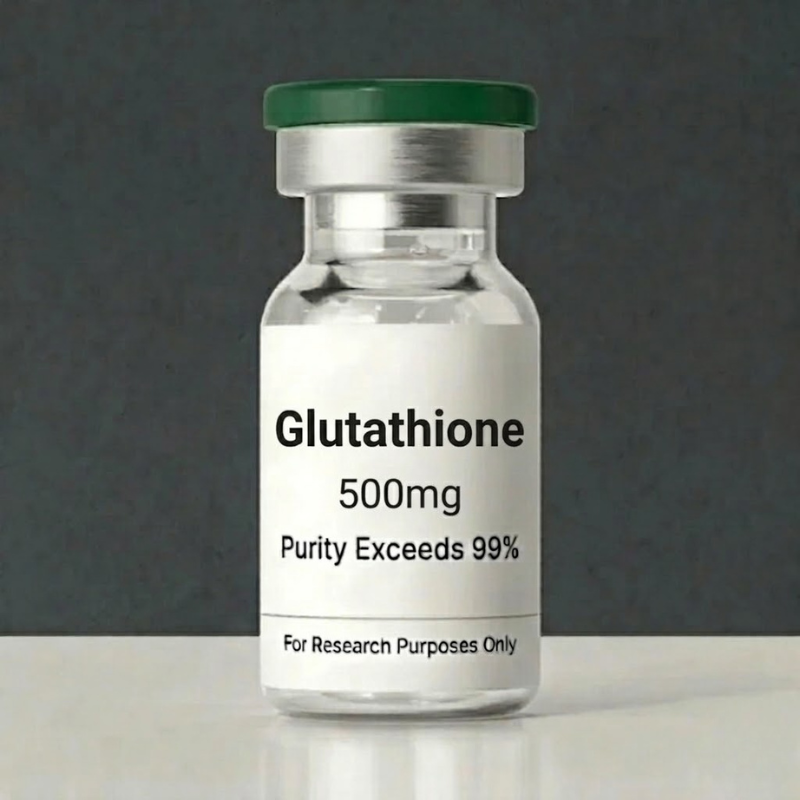
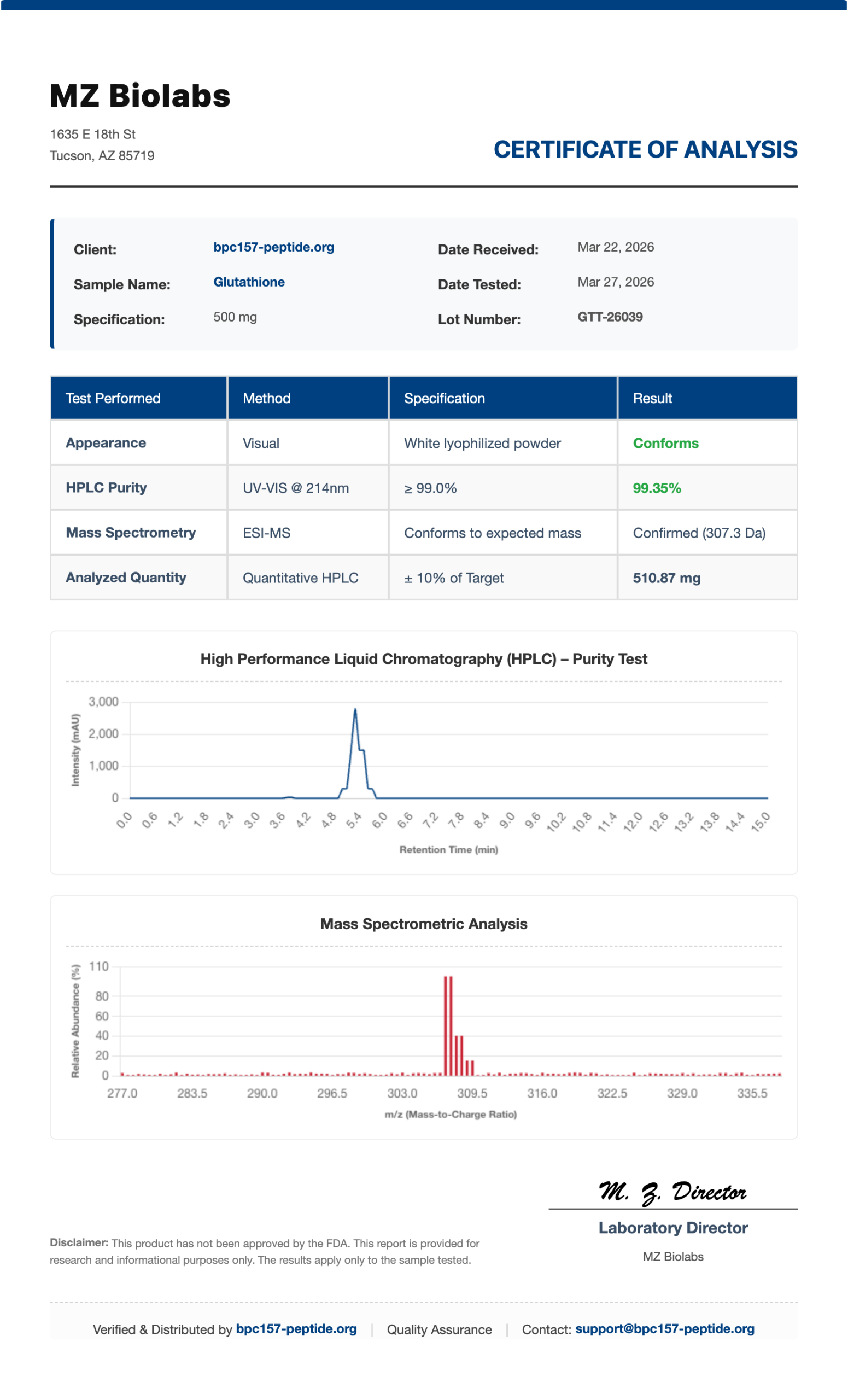
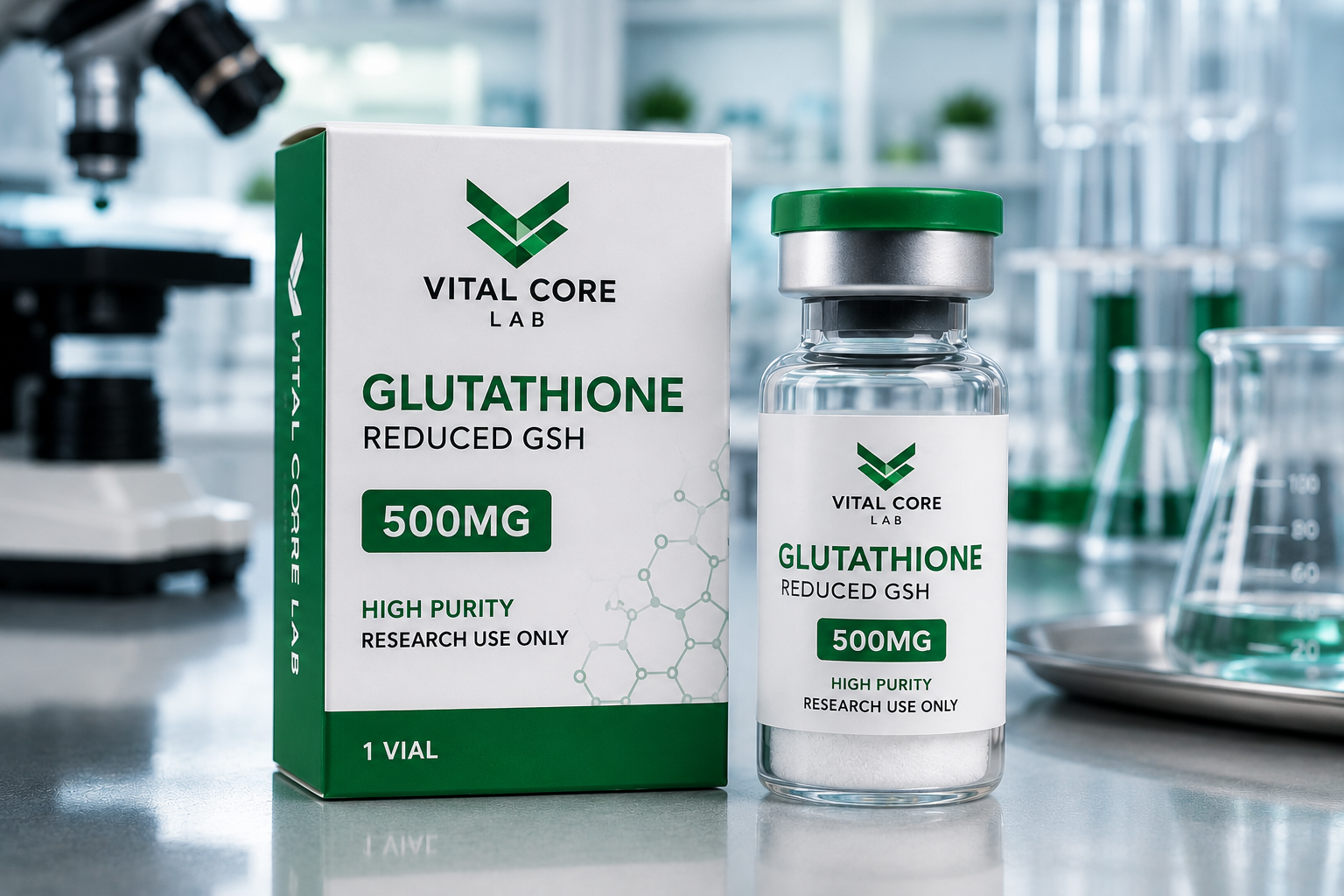
This Glutathione product is available in 500mg, 1000mg, and 1500mg vial options. It is listed at >99% purity, subject to applicable product specifications, analytical testing, and batch documentation.
Glutathione research focuses on many important cellular processes. For example, scientists study its role in antioxidant defense, redox balance, protein regulation, cellular signaling, and glutathione-dependent enzyme systems.
Furthermore, reduced glutathione can participate directly in reactions involving reactive oxygen species and electrophilic compounds. It also serves as a cofactor or substrate in several important enzymatic systems, including glutathione peroxidases and glutathione transferases.
For this reason, Glutathione remains an important compound in biochemical, molecular, cellular, and oxidative stress research.
The product is supplied for controlled laboratory and scientific research. Before beginning an experiment, researchers should review the exact product specifications and applicable batch documentation.
⚠️ For research use only. Not for human or animal consumption.
🧪 Glutathione Product Specifications
The following information should match your actual product documentation before publication.
| Specification | Product Information |
|---|---|
| Product Name | Glutathione |
| Alternative Name | Reduced GSH / L-Glutathione |
| Product Type | Research tripeptide |
| Available Sizes | 500mg, 1000mg, 1500mg |
| Chemical Formula | C₁₀H₁₇N₃O₆S |
| CAS Number | 70-18-8 |
| Molecular Weight | 307.32 g/mol |
| Purity | >99%, subject to applicable documentation |
| Research Focus | Redox and antioxidant research |
| Research Areas | Cellular, biochemical, and molecular research |
| Storage | Follow applicable product label and documentation |
| Intended Use | Laboratory and scientific research only |
Glutathione is commonly represented as γ-L-glutamyl-L-cysteinyl-glycine. Its cysteine residue contains a reactive sulfhydryl group that is important to its chemical and biological functions.
🧬 Understanding Glutathione Research
🔬 Glutathione and Cellular Redox Balance
One of the most studied roles of Glutathione involves cellular redox balance.
Cells constantly manage chemical reactions involving oxidation and reduction. These reactions are part of normal biological activity. However, changes in redox balance can affect proteins, lipids, signaling pathways, and other cellular components.
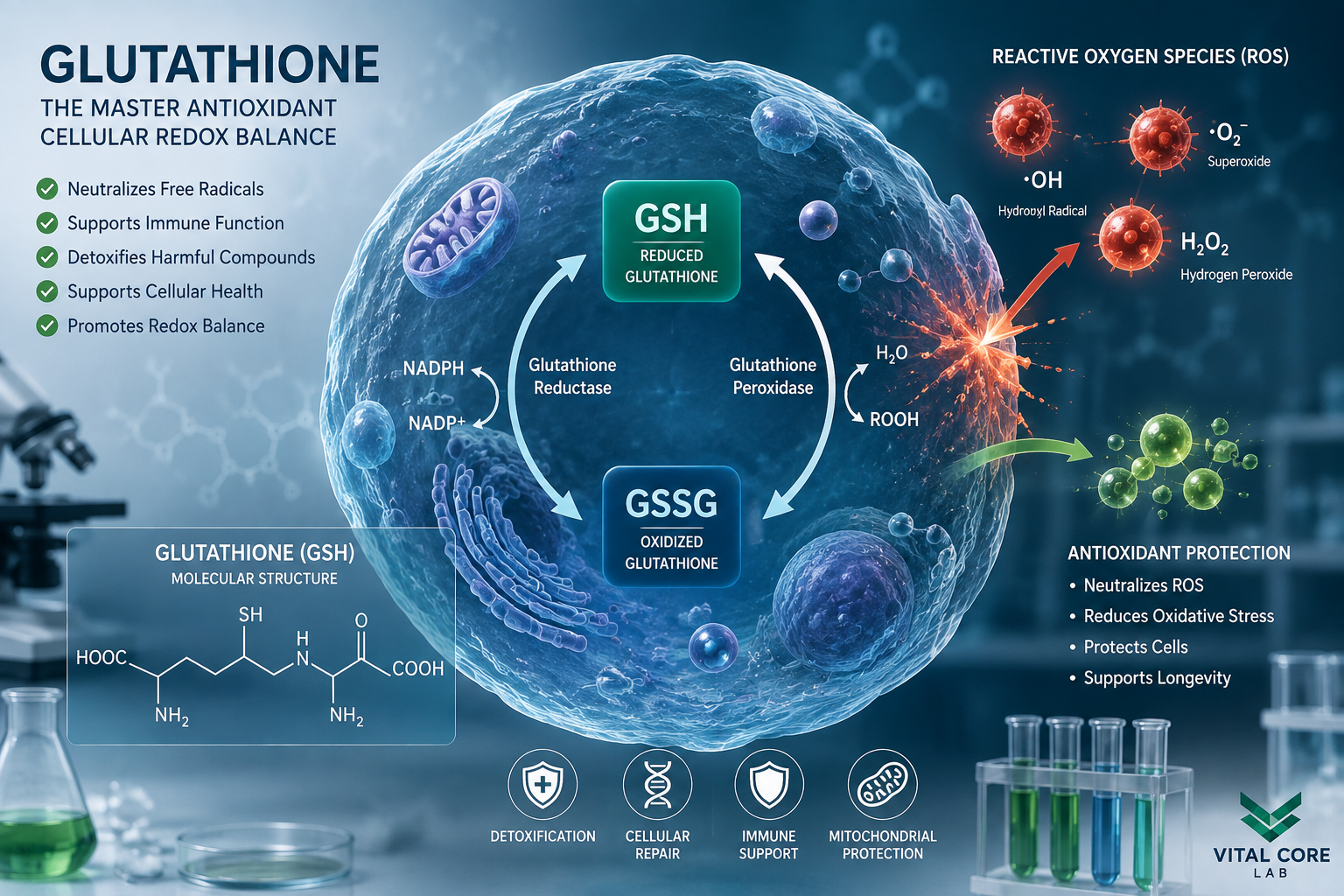
Reduced glutathione, known as GSH, and oxidized glutathione, known as GSSG, form an important redox system within cells.
Therefore, researchers may study the relationship between:
- GSH concentrations
- GSSG concentrations
- Cellular redox state
- Oxidative stress markers
- Protein oxidation
- Enzyme activity
- Cellular signaling responses
Glutathione can also participate in reversible changes to protein cysteine residues. This process is associated with redox signaling and can affect protein activity under different experimental conditions.
As a result, Glutathione research may help scientists examine how changes in redox conditions influence specific cellular processes.
⚗️ Glutathione and Antioxidant Research
Glutathione is frequently described in scientific literature as a major cellular antioxidant and a central component of antioxidant defense systems.
However, its role is more complex than simply acting as a general free-radical scavenger.
For example, glutathione participates in enzyme-driven reactions. Glutathione peroxidases can use GSH in reactions that reduce hydrogen peroxide and certain organic peroxides. During these reactions, GSH is converted into oxidized glutathione.
Glutathione reductase can then help regenerate GSH using reducing equivalents supplied through cellular metabolism.
This creates an important research cycle involving:
GSH → oxidation → GSSG → regeneration → GSH
Researchers may investigate this cycle to study cellular responses under controlled oxidative conditions.
Possible research areas include:
- Oxidative stress models
- Reactive oxygen species research
- Lipid oxidation studies
- Hydrogen peroxide research
- Redox enzyme activity
- Antioxidant pathway analysis
- Cellular stress responses
Nevertheless, results can vary depending on the experimental system. Therefore, researchers should use suitable controls and carefully define their analytical methods.
🧫 Glutathione and Cellular Signaling Research
🧬 Glutathione Research in Molecular Pathways
Glutathione is also important in studies involving cellular and molecular signaling.
Redox changes can influence the activity of proteins that contain sensitive cysteine residues. Consequently, researchers may examine whether changes in glutathione status affect specific signaling pathways.
Scientific literature discusses processes such as S-glutathionylation, in which glutathione can become associated with protein cysteine residues under particular conditions. This reversible modification can influence protein function and cellular signaling.
Researchers may investigate:
- Redox-sensitive proteins
- Protein thiol regulation
- Signal transduction
- Cellular stress pathways
- Gene expression research
- Protein folding research
- Cellular growth models
- Apoptosis-related pathways
Each study requires its own experimental design. Therefore, findings should be interpreted according to the specific model, conditions, and analytical procedures used.
🧪 Glutathione and Enzyme Research
Another major area of interest is Glutathione-dependent enzyme research.
Several enzyme systems interact directly or indirectly with glutathione. These include:
- Glutathione peroxidases
- Glutathione transferases
- Glutathione reductase
- Glyoxalase-related systems
For example, glutathione transferases are involved in reactions that conjugate glutathione with certain electrophilic compounds. These processes are widely studied in biochemical and cellular research.
Consequently, researchers may examine enzyme activity alongside glutathione concentration, redox conditions, or selected experimental compounds.
This type of research may involve:
- Enzyme kinetics
- Protein interaction studies
- Biochemical assays
- Cellular metabolism studies
- Oxidative stress models
- Electrophile research
⚙️ Glutathione Research Applications
Glutathione may be used in controlled scientific studies involving several areas of biological and biochemical research.
Depending on the experimental design, researchers may investigate:
- Cellular redox balance
- Antioxidant defense pathways
- Oxidative stress
- Reactive oxygen species
- Glutathione-dependent enzymes
- Protein oxidation
- Protein thiol research
- Cellular signaling
- Biochemical pathways
- Molecular biology
- Mitochondrial research
- Cellular stress models
- Metabolic research
Furthermore, glutathione is relevant to studies involving different cellular compartments.
Mitochondria, for example, contain glutathione that is important in research involving respiration-related reactive oxygen species and oxidative processes.
Therefore, researchers may also investigate glutathione in relation to:
- Mitochondrial redox balance
- Cellular respiration
- Oxidative signaling
- Lipid hydroperoxide research
- Cellular stress responses
These examples describe scientific research contexts only.
They are not medical claims. They do not establish that the product diagnoses, treats, cures, or prevents any disease.
🔬 Glutathione and Mitochondrial Research
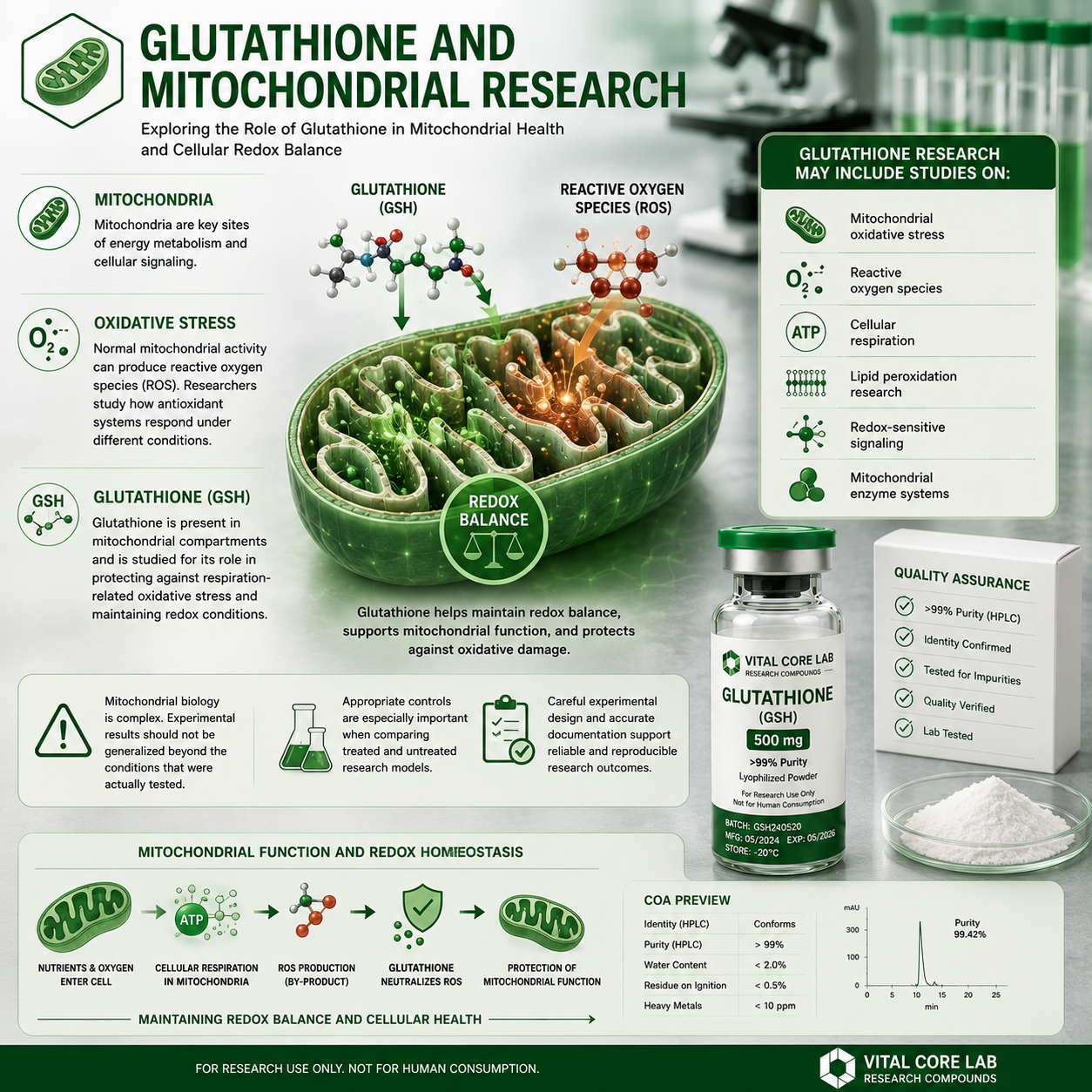
Mitochondria are important sites of energy metabolism and cellular signaling.
Because normal mitochondrial activity can involve the production of reactive oxygen species, researchers study how mitochondrial antioxidant systems respond under different conditions.
Glutathione is present in mitochondrial compartments and is studied for its role in protecting against respiration-related oxidative stress and in maintaining redox conditions.
Therefore, Glutathione research may include controlled studies involving:
- Mitochondrial oxidative stress
- Reactive oxygen species
- Cellular respiration
- Lipid peroxidation research
- Redox-sensitive signaling
- Mitochondrial enzyme systems
However, mitochondrial biology is complex. Thus, experimental results should not be generalized beyond the conditions that were actually tested.
Appropriate controls are especially important when comparing treated and untreated research models.
✨ Glutathione and Aesthetic Research
Glutathione is also discussed in scientific research involving melanogenesis, skin biology, oxidative stress, and tissue-related pathways.
Research has examined how glutathione-related redox processes may interact with melanogenesis and other biological mechanisms relevant to skin science. A recent systematic review describes glutathione as a central regulator in redox homeostasis and discusses its research relevance to melanogenesis and dermatology, while also noting that delivery methods and safety require careful evaluation.
Therefore, laboratory research may investigate:
- Melanogenesis pathways
- Tyrosinase-related research
- Cellular redox conditions
- Skin cell biology
- Oxidative stress markers
- Tissue regeneration pathways
Importantly, these research topics should not be presented as guaranteed cosmetic outcomes for the specific product.
Avoid claims such as:
- Guaranteed skin whitening
- Permanent skin lightening
- Proven anti-aging treatment
- Detoxification treatment
- Medical skin therapy
Instead, describe the product accurately as a research compound used in controlled laboratory studies.
📊 Glutathione Research Information at a Glance
| Feature | Product Information |
|---|---|
| 🔬 Product | Glutathione |
| 🧪 Form | Reduced GSH / L-Glutathione |
| 📦 Available Sizes | 500mg, 1000mg, 1500mg |
| ⚗️ Research Focus | Redox and antioxidant research |
| 🧬 Research Areas | Cellular and molecular research |
| 🧫 Key Research Systems | GSH, GSSG, redox enzymes |
| ✨ Purity Listing | >99%, subject to documentation |
| 📄 Documentation | Review applicable batch and quality records |
| 🧪 Product Type | Research tripeptide |
| ⚠️ Use Restriction | Research use only |
This overview provides general scientific context. However, final specifications and claims should always match the actual product and batch documentation.
📄 Glutathione Quality and Documentation
Quality information is important for reproducible research.
Therefore, before beginning laboratory work, researchers should review available documentation for the specific product and batch.
Depending on your actual records, this may include:
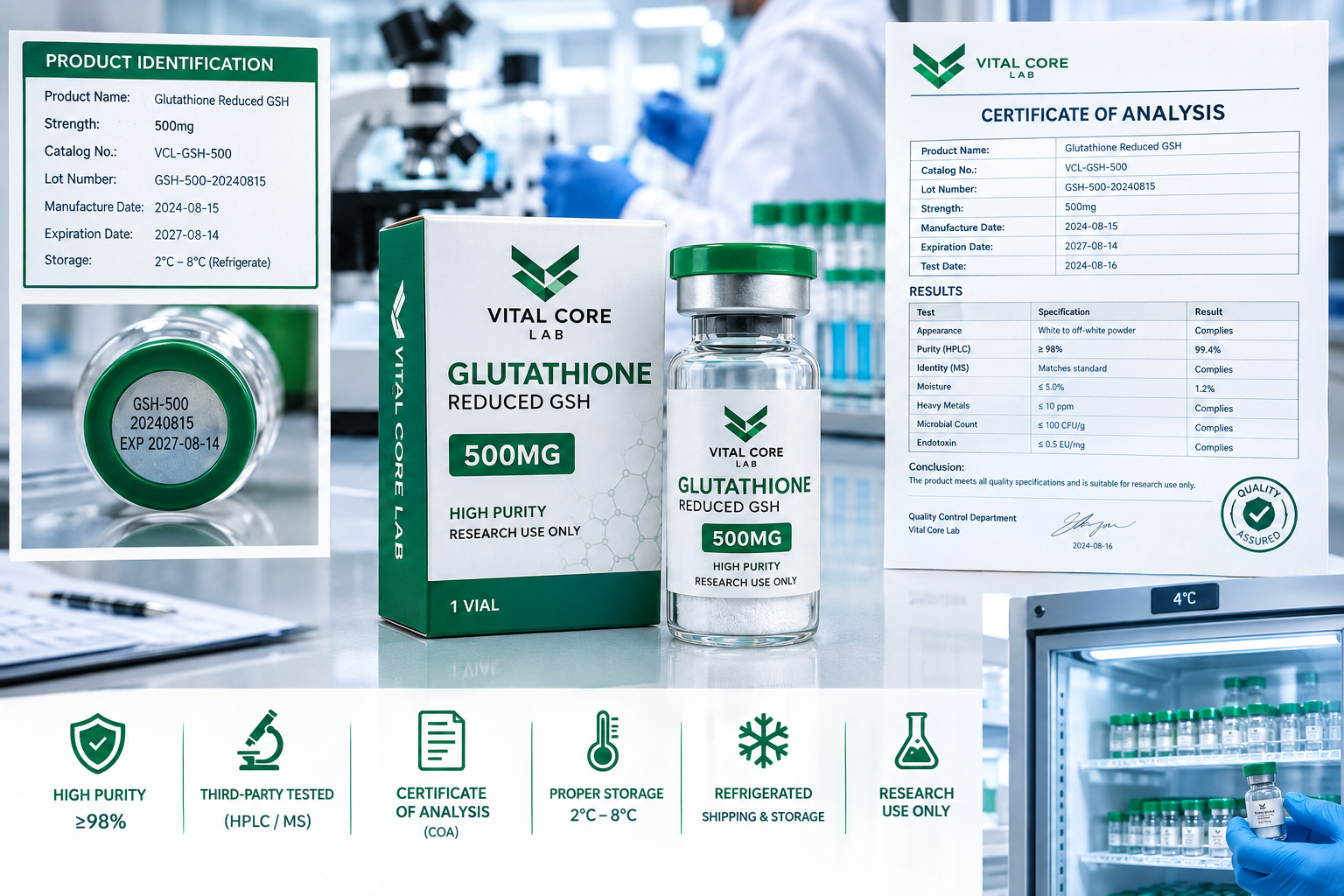
- Product identification
- Batch or lot number
- Purity information
- HPLC results, where available
- Analytical documentation
- Chemical specifications
- Appearance
- Storage guidance
- Handling information
The >99% purity claim should be supported by applicable analytical documentation.
Furthermore, any reference to a specific analytical method should only be published when that information is available for the material supplied.
🧊 Glutathione Storage and Handling
Proper storage is important for maintaining research materials.
Therefore, Glutathione should be stored according to the instructions provided on the actual product label and applicable batch documentation.
The reference product lists protection from light and oxidation as important handling considerations.
Researchers should review:
- Storage temperature
- Light protection
- Moisture protection
- Oxidation protection
- Container integrity
- Batch identification
- Product handling procedures
Do not publish storage conditions that conflict with your actual product documentation.
In addition, laboratories should maintain clear records throughout handling and research.
⚠️ Important Glutathione Research Use Notice
Glutathione is intended strictly for research and laboratory purposes.
⚠️ Not for human consumption.
⚠️ Not for animal consumption.
This product is not presented as a medicine, dietary supplement, or approved treatment.
It is not intended to diagnose, treat, cure, or prevent any disease.
Furthermore, this product page does not provide dosing instructions, administration instructions, or recommendations for personal use.
Published scientific research on glutathione is extensive. However, general scientific knowledge about GSH does not automatically establish the safety, effectiveness, or regulatory status of a specific commercial research product.
Researchers are responsible for determining whether the material is appropriate for their intended experimental application.
Always review the available product specifications and applicable batch documentation before use.
🛒 Glutathione Research Vials — 500mg to 1500mg
Glutathione is available in 500mg, 1000mg, and 1500mg vial options.
Choose the product format that matches your research requirements and experimental design.
Before ordering, review:
- Product size
- Product identity
- Purity information
- Available quality documentation
- Batch information
- Storage requirements
In addition, researchers should maintain appropriate laboratory procedures and records throughout their work.
This Glutathione product is supplied for controlled scientific and laboratory research.
🔬 High-purity research material.
🧪 Available in multiple vial sizes.
📄 Review applicable product and batch documentation.
Reviews
There are no reviews yet.