
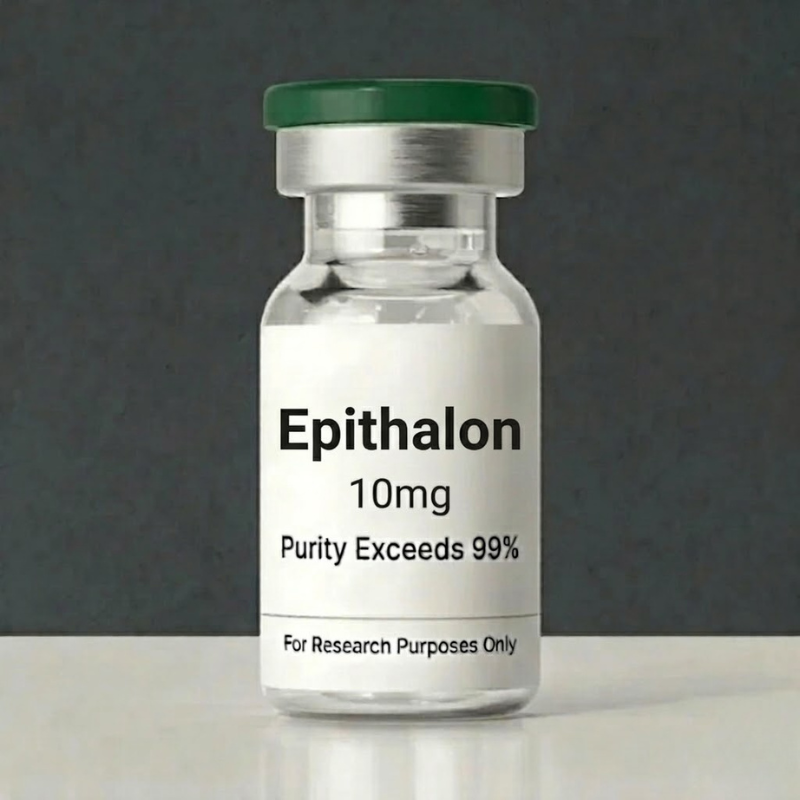



Epithalon (Epitalon) Peptide | 10mg – 50mg Vials | >99% Purity
Epithalon Peptide, also known as Epitalon, is a synthetic tetrapeptide that has attracted significant attention in peptide science because of its relationship to cellular aging, longevity pathways, circadian biology, and telomere-related research. At Vital Core Lab, Epithalon Peptide is presented in carefully defined 10mg–50mg vial options with a stated purity of >99%.
The product is designed around clear specifications and straightforward product information. Therefore, each vial size can be selected according to the requirements of the intended application. In addition, the clean presentation makes it easy to identify the product, concentration, and package information.
Epithalon has been discussed extensively in scientific literature and experimental peptide research. However, scientific interest does not automatically establish a therapeutic effect in humans. For that reason, product information should be interpreted carefully and within the appropriate scientific context.
Whether you are reviewing peptide structures, comparing purity specifications, studying cellular aging pathways, or organizing a peptide collection, Epithalon Peptide provides a clearly identified material for laboratory-focused applications.
🧬 What Is Epithalon Peptide?
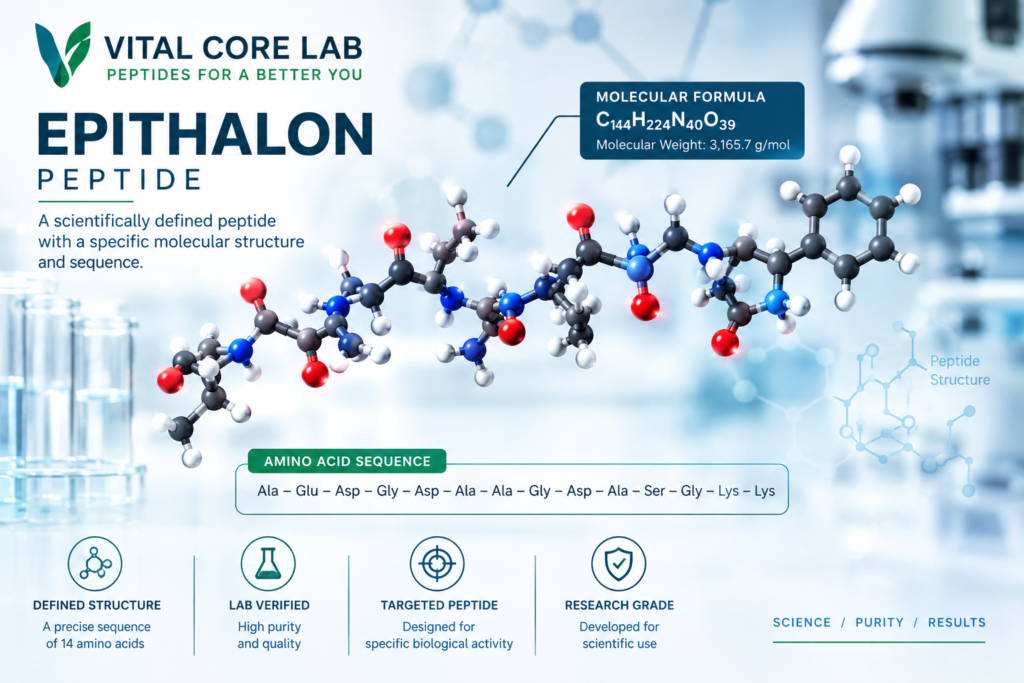
Epithalon Peptide is a synthetic tetrapeptide commonly associated with the sequence Ala-Glu-Asp-Gly. It is also widely known under the name Epitalon. Its short peptide structure has made it an interesting subject for researchers examining biological signaling and age-associated cellular processes.
Unlike larger proteins, short peptides consist of relatively few amino acids. This gives researchers a defined molecular structure that can be examined using analytical and biochemical methods.
Epithalon has received particular attention because of experimental discussions surrounding cellular aging and telomere biology. Telomeres are protective structures located at the ends of chromosomes. They help maintain chromosome stability during cell division.
However, telomere biology is complex. Many factors influence telomere length, cellular senescence, and genomic stability. Therefore, Epithalon should not be presented as a simple solution to aging.
Instead, it is more useful to understand Epithalon as a peptide that has been investigated in the broader field of longevity and cellular biology.
Epithalon Peptide Molecular Identity
A clearly defined molecular identity is important when working with synthetic peptides. Researchers need to know what material they are handling before selecting analytical methods or designing an experiment.
For this reason, product specifications such as peptide name, vial size, and stated purity are important parts of product selection.
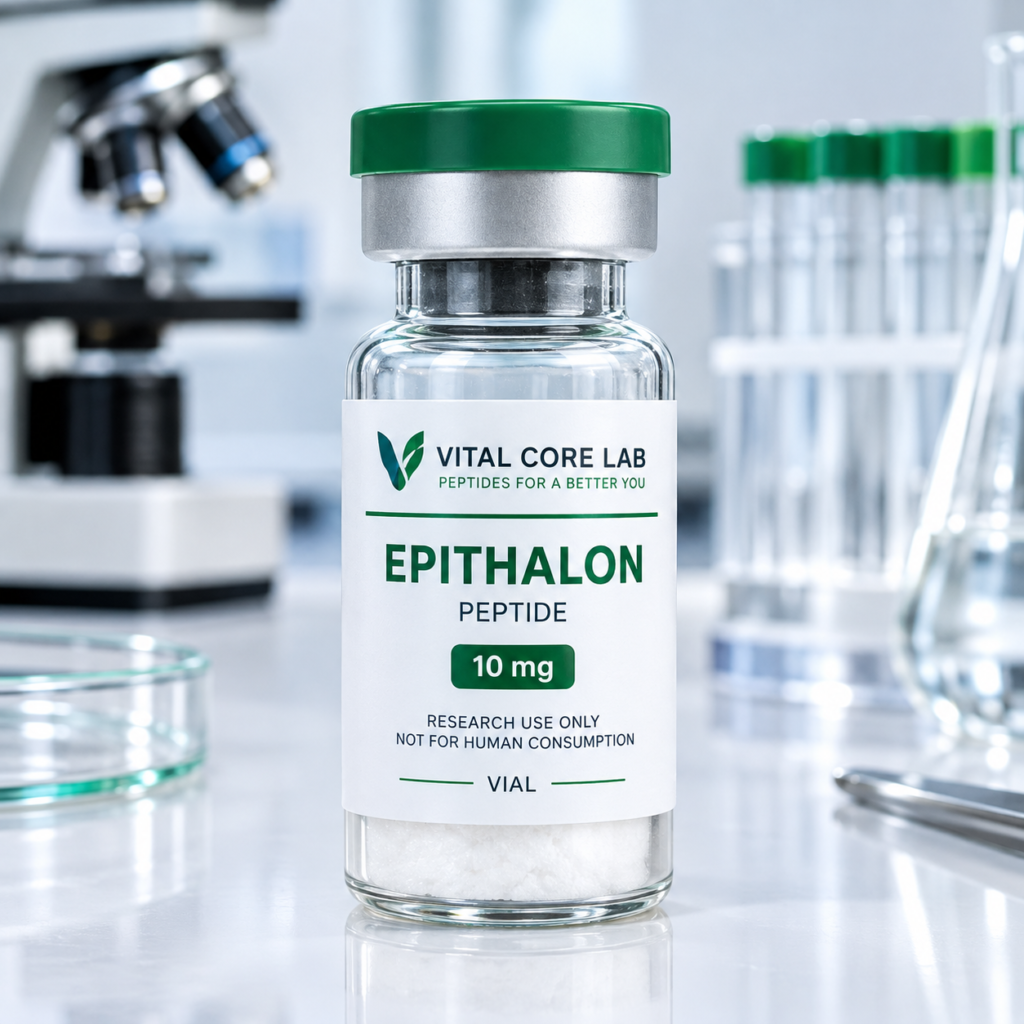
Epithalon Peptide is supplied by Vital Core Lab in 10mg–50mg vial options. The range provides flexibility when selecting a quantity that fits the intended laboratory workflow.
🧪 Product specification: Epithalon / Epitalon peptide
📦 Available sizes: 10mg–50mg vials
🔬 Stated purity: >99%
🧬 Peptide type: Synthetic tetrapeptide
📋 Format: Vial presentation
🔬 Epithalon Peptide and Cellular Aging Research
One reason Epithalon Peptide has generated interest is its connection to studies involving cellular aging.
Aging is not controlled by one pathway. Instead, it involves numerous biological processes. These include changes in cellular repair, oxidative balance, mitochondrial function, genomic stability, protein regulation, and cellular senescence.
Telomeres are one part of this larger picture.
Each chromosome contains protective structures called telomeres at its ends. During normal cell division, telomeres can progressively shorten. When telomeres become critically short or dysfunctional, cells may enter a state known as senescence.
Because of this relationship, telomere biology has become an important area of modern aging research.
Epithalon has been investigated in experimental settings in connection with telomerase activity and telomere-related mechanisms. Yet these subjects require careful interpretation. Results observed in experimental systems cannot automatically be translated into proven outcomes for people.
Therefore, Epithalon Peptide is best understood through the lens of scientific investigation rather than unsupported anti-aging promises.
Why Telomeres Matter
Telomeres help protect chromosome ends from being incorrectly recognized as damaged DNA. Their condition can influence how cells respond to repeated division and biological stress.
Researchers therefore examine telomeres when studying:
- Cellular senescence
- Chromosome stability
- Replicative aging
- Genomic maintenance
- Telomerase-related activity
- Age-associated cellular changes
Epithalon’s connection to these subjects helps explain why the peptide continues to attract interest among researchers studying longevity biology.
🧬 Epithalon Peptide and Telomere Biology
Telomere biology is a highly specialized field. It involves telomeres, telomerase, chromosome-end protection, and several regulatory proteins.
Telomerase is an enzyme complex that can add repetitive DNA sequences to telomeres. Its activity varies considerably between different cell types.
For example, certain stem and germline cells maintain telomerase activity, while most ordinary somatic cells have much lower activity.
This difference is one reason telomere research is important in the study of cellular lifespan.
Epithalon Peptide has been investigated in experimental research related to telomerase and telomere-associated processes. However, the relationship between a peptide intervention and a complex aging phenotype cannot be reduced to a single mechanism.
Consequently, researchers should evaluate Epithalon within the broader framework of cellular biology.
A Broader View of Longevity Research
Longevity research involves many interconnected systems.
These can include:
- Cellular senescence
- DNA maintenance
- Mitochondrial function
- Protein homeostasis
- Oxidative stress
- Metabolic regulation
- Inflammatory signaling
- Telomere biology
- Autophagy
- Cellular communication
Epithalon is therefore one research subject among many.
Its relevance comes from the questions it raises about cellular aging and biological regulation.
📊 Epithalon Peptide Product Overview
| Specification | Product Information |
|---|---|
| Product Name | Epithalon (Epitalon) Peptide |
| Peptide Type | Synthetic tetrapeptide |
| Available Vials | 10mg – 50mg |
| Stated Purity | >99% |
| Common Research Area | Cellular aging and longevity biology |
| Presentation | Vial |
| Product Format | Peptide material |
The table above provides a quick overview for customers who want to compare the core product characteristics before reviewing the complete description.
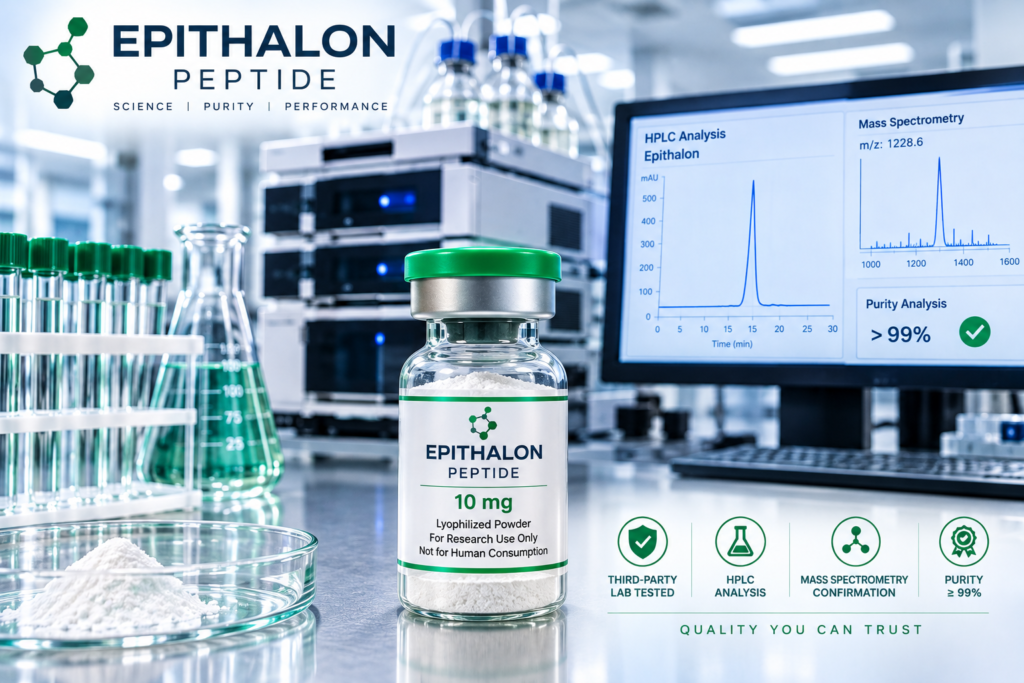
🧪 Understanding Epithalon Peptide Purity
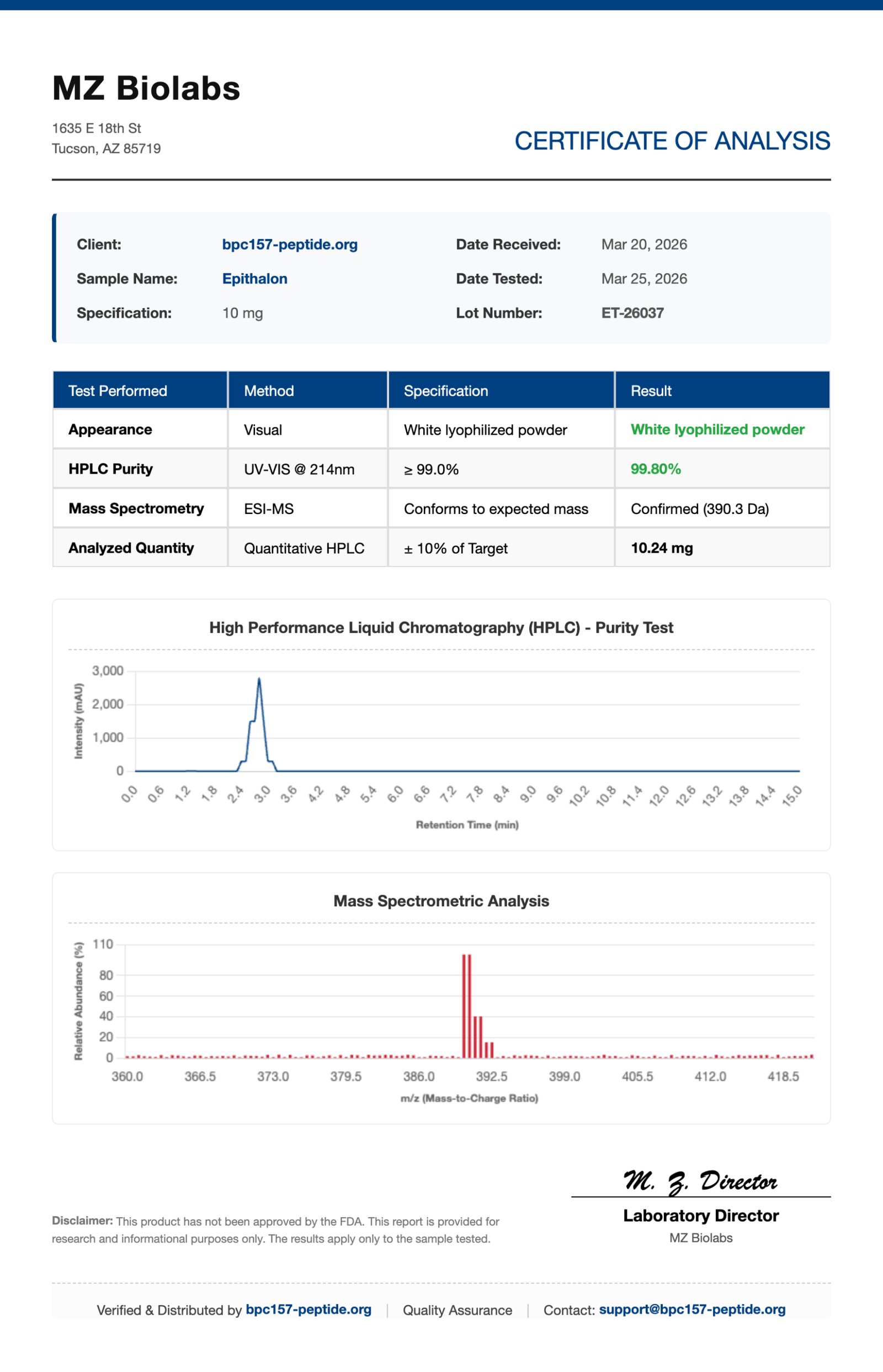
Purity is one of the most important considerations when selecting a synthetic peptide.
A stated purity of >99% indicates that the product is represented as containing more than 99% of the target peptide by the applicable analytical measurement. However, purity should always be interpreted alongside the analytical method used.
Different analytical techniques provide different types of information.
For example, chromatography can be used to assess chemical composition and the relative presence of related compounds. Mass spectrometry can help evaluate molecular mass and identity.
Therefore, a strong quality program does not rely on a purity number alone.
Instead, product identity, analytical documentation, batch information, and appropriate handling should all be considered together.
Why Product Documentation Matters
Clear documentation helps researchers understand the material they are working with.
Useful documentation can include:
- Product identity
- Batch information
- Stated purity
- Analytical information
- Molecular information
- Storage considerations
- Packaging details
This approach provides greater transparency and helps users make informed decisions about the material.
🔎 Epithalon Peptide in Experimental Biology
Peptides can be studied in several types of experimental environments.
Depending on the research question, scientists may investigate peptide behavior through biochemical assays, cellular models, analytical testing, or molecular biology techniques.
Epithalon has been associated with experimental discussions involving cellular aging and longevity-related pathways. These areas are particularly interesting because aging is a multifactorial biological process.
A single peptide should therefore not be described as controlling aging itself.
Instead, researchers can examine how a defined peptide interacts with specific experimental systems.
This distinction is important.
Scientific investigation depends on measurable observations. It also depends on controlled conditions, appropriate controls, validated methods, and reproducible results.
For this reason, Epithalon Peptide can be considered within a broader research framework involving cellular and molecular biology.
🧫 Potential Areas of Scientific Interest
Epithalon Peptide has been discussed in relation to several areas of biological investigation.
Cellular Senescence
Cellular senescence describes a state in which cells stop dividing while remaining metabolically active. Senescent cells can exhibit substantial changes in gene expression and cellular signaling.
Understanding these changes is important in aging biology.
Telomerase and Telomeres
Telomerase and telomeres are closely connected to cellular replication and chromosome stability. Their role makes them important subjects in studies of cellular lifespan.
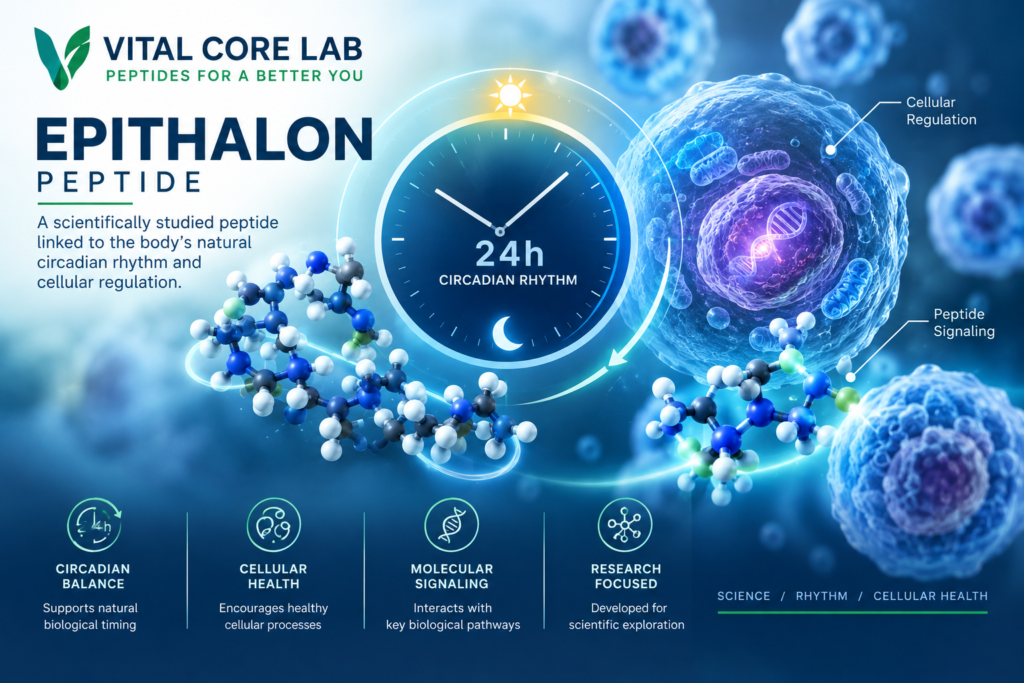
Circadian Biology
Epithalon has also been associated with research discussions involving biological rhythms. Circadian biology examines how organisms maintain approximately 24-hour cycles in physiological and molecular activity.
These rhythms influence many biological processes.
Longevity Biology
Longevity research investigates why organisms age and why aging rates differ between individuals and species.
It includes genetics, metabolism, cellular maintenance, environmental factors, and molecular signaling.
Epithalon sits within this broader scientific conversation because of its historical association with aging-related peptide research.
🧬 Epithalon Peptide and Circadian Biology
The body’s biological clock coordinates many daily processes.
Sleep and wake cycles are among the most familiar examples. However, circadian regulation also affects metabolism, hormone signaling, gene expression, and cellular activity.
Melatonin is one of the molecules commonly associated with circadian regulation.
Historical experimental work involving Epithalon has contributed to interest in the relationship between this peptide and biological rhythms. However, research findings should be considered in context and should not be converted into guaranteed outcomes.
The study of circadian biology remains an active scientific field.
For researchers, this makes peptide-based investigations particularly interesting when examining relationships between cellular timing, gene regulation, and age-associated changes.
📋 Comparing Available Epithalon Peptide Vial Sizes
Vital Core Lab offers Epithalon Peptide in multiple vial sizes. This provides flexibility for different laboratory requirements.
A smaller vial can be suitable when only a limited quantity is needed for a particular analytical workflow. Larger formats may be more practical for researchers who require additional material for repeated testing or extended experimental work.
The correct size depends on the specific project.
| Vial Option | General Use Consideration |
|---|---|
| 10mg | Suitable for smaller material requirements |
| 20mg | Flexible intermediate quantity |
| 30mg | Additional material for broader workflows |
| 40mg | Higher quantity option |
| 50mg | Larger material requirement |
Exact availability can vary by product configuration.
🧪 Handling and Product Considerations
Synthetic peptides require appropriate handling.
Environmental factors such as heat, moisture, light, and repeated exposure to unsuitable conditions can affect peptide materials.
For this reason, users should review the applicable product documentation and storage information before handling the material.
Clean handling practices are also important.
Laboratory personnel should use suitable equipment, appropriate containers, and established procedures for the type of work being performed.
Furthermore, the product should remain clearly labeled throughout storage and use.
Good labeling reduces the chance of confusion between different peptide materials.
🔬 Why a Defined Peptide Format Matters
A defined peptide offers researchers a specific molecular material that can be incorporated into controlled experimental workflows.
This differs from a broad mixture containing numerous unidentified compounds.
With a defined peptide, researchers can focus on questions related to molecular identity, concentration, analytical behavior, and experimental response.
That makes product transparency especially valuable.
The combination of a clearly identified peptide, stated purity, defined vial sizes, and appropriate product documentation provides a practical foundation for organized laboratory work.
🧬 Epithalon Peptide and Modern Aging Science
Modern aging science has moved far beyond the idea that aging is controlled by one factor.
Today, researchers examine aging as a network of interconnected biological processes.
Cells experience molecular damage. DNA maintenance systems respond to stress. Mitochondria change with age. Protein quality-control systems can become less efficient. Cellular senescence can increase. Epigenetic patterns can shift.
Telomeres are another important component.
Epithalon Peptide is interesting because its research history intersects with several of these questions, especially telomere biology and cellular aging.
Still, it is essential to separate scientific investigation from marketing claims.
A peptide may be scientifically interesting without being proven as an anti-aging treatment.
This distinction protects the quality of scientific communication and helps researchers evaluate information objectively.
🧪 Epithalon Peptide for Peptide Science
For peptide-focused laboratories, Epithalon offers an example of a small synthetic peptide with a distinctive research history.
Its compact structure makes it suitable for analytical characterization and molecular investigation.
Researchers may be interested in questions such as:
- How does the peptide behave under controlled conditions?
- How can its identity be analytically confirmed?
- How does purity influence experimental interpretation?
- What cellular pathways have been associated with Epithalon?
- How do experimental models differ from human biology?
- What role does telomere biology play in cellular aging?
These questions encourage a more careful and scientific approach.
Rather than relying on broad claims, researchers can examine measurable characteristics and published experimental findings.
🧬 Quality-Focused Epithalon Peptide Presentation
At Vital Core Lab, the goal is to provide clear product information so that buyers can understand what they are selecting.
The Epithalon Peptide range is presented with defined vial sizes and a stated purity specification of >99%.
The packaging should also make the product easy to identify.
A professional presentation matters because clear labeling supports organized inventory management. It can also reduce confusion when several peptide products are handled within the same laboratory environment.
Moreover, product information should remain straightforward.
Researchers benefit from knowing the peptide identity, available quantity, purity specification, and relevant product details before making a selection.
📦 Epithalon Peptide 10mg–50mg Vial Options
The 10mg–50mg range gives customers several quantity choices.
This is useful because not every project requires the same amount of peptide.
A smaller quantity can help reduce unnecessary material when an experiment requires only limited quantities. Conversely, a larger vial may be convenient when the material is needed across multiple analytical sessions.
The choice should therefore be based on the requirements of the individual workflow.
Before selecting a vial size, consider the amount required, the planned number of experiments, storage capacity, and the relevant laboratory procedures.
📊 Key Epithalon Peptide Features
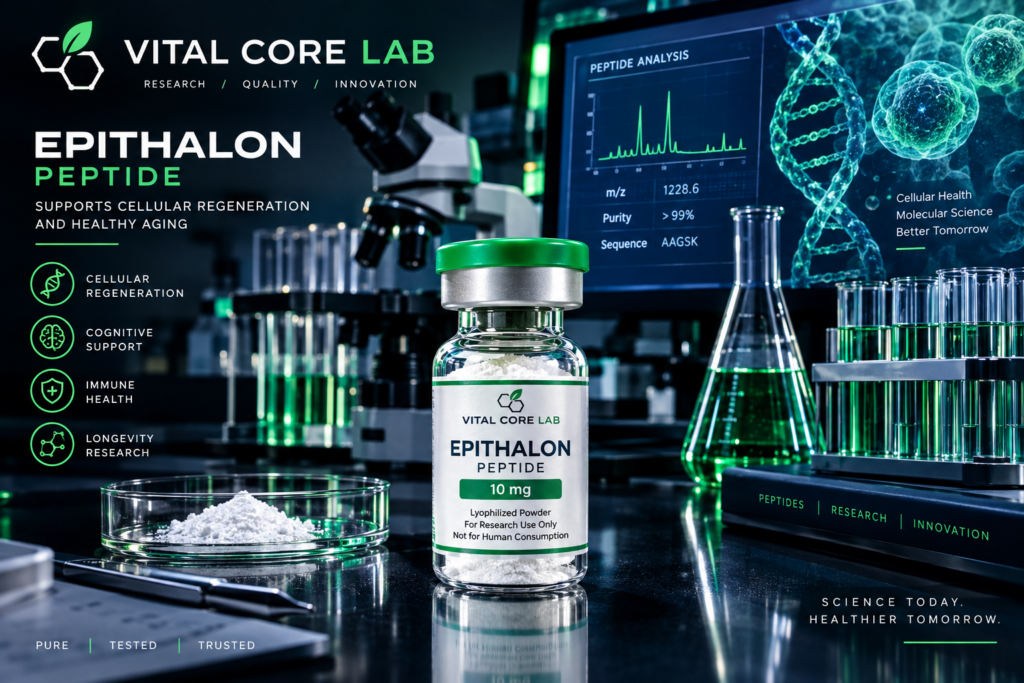
Epithalon Peptide combines a defined molecular identity with multiple available vial sizes and a stated purity of >99%.
Its scientific interest comes largely from its association with cellular aging, telomere biology, circadian research, and longevity-related experimental studies.
The most important features include:
🔬 Defined peptide identity — Epithalon is a recognized synthetic tetrapeptide.
🧬 Stated >99% purity — The product is presented with a high-purity specification.
📦 Multiple vial sizes — Available options range from 10mg to 50mg.
🧪 Laboratory-oriented presentation — Clear product identification supports organized handling.
📋 Straightforward specifications — Core product information is presented clearly.
🧠 Established scientific interest — Epithalon has been studied in areas involving cellular aging and biological regulation.
🧬 Final Overview of Epithalon Peptide
Epithalon Peptide, also known as Epitalon, is a synthetic tetrapeptide associated with scientific interest in cellular aging, telomere biology, circadian regulation, and longevity research.
Its relevance comes from the questions surrounding these biological systems rather than from unsupported promises.
With available 10mg–50mg vial options and a stated purity of >99%, the product provides a clearly defined peptide material for appropriate laboratory applications.
Understanding Epithalon also requires understanding the broader science of aging. Telomeres, cellular senescence, circadian rhythms, genomic stability, and molecular regulation all contribute to this complex field.
Therefore, Epithalon should be viewed as one component within a much larger area of scientific investigation.
Clear product identification, appropriate documentation, careful handling, and objective interpretation are equally important.
For anyone evaluating peptide materials, these fundamentals provide a stronger basis for informed product selection than exaggerated claims.
Thank you for your order with Vital Core Lab.


Reviews
There are no reviews yet.