




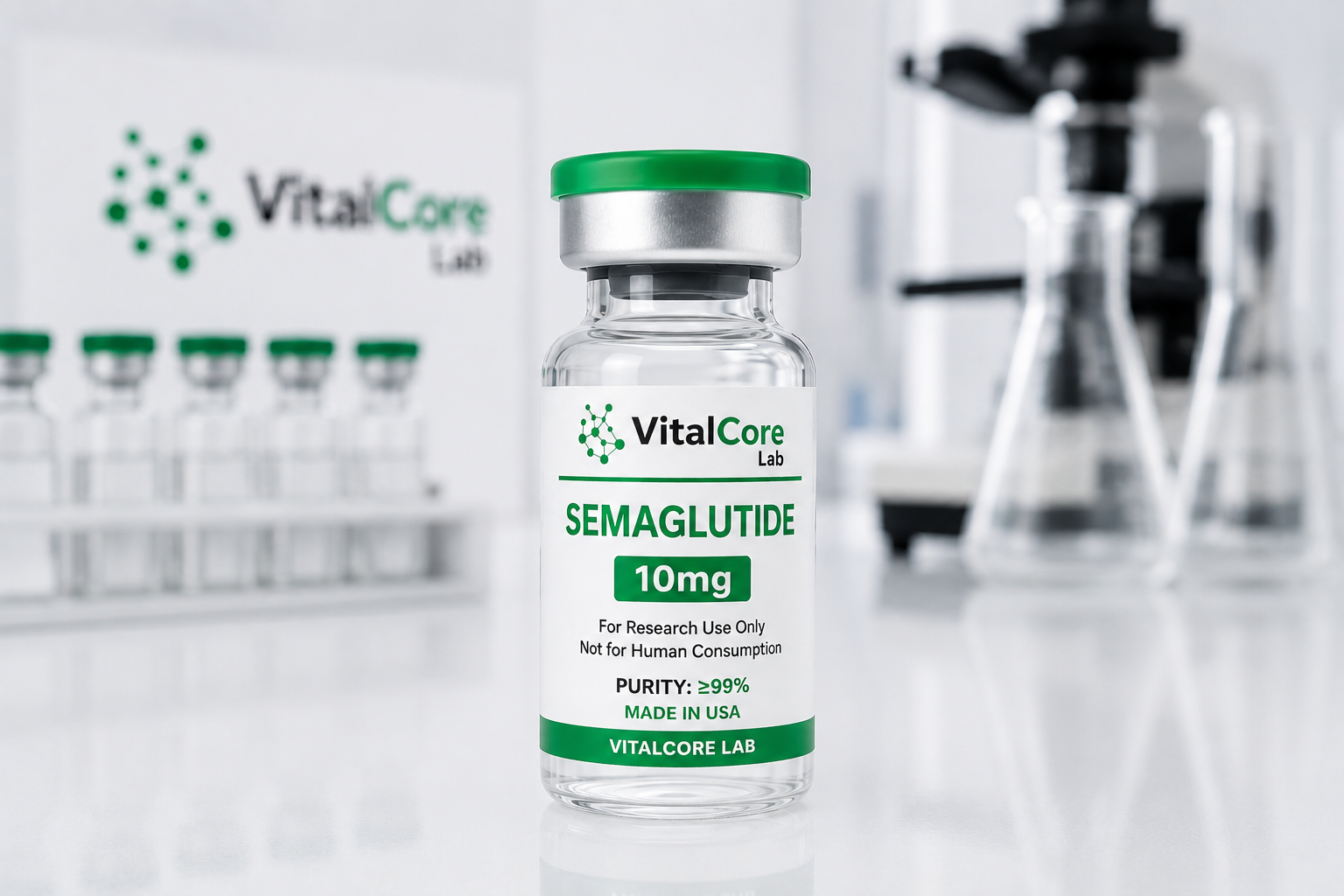
Premium Semaglutide GLP-1 Peptide | 2mg to 50mg Vials | Research Reference
Premium Semaglutide GLP-1 Peptide
Semaglutide is a synthetic peptide that belongs to the glucagon-like peptide-1 (GLP-1) receptor agonist class. It has been extensively studied in biomedical and pharmaceutical research because of its interaction with GLP-1 receptors.
This research reference page provides general scientific information about semaglutide and its research relevance. It is intended to support educational and laboratory information rather than provide medical advice.
Important: Semaglutide is a prescription medication in approved clinical applications. Research materials should not be represented as approved medicines, and this information should not be used as instructions for human or animal administration.
Understanding Semaglutide
Semaglutide is a peptide molecule designed to interact with the GLP-1 receptor. GLP-1 is a naturally occurring peptide hormone involved in several physiological signaling pathways.
Because of this receptor activity, semaglutide has become an important subject in metabolic, endocrinology, pharmacology, and pharmaceutical research.
Researchers may study the molecule to better understand:
- GLP-1 receptor signaling
- Peptide pharmacology
- Metabolic signaling pathways
- Receptor-mediated cellular responses
- Peptide stability
- Analytical characterization
- Pharmaceutical formulation
Furthermore, its well-characterized structure makes semaglutide relevant to research involving peptide-based therapeutics.
Semaglutide Research Overview
Semaglutide has been investigated extensively in controlled scientific and clinical research. Its primary pharmacological target is the GLP-1 receptor.
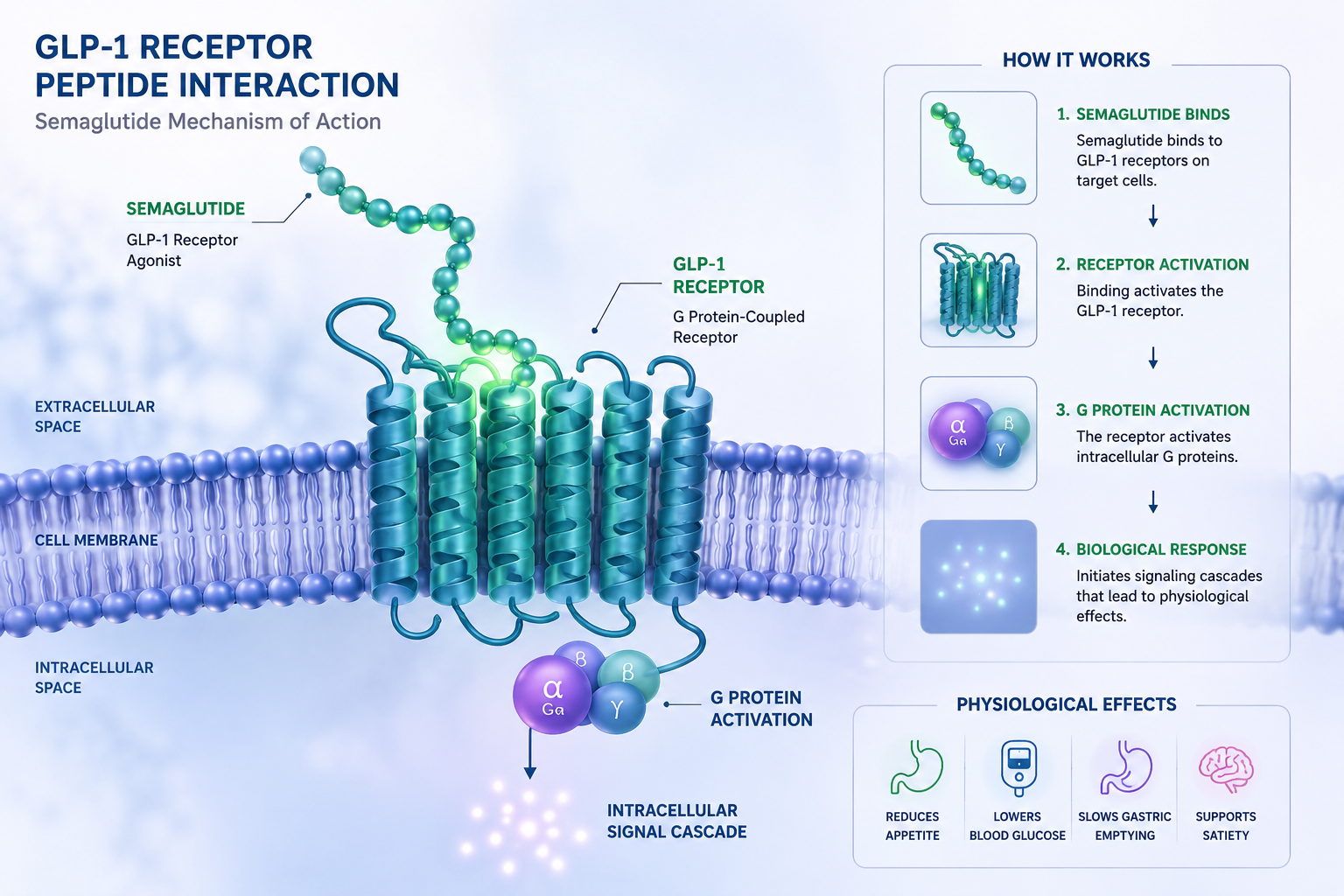
The GLP-1 receptor is part of the G-protein-coupled receptor family. Activation of this receptor can influence intracellular signaling pathways.
Therefore, semaglutide provides researchers with a useful model for studying peptide-receptor interactions.
Key Research Characteristics
Several characteristics make semaglutide relevant to peptide research.
First, it is a defined peptide molecule with a well-established molecular structure. Next, its interaction with the GLP-1 receptor has been extensively characterized. In addition, researchers can examine its behavior using established analytical techniques.
Common research areas include:
Peptide Characterization
Analytical laboratories can investigate peptide identity, molecular characteristics, and sample composition using appropriate analytical methods.
Receptor Research
Semaglutide can serve as a research subject in studies examining GLP-1 receptor activity and related signaling mechanisms.
Pharmacology Research
Researchers may investigate peptide-receptor interactions, pharmacological properties, and related molecular mechanisms under appropriate laboratory conditions.
Analytical Research
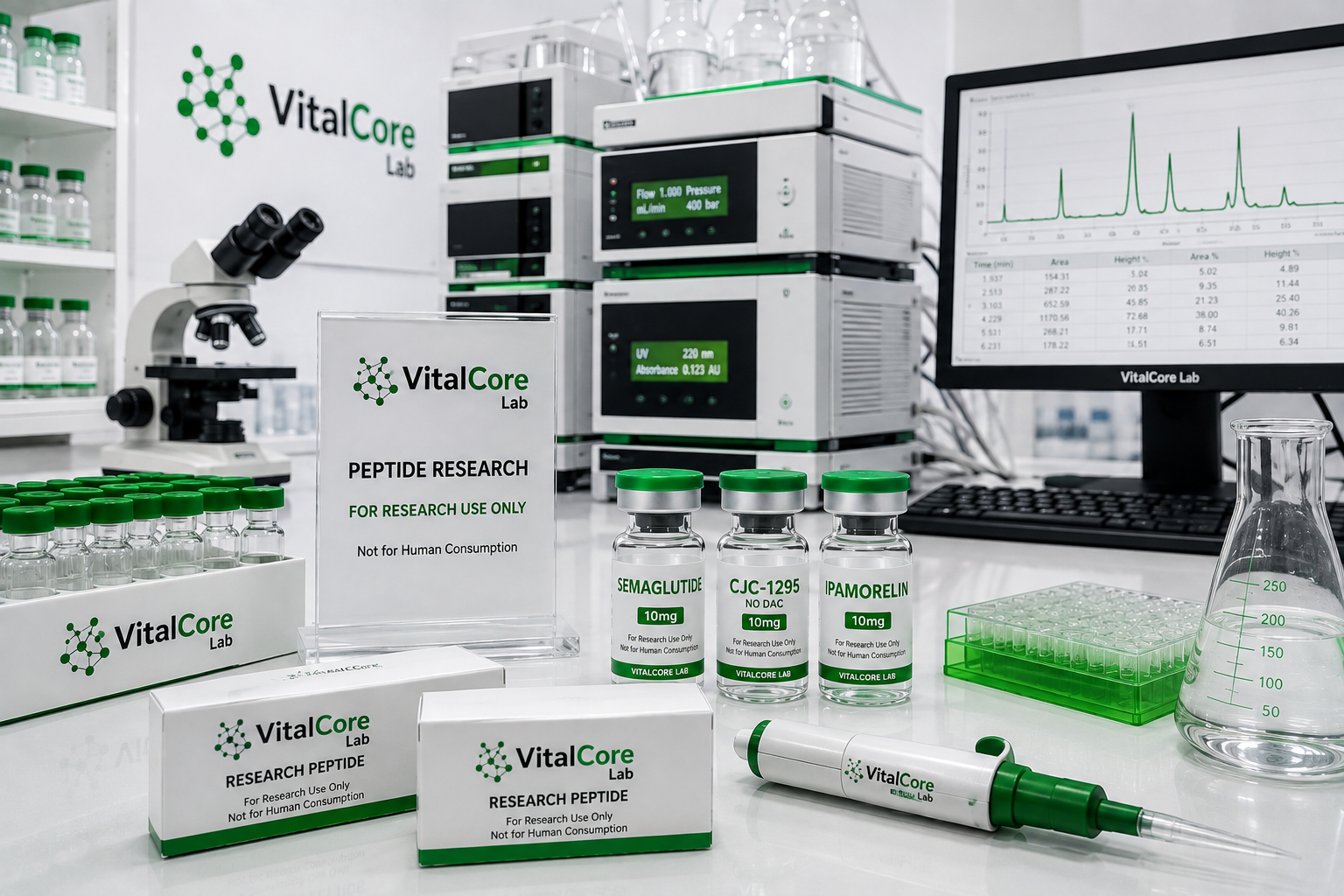
Laboratories may use analytical procedures to examine peptide samples. Depending on the research objective, methods may include chromatographic and spectrometric techniques.
Semaglutide and GLP-1 Research
GLP-1 research covers a broad area of biomedical science. The naturally occurring GLP-1 hormone participates in signaling processes involving the pancreas, gastrointestinal system, central nervous system, and other tissues.
Semaglutide is a longer-acting GLP-1 receptor agonist that has consequently received substantial scientific attention.
For researchers, this makes semaglutide relevant to investigations involving:
- Peptide receptor biology
- Cellular signaling
- Metabolic research
- Pharmaceutical science
- Peptide engineering
- Analytical chemistry
These areas can overlap. As a result, semaglutide research may involve multiple scientific disciplines.
Research Applications
Semaglutide can be discussed in several research contexts.
Molecular Research
Molecular researchers can investigate peptide structure, receptor interactions, and downstream signaling pathways.
Pharmaceutical Research
Pharmaceutical science may examine peptide stability, formulation characteristics, analytical identification, and other properties.
Laboratory Analysis
Analytical laboratories can characterize peptide materials using validated laboratory procedures.
Comparative Peptide Research
Semaglutide may also be examined alongside other peptide molecules to investigate differences in structure, receptor interaction, or other experimentally measurable characteristics.
Analytical Characterization
Proper analytical characterization is an important part of peptide research.
Depending on the laboratory protocol, researchers may examine characteristics such as:
- Molecular identity
- Sample composition
- Peptide integrity
- Purity
- Molecular mass
- Chromatographic profile
However, analytical results should always be tied to the actual batch being examined.
A general product description should not be treated as a substitute for batch-specific laboratory documentation.
For that reason, laboratories should review applicable analytical documentation before beginning experimental work.
Research Quality Considerations
Quality assessment is particularly important when working with research peptides.
A suitable laboratory workflow should begin with identification of the material. Next, researchers should review available documentation and confirm that the material corresponds to the intended research compound.
Where applicable, researchers may review:
| Research Check | Purpose |
|---|---|
| Identity | Confirms the intended peptide |
| Batch information | Connects material to a specific batch |
| Analytical data | Supports laboratory characterization |
| Purity data | Provides batch-specific composition information |
| Storage information | Supports appropriate material handling |
These checks help create a more consistent research process.
Why Documentation Matters
Documentation provides important context for laboratory materials.
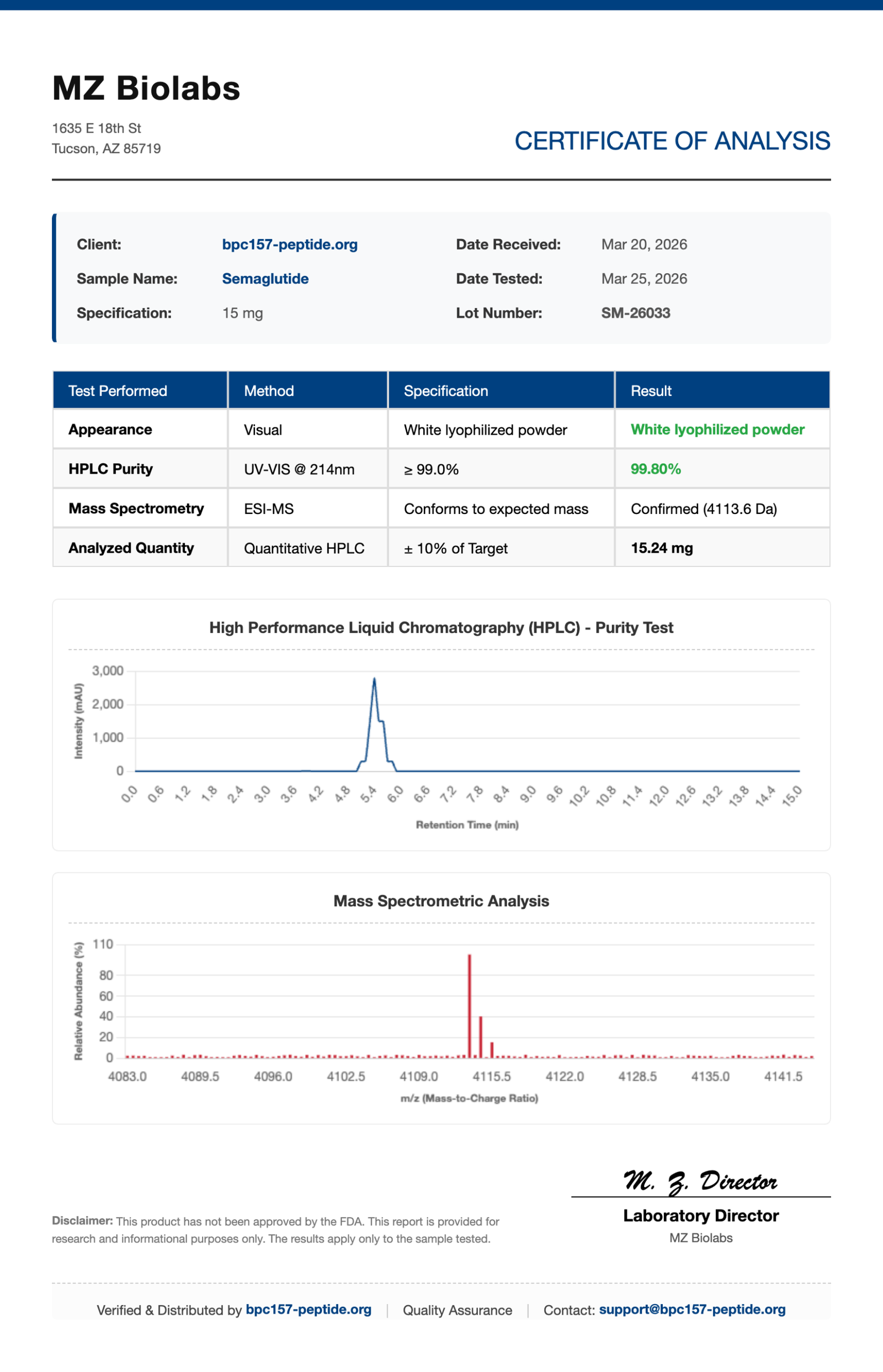
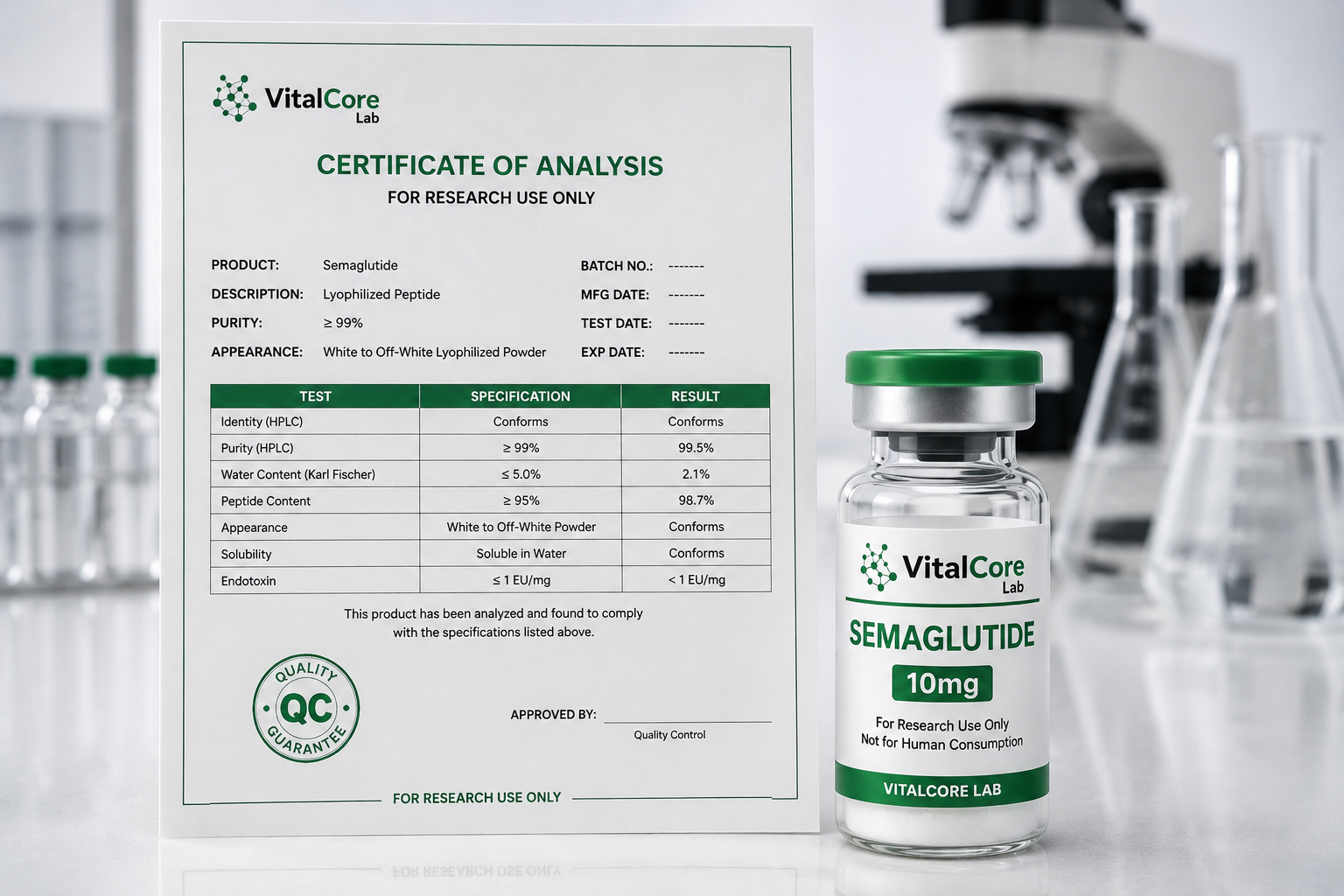
For example, a certificate of analysis may contain information about a particular batch. Researchers can use appropriate documentation alongside their own laboratory procedures when evaluating material characteristics.
However, documentation should always be reviewed carefully.
A stated purity percentage should be supported by appropriate batch-specific analytical evidence. Therefore, researchers should avoid assuming that a general product statement applies to every individual sample.
Semaglutide Peptide Structure and Research
Peptide structure plays an important role in biological activity.
Semaglutide is structurally related to GLP-1 and incorporates modifications that contribute to its pharmacological characteristics.
Researchers studying peptide structure can examine how molecular changes influence receptor interaction, stability, and other measurable properties.
This is particularly relevant to the broader field of peptide engineering.
GLP-1 Receptor Research
The GLP-1 receptor is an important target in peptide pharmacology research.
When researchers examine GLP-1 receptor agonists, they may investigate receptor activation and associated intracellular signaling pathways.
Semaglutide therefore provides a useful research model for understanding how a modified peptide interacts with a specific receptor system.
Importantly, laboratory research should remain within the appropriate experimental and institutional framework.
Responsible Research
Responsible research begins with accurate identification and appropriate documentation.
Researchers should use established laboratory procedures and follow applicable institutional requirements. They should also maintain suitable records for research materials.
Furthermore, product information should not be interpreted as medical advice.
Semaglutide research materials should not be presented as substitutes for approved prescription medicines. They should also not be promoted for self-administration or treatment outside appropriate medical and regulatory frameworks.
Laboratory Preparation Checklist
Before laboratory work begins, researchers can verify several basic points:
- Product identity confirmed
- Batch information recorded
- Available analytical documentation reviewed
- Storage information reviewed
- Laboratory protocol established
- Appropriate safety procedures followed
- Research purpose documented
A simple checklist can help reduce avoidable errors.
Summary
Semaglutide is a well-characterized GLP-1 receptor agonist that has attracted significant interest in peptide, pharmacology, metabolic, and pharmaceutical research.
Its scientific relevance includes peptide-receptor interactions, GLP-1 signaling, molecular research, analytical characterization, and pharmaceutical science.
At the same time, accurate documentation remains essential. Batch-specific information should be reviewed whenever analytical characteristics such as identity or purity are important to an experiment.
Ultimately, responsible laboratory research depends on clear documentation, appropriate procedures, and careful interpretation of scientific information.
Research use only. Not for human or animal administration. This page does not provide medical advice, treatment recommendations, or dosing instructions.



Reviews
There are no reviews yet.