



AOD9604
🔬 AOD9604 Peptide for Lipolysis and Metabolic Research
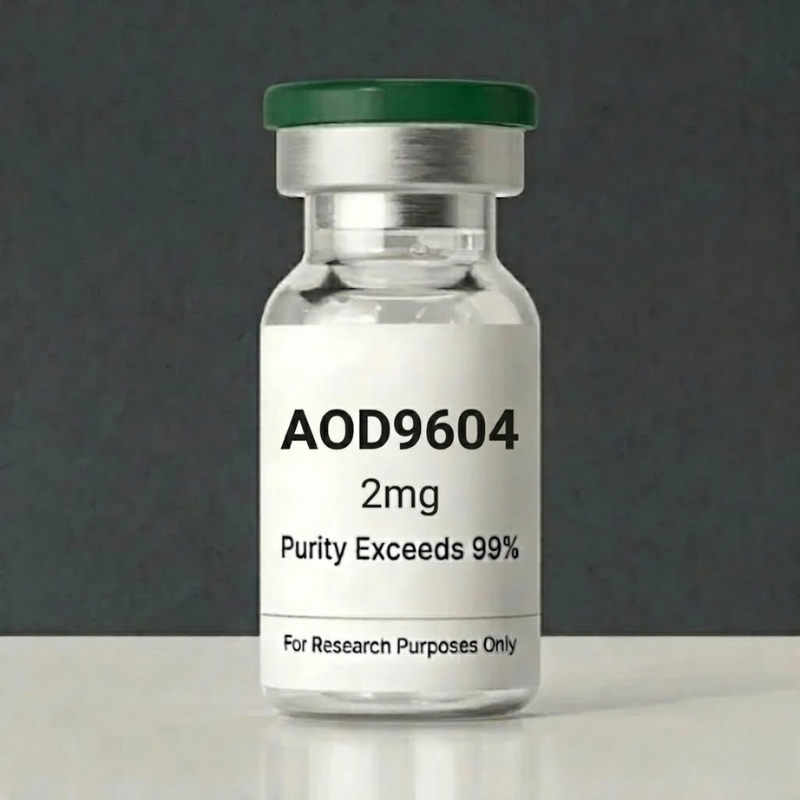
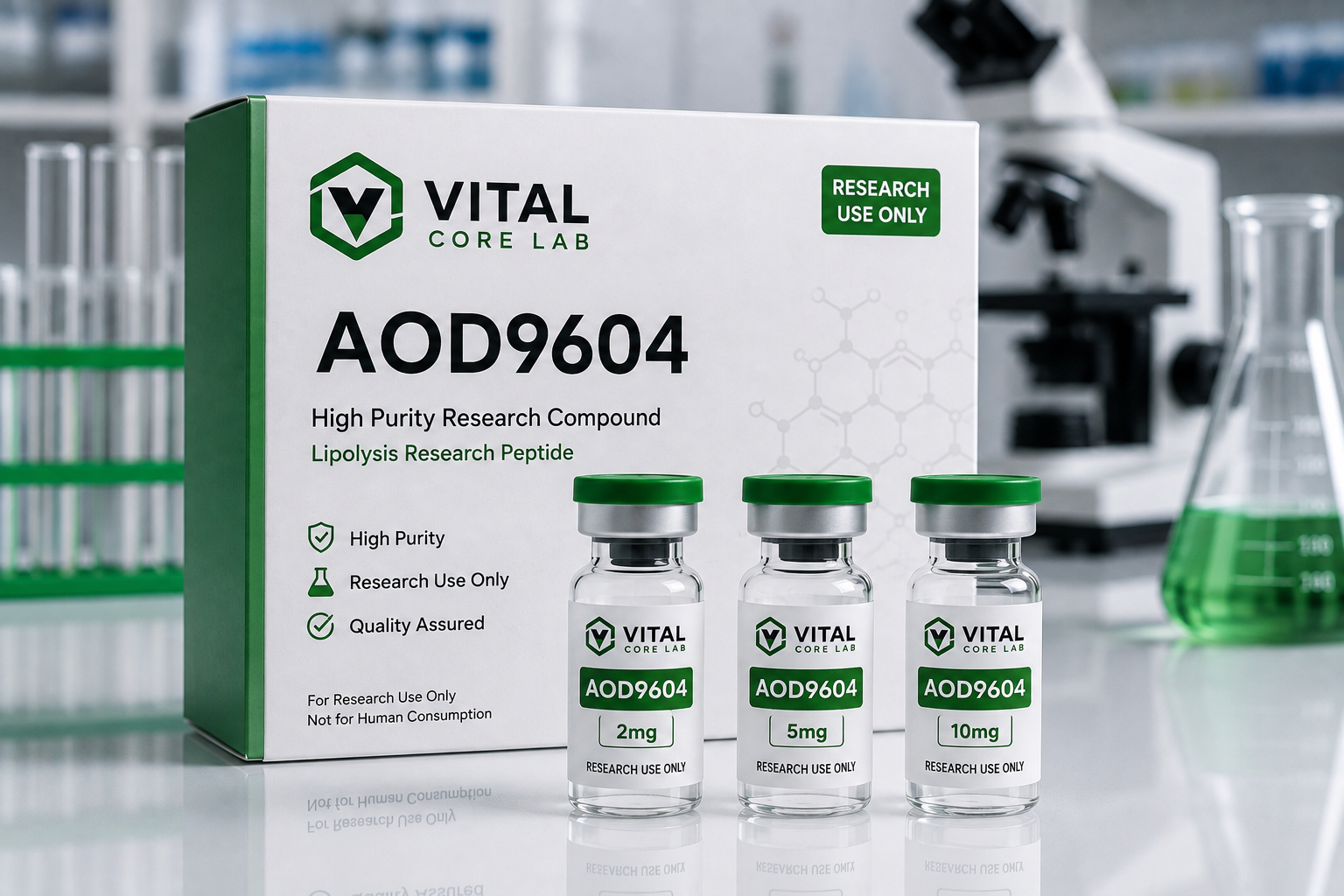
AOD9604 is a research peptide studied in laboratory settings involving lipolysis, lipid metabolism, metabolic signaling, and related biological pathways. This product is available in 2mg, 5mg, and 10mg vial options for controlled scientific and laboratory research.
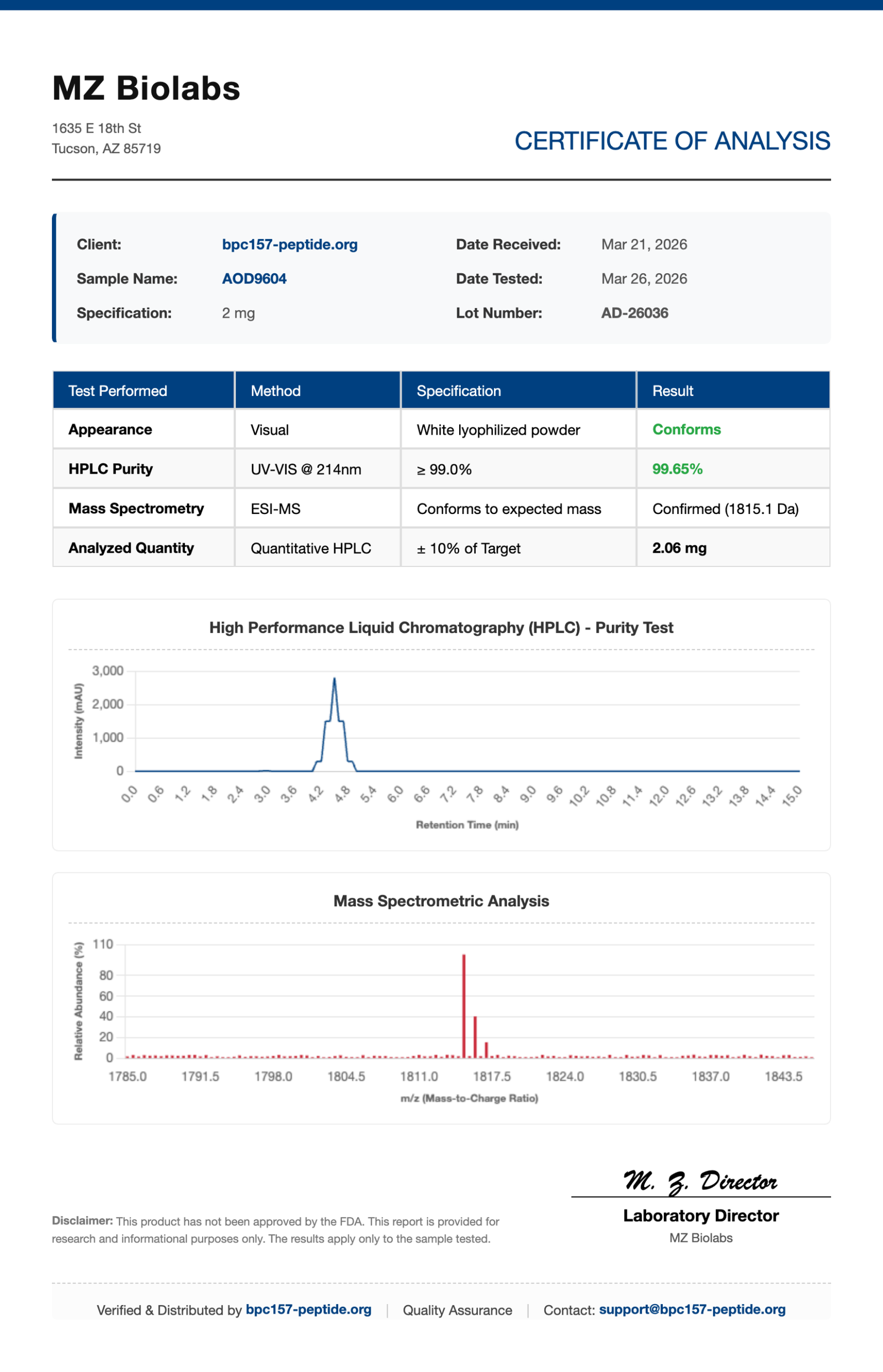
Additionally, AOD9604 is listed at >99% purity, subject to applicable product and batch documentation. Therefore, researchers should review the available specifications and quality information before beginning experimental work.
AOD9604 research may involve the study of selected pathways connected with lipid metabolism and cellular signaling. Furthermore, researchers may investigate molecular responses, biochemical markers, and interactions between different metabolic processes.
However, biological systems are complex. Results can vary depending on the research model, laboratory conditions, analytical methods, exposure period, and experimental controls.
Therefore, careful experimental design remains important.
This product page focuses on research information only. It does not provide dosing instructions, administration instructions, medical advice, or personal-use recommendations.
⚠️ For research use only. Not for human or animal consumption.
🧪 AOD9604 Product Specifications
The final product specifications should always match the documentation for the actual material and batch being supplied.
| Specification | Product Information |
|---|---|
| Product Name | AOD9604 |
| Product Type | Research peptide |
| Available Sizes | 2mg, 5mg, 10mg |
| Format | Individual research vials |
| Purity Listing | >99%, subject to applicable documentation |
| Research Focus | Lipolysis and metabolic research |
| Research Areas | Lipid metabolism and cellular signaling |
| Product Form | Research material |
| Documentation | Review applicable batch information |
| Intended Use | Laboratory and scientific research only |
Additionally, researchers should confirm all batch-specific information before using the material in a study.
⚗️ Understanding AOD9604 Research
🧬 AOD9604 and Peptide Research
AOD9604 is studied as a peptide research compound in selected areas of metabolic and lipid-related research.
Peptides can interact with complex biological systems. Therefore, researchers often investigate their molecular structure, biochemical behavior, signaling activity, and interactions with selected pathways.
AOD9604 research may involve controlled studies of:
- Lipid metabolism
- Lipolysis-related pathways
- Metabolic signaling
- Cellular responses
- Biochemical markers
- Molecular interactions
- Energy-related pathways
- Research peptide activity
Furthermore, researchers may compare different laboratory models to examine how selected markers respond under controlled conditions.
However, results from one model may differ from another.
For example, cellular research may produce findings that differ from tissue-based or other experimental models. Likewise, changes in concentration, exposure time, laboratory procedures, and analytical techniques can affect results.
Consequently, each study should clearly document its own methods and limitations.
🔬 AOD9604 and Lipolysis Research
Lipolysis is a major subject in lipid metabolism research.
In simple terms, researchers study how biological systems process and regulate stored lipids. However, this involves many connected pathways and signaling processes.
Therefore, a controlled research approach is necessary.
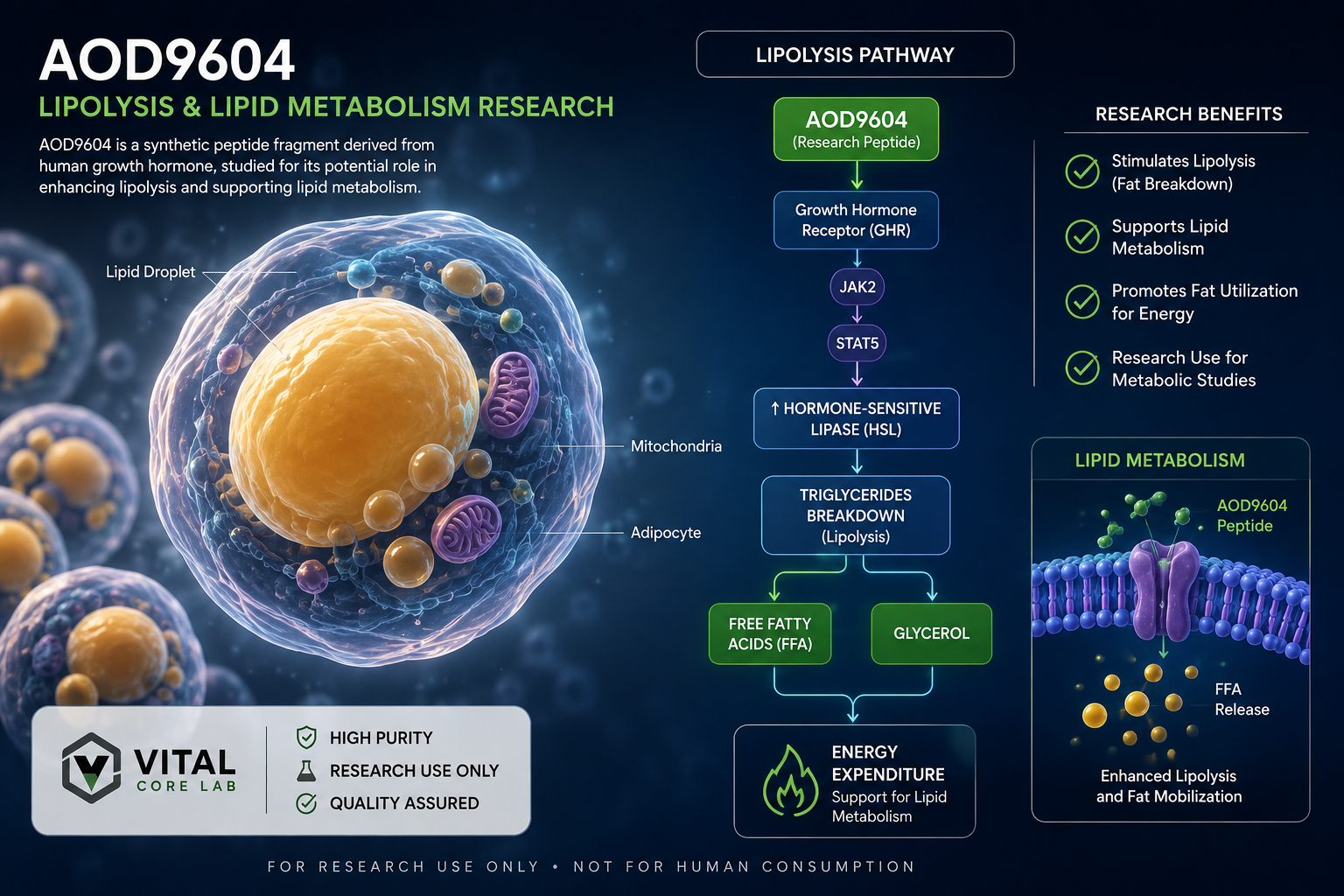
AOD9604 may be studied in laboratory research involving selected lipolysis-related processes. Researchers can examine biochemical markers and molecular responses that may be relevant to lipid metabolism under specific experimental conditions.
Research topics may include:
- Lipolysis-related signaling
- Lipid metabolism
- Cellular lipid processing
- Metabolic pathway interactions
- Enzyme-related research
- Molecular signaling
- Cellular energy pathways
- Biochemical response analysis
Additionally, researchers may compare treated and control groups to evaluate changes in selected markers.
Nevertheless, an observed change does not automatically explain the exact biological mechanism involved.
Therefore, appropriate controls are important.
Researchers may also use additional validated methods to investigate the pathways being studied.
🧫 AOD9604 and Lipid Metabolism Research
Lipid metabolism includes many connected biological processes.
Cells and tissues regulate how lipids are stored, processed, transported, and used. Consequently, researchers investigate several molecular pathways when studying metabolic systems.
AOD9604 research may focus on selected components of this broader scientific area.
Possible laboratory research topics include:
- Lipid pathway regulation
- Cellular lipid metabolism
- Metabolic enzyme research
- Molecular signaling
- Energy-related pathways
- Biochemical interactions
- Cellular adaptation
- Metabolic response markers
Furthermore, researchers may investigate how different pathways interact.
One pathway can influence another. As a result, experimental findings should be interpreted within the full context of the research model.
For example, a change in one biochemical marker does not necessarily prove a complete change in overall metabolism.
Instead, researchers should examine relevant controls and supporting data.
This approach can help create a clearer understanding of the experimental findings.
⚙️ AOD9604 and Metabolic Signaling Research
🧪 Metabolic Pathway Investigation
Metabolism involves many chemical and biological processes working together.
Therefore, researchers often examine individual pathways while also considering their wider interactions.
AOD9604 may be used as a research material in selected laboratory studies involving metabolic signaling and related biochemical processes.
Possible areas of investigation include:
- Metabolic pathway signaling
- Cellular energy regulation
- Lipid-related molecular markers
- Biochemical pathway interactions
- Cellular responses
- Enzyme-related research
- Molecular research
- Cellular signaling
Additionally, researchers may use different analytical methods to evaluate experimental results.
For instance, selected studies may examine molecular markers, biochemical activity, or other measurable responses.
However, every method has limitations.
Therefore, results should be interpreted according to the exact procedures and conditions used during the experiment.
🔬 AOD9604 Research and Cellular Signaling
Cells communicate through complex signaling systems.
These systems can respond to changes in nutrients, energy status, environmental conditions, and many other factors.
Therefore, researchers investigate how selected compounds interact with cellular signaling under controlled laboratory conditions.
AOD9604 research may include the examination of selected molecular and biochemical responses.
Researchers may investigate:
- Cellular signaling markers
- Molecular pathway activity
- Biochemical responses
- Metabolic signaling
- Lipid-related cellular processes
- Energy-related responses
- Cellular adaptation
- Pathway interactions
Furthermore, researchers may compare results across different models.
This can help identify patterns within a specific research system.
However, findings should not automatically be generalized beyond the conditions tested.
Consequently, careful interpretation is essential.
🧬 AOD9604 and Molecular Research
Molecular research examines the smaller biological processes that contribute to larger cellular functions.
Therefore, peptides such as AOD9604 may be investigated in controlled studies involving selected molecular pathways.
Researchers may examine:
- Molecular interactions
- Cellular markers
- Protein-related pathways
- Biochemical signaling
- Metabolic regulation
- Lipid-related molecular processes
- Experimental pathway responses
Additionally, different laboratory methods may be used to collect supporting information.
Researchers may compare multiple markers rather than relying on one result alone.
This can provide a broader view of the experimental system.
However, no single measurement should automatically be treated as complete proof of a complex biological mechanism.
Therefore, suitable controls, repeat testing, and validated analytical procedures remain important.
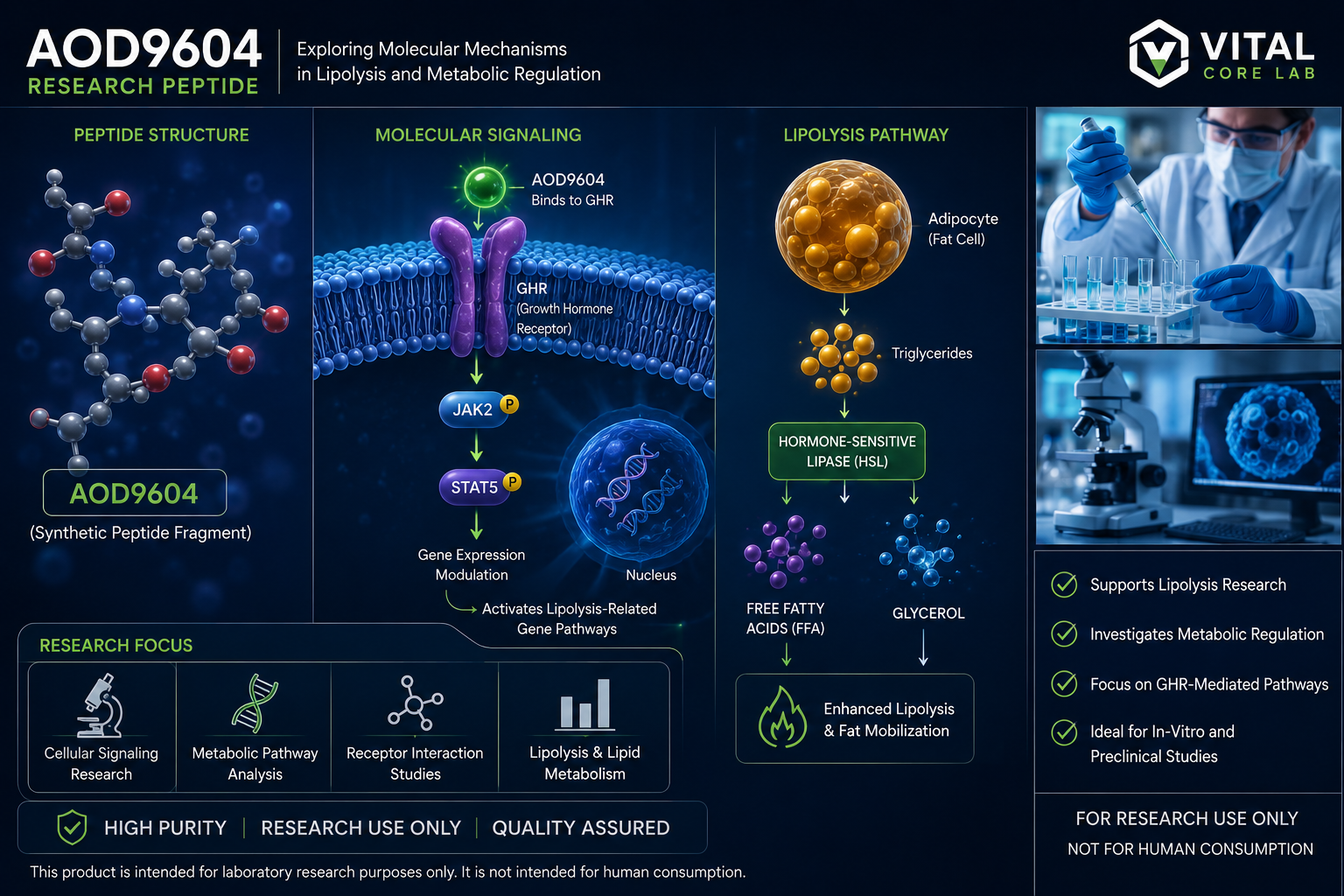
🧪 AOD9604 Research in Controlled Laboratory Studies
Controlled research conditions can help improve the quality of experimental observations.
Therefore, researchers should establish clear procedures before beginning work.
Important considerations may include:
- Research objective
- Experimental model
- Control groups
- Analytical methods
- Product identification
- Batch information
- Sample handling
- Data recording
Additionally, researchers should document the exact conditions used during each study.
This may include details about the research system, equipment, procedures, and selected analytical methods.
Clear documentation can make it easier to review findings later.
Furthermore, well-organized records can support consistency between experiments.
However, laboratory research can involve variation.
Therefore, repeat experiments and appropriate controls may be necessary depending on the research objective.
📊 AOD9604 Research Information at a Glance
| Feature | Product Information |
|---|---|
| 🔬 Product | AOD9604 |
| 🧪 Product Type | Research peptide |
| 📦 Available Options | 2mg, 5mg, 10mg |
| ⚗️ Research Focus | Lipolysis and metabolic research |
| 🧬 Research Areas | Lipid and cellular research |
| ⚙️ Related Topics | Metabolic signaling |
| 🧫 Research Setting | Controlled laboratory studies |
| ✨ Purity Listing | >99%, subject to documentation |
| 📄 Documentation | Review applicable batch information |
| ⚠️ Use Restriction | Research use only |
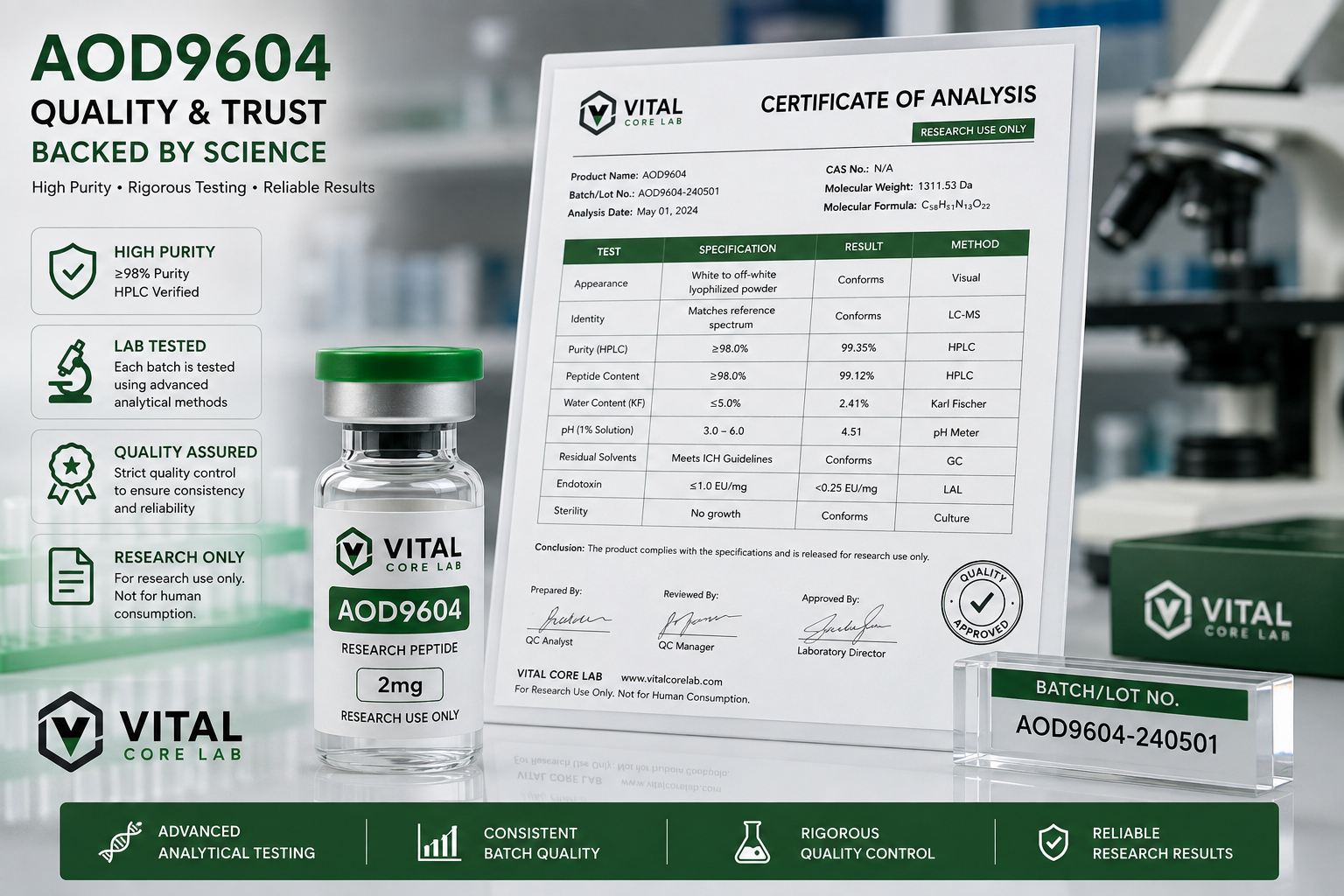
📄 AOD9604 Quality and Documentation
Quality information is an important part of responsible laboratory research.
Therefore, researchers should review applicable information for the exact product and batch before beginning experimental work.
Depending on the documentation available, information may include:
- Product identity
- Batch or lot number
- Purity information
- Analytical information
- Product specifications
- Storage information
- Handling guidance
The >99% purity listing should only be used when supported by applicable product or batch documentation.
Furthermore, general information about AOD9604 should be kept separate from verified information about the exact material supplied.
Accurate product records can support better laboratory organization.
Therefore, batch information should be recorded where relevant to the study.
🧊 AOD9604 Storage and Handling
Proper storage and handling are important for maintaining organized laboratory procedures.
Therefore, AOD9604 should be stored according to the instructions provided with the actual product and its applicable documentation.
Researchers should review:
- Storage requirements
- Light protection information
- Moisture protection requirements
- Container condition
- Product identification
- Batch information
- Handling procedures
Do not publish a specific storage temperature unless it is confirmed by the actual documentation for the product being supplied.
Additionally, laboratories should follow their own validated procedures for handling and documenting research materials.
Clear records can help maintain consistency throughout the research process.
⚠️ Important AOD9604 Research Use Notice
AOD9604 is intended strictly for research and laboratory purposes.
⚠️ Not for human consumption.
⚠️ Not for animal consumption.
This product is not presented as a medicine, dietary supplement, or approved treatment.
Furthermore, this page does not provide:
- Dosing instructions
- Administration instructions
- Personal-use recommendations
- Weight-loss instructions
- Fat-loss instructions
- Medical treatment advice
- Therapeutic recommendations
Research involving AOD9604 and related biological pathways should be interpreted within the limits of the specific experimental model.
Therefore, researchers are responsible for selecting appropriate laboratory methods, controls, and procedures.
General scientific research does not automatically establish identical outcomes in every research model.
🛒 AOD9604 Research Vials
This AOD9604 product is available in 2mg, 5mg, and 10mg vial options.
The different vial sizes can help researchers select a product option that matches their specific laboratory requirements.
Before ordering, researchers should review the available product information.
Additionally, they should confirm that the selected vial size matches their research objective.
Furthermore, applicable product and batch documentation should be reviewed where available.
AOD9604 may be relevant to controlled laboratory studies involving:
- AOD9604 research
- Peptide research
- Lipolysis-related research
- Lipid metabolism research
- Metabolic signaling research
- Cellular signaling research
- Molecular research
- Biochemical research
Nevertheless, suitability depends on the specific experimental objective and research model.
🔬 Research-focused product information.
🧪 Available in 2mg, 5mg, and 10mg vial options.
📄 Review applicable product and batch documentation.
✨ Listed at >99% purity, subject to documentation.
Reviews
There are no reviews yet.