
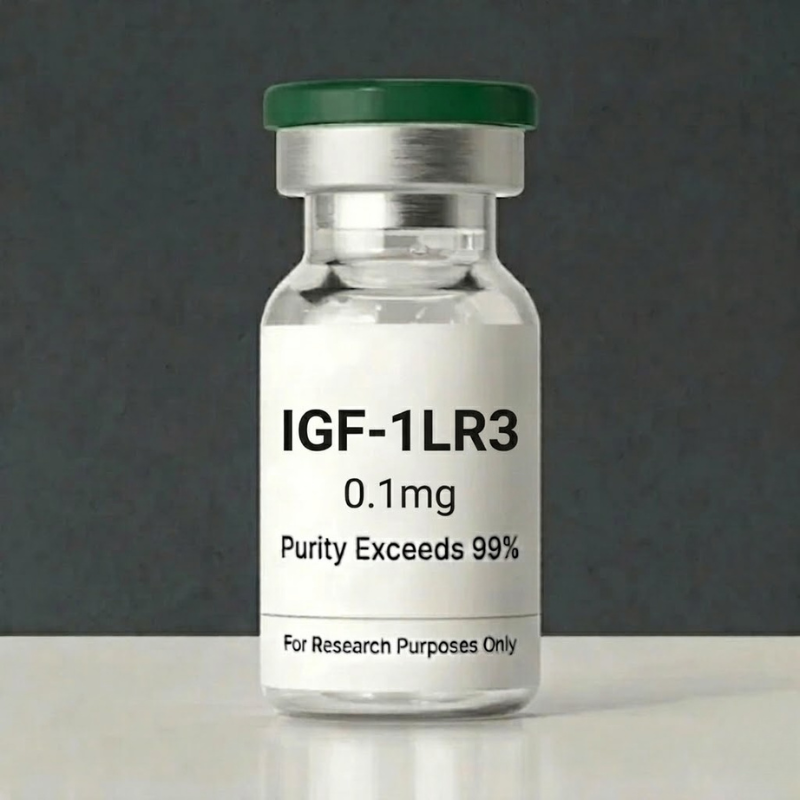



IGF-1 LR3 (Muscle Hyperplasia) | 0.1mg – 1mg | >99% Purity
IGF-1 LR3 is a modified form of insulin-like growth factor 1 (IGF-1) developed to provide a distinct molecular profile for laboratory investigation. It is commonly examined in studies involving peptide signaling, cellular communication, growth-factor pathways, and muscle-cell biology. This product is supplied in 0.1mg to 1mg formats with a stated purity of >99%.
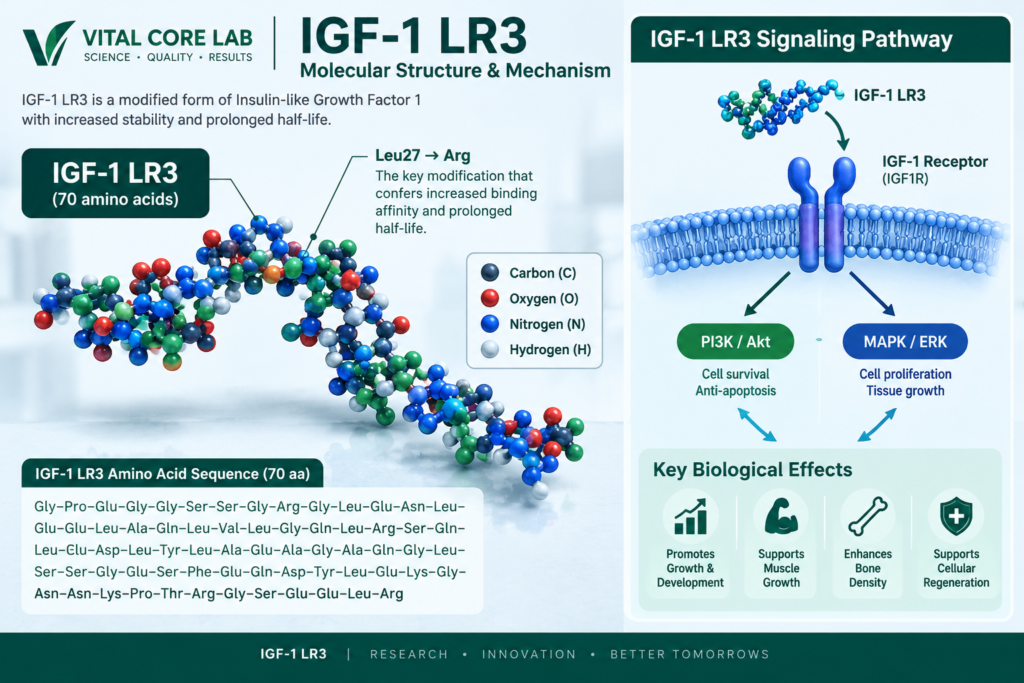
The name IGF-1 LR3 refers to the long arginine 3 variant of IGF-1. Compared with native IGF-1, the modified structure contains additional amino-acid residues and a specific substitution within the peptide sequence. These changes are important because peptide structure can influence molecular behavior, stability, and interactions within experimental systems.
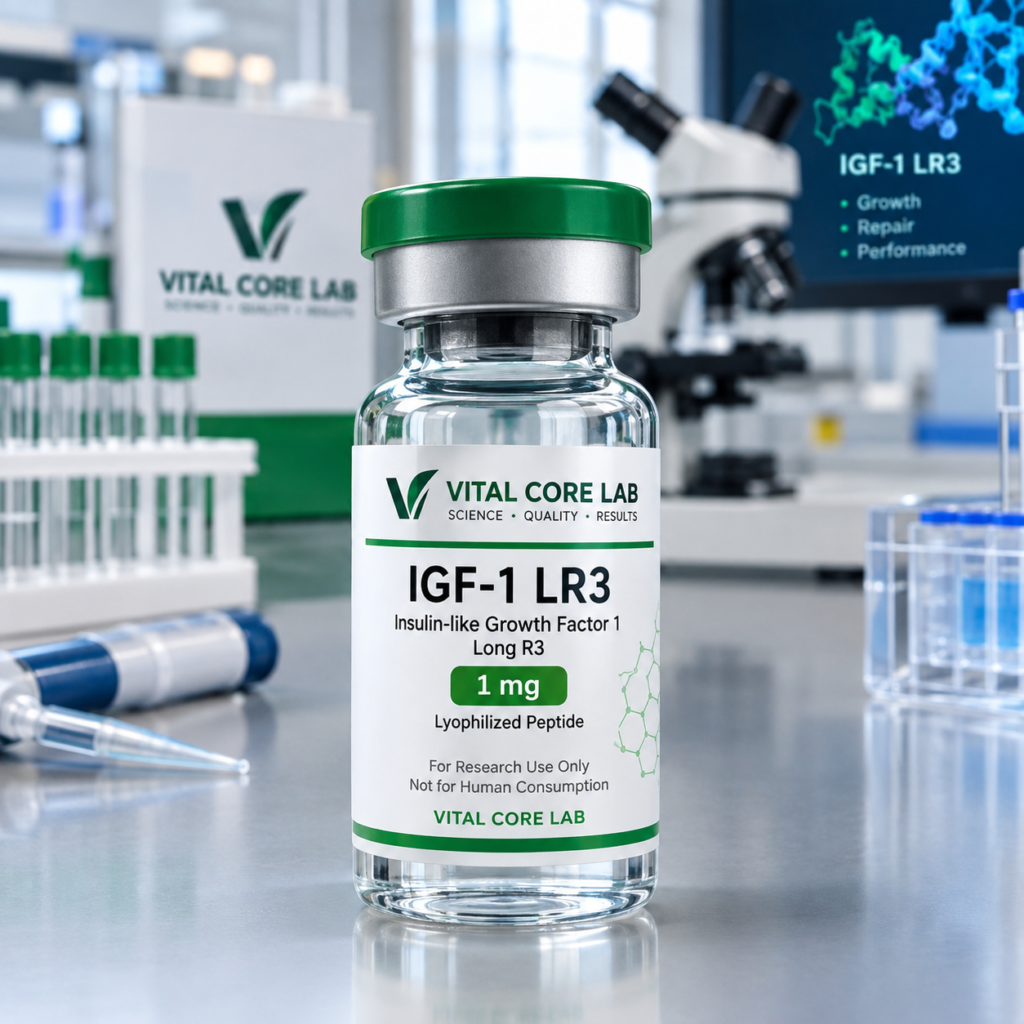
IGF-1 LR3 is particularly relevant when researchers need to examine signaling associated with the IGF system. This system is involved in complex cellular processes. Therefore, the peptide can be useful as a defined molecular tool when studying how growth-factor signaling behaves under controlled conditions.
Understanding IGF-1 LR3
IGF-1 LR3 belongs to the broader IGF family of peptide growth factors. Native IGF-1 is a naturally occurring peptide involved in communication between cells and tissues. It interacts with the IGF-1 receptor and participates in signaling pathways that regulate several biological processes.
IGF-1 LR3 has a modified molecular design. The “LR3” designation identifies the long form containing an extended sequence and an arginine substitution at position 3. These structural changes distinguish it from standard recombinant IGF-1.
For laboratory applications, molecular identity matters. A well-defined peptide allows investigators to compare experimental conditions more consistently. In addition, purity is an important consideration when interpreting analytical results.
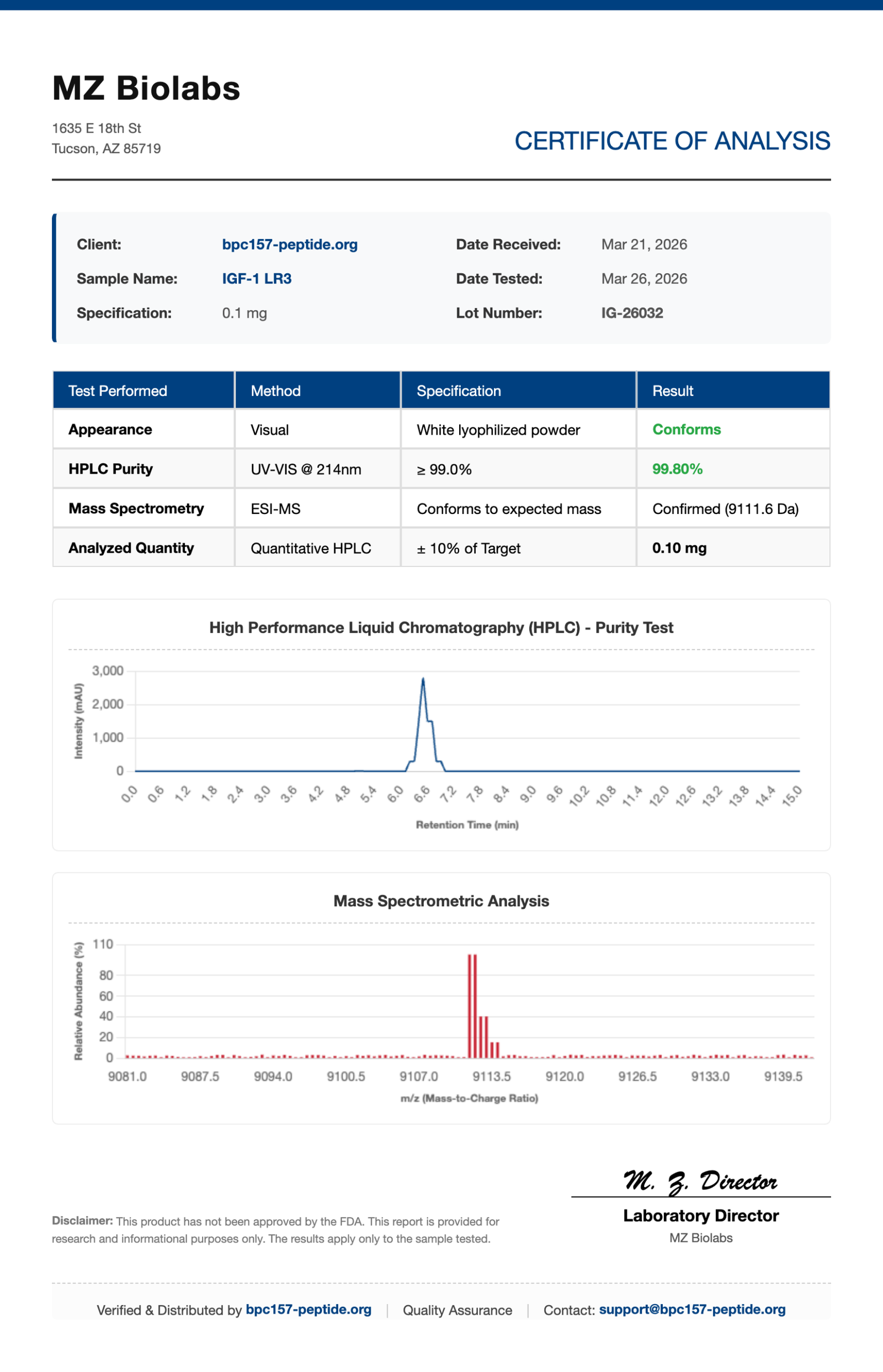
The >99% purity specification provides a clear quality reference for the product. However, purity should always be interpreted alongside the analytical method used, the specific batch, and the available documentation.
IGF-1 LR3 and Peptide Signaling
Peptide signaling is based on molecular recognition. A peptide interacts with a receptor, protein, or another molecular target. That interaction can then initiate a series of intracellular events.
IGF-1 LR3 is studied within this broader signaling framework. The IGF system includes receptors, binding proteins, intracellular signaling molecules, and feedback mechanisms. As a result, experiments involving IGF-1-related peptides can involve several interconnected variables.
One important pathway associated with IGF signaling is the PI3K/Akt pathway. Another is the MAPK/ERK pathway. These pathways are involved in cellular signaling and can be evaluated using different experimental techniques.
Because signaling pathways are interconnected, results can vary according to the experimental model. Cell type, receptor expression, incubation conditions, assay design, and analytical technique can all influence observations.
This is why a defined peptide material is valuable. Consistent product identity and documented purity can help reduce unnecessary variability between experimental conditions.
Why IGF-1 LR3 Is Associated With Muscle-Cell Studies
IGF-1 is widely recognized as an important component of growth-factor signaling. Because of this, IGF-related peptides are frequently examined in cellular and molecular studies involving muscle biology.
The phrase muscle hyperplasia refers to an increase in the number of muscle fibers or cells. This differs from hypertrophy, which generally refers to an increase in the size of existing muscle fibers.
These terms are sometimes used interchangeably in informal product descriptions. Scientifically, however, they describe different cellular concepts. Keeping the distinction clear is important when interpreting experimental literature.
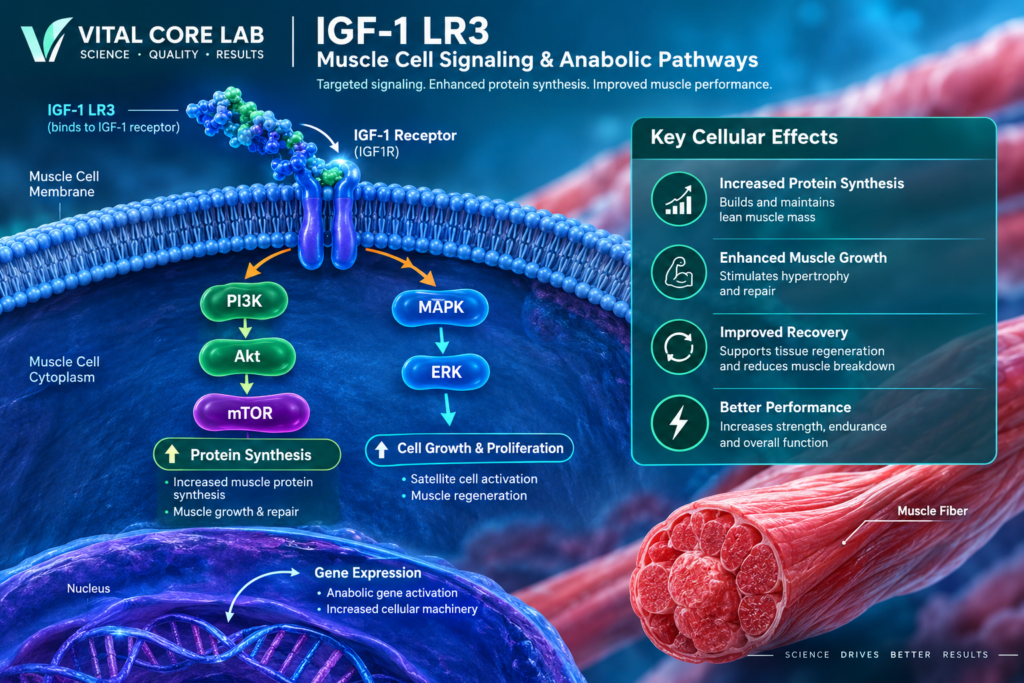
IGF-1 LR3 can therefore serve as a defined peptide material for experiments examining growth-factor signaling and related cellular mechanisms. The actual outcome of an experiment depends heavily on the model and methodology used.
IGF-1 LR3 Structure and Molecular Characteristics
IGF-1 LR3 is structurally related to IGF-1 but is not identical to native IGF-1. The LR3 modification extends the peptide and changes a specific residue in the sequence.
Structural modifications can influence the way a peptide behaves in an experimental environment. They may affect interactions with binding proteins, receptor systems, enzymatic degradation, or other molecular components.
For this reason, researchers should treat IGF-1 LR3 as its own defined peptide rather than assuming that it behaves exactly like native IGF-1.
The molecular structure also explains why accurate product identification matters. Even small changes to a peptide sequence can create meaningful differences in experimental behavior.
When evaluating a peptide, it is therefore useful to consider several factors together:
| IGF-1 LR3 Attribute | Product Information |
|---|---|
| Peptide | IGF-1 LR3 |
| Related family | Insulin-like growth factor |
| Format | Lyophilized peptide |
| Available sizes | 0.1mg – 1mg |
| Stated purity | >99% |
| Primary analytical interest | Peptide identity and purity |
| Research area | Growth-factor and cellular signaling |
IGF-1 LR3 Purity and Analytical Quality
Purity is one of the most important specifications when selecting a peptide for controlled experiments. A stated purity of >99% indicates a high-purity material based on the applicable analytical assessment.
Still, purity is only one part of peptide characterization. Identity confirmation is also important. Depending on the analytical workflow, laboratories may use techniques such as mass spectrometry, chromatography, or other validated analytical methods.
High-purity material can help investigators establish cleaner experimental conditions. It may also make analytical interpretation easier when compared with materials containing larger amounts of unrelated components.
At Vital Core Lab, the product presentation is designed to make the essential product information easy to understand. The goal is straightforward: provide a clearly identified peptide with concise specifications and professional presentation.
IGF-1 LR3 and Experimental Variables
Results involving IGF-1 LR3 can depend on many factors. Therefore, the peptide itself should not be viewed as the only variable.
The experimental model is particularly important. Different cell lines can express different levels of receptors and signaling proteins. Likewise, tissue-derived models may respond differently from simplified cell-based systems.
Temperature, buffer composition, storage conditions, exposure time, and analytical method can also affect peptide behavior.
In addition, freeze-thaw cycles may influence the quality of peptide materials. Good laboratory handling practices are therefore important when maintaining sample consistency.
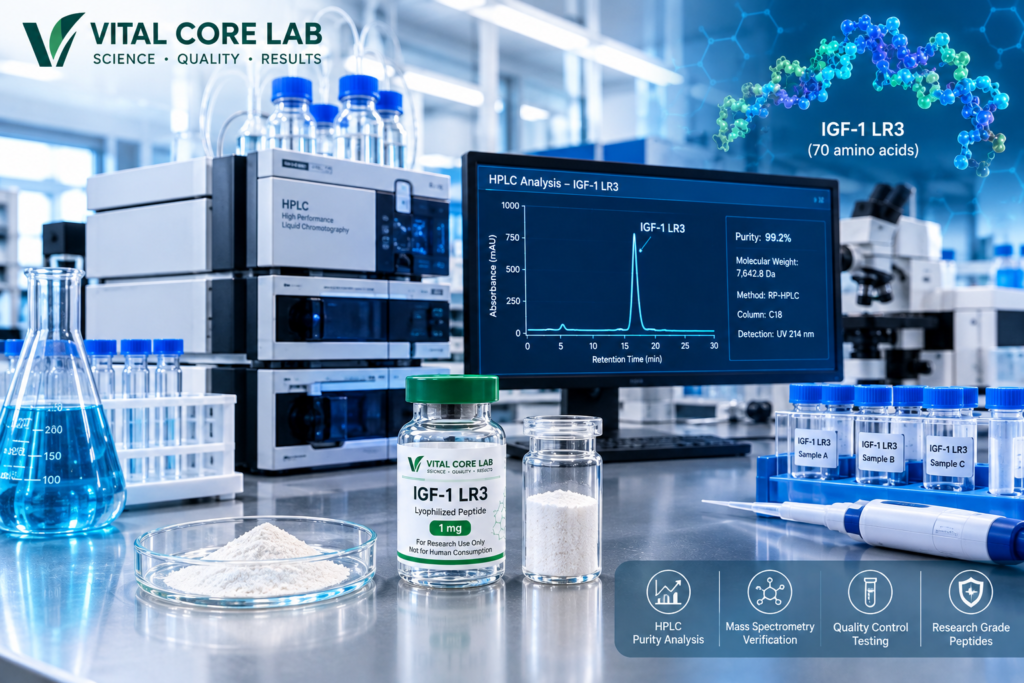
Careful sample handling helps maintain consistency from one experimental stage to the next. It also makes comparisons between batches more meaningful.
IGF-1 LR3 and Cellular Signaling Research
IGF-related signaling can be investigated using a range of laboratory methods. Depending on the objective, investigators may examine receptor activation, downstream signaling proteins, gene expression, protein expression, or cellular morphology.
For example, phosphorylation-based assays can help evaluate changes in signaling proteins. Western blotting may be used to examine protein expression or pathway activation. Imaging methods can provide additional information about cellular changes.
Other analytical approaches can examine peptide identity and stability rather than cellular responses. These methods address different questions, so they should not be treated as interchangeable.
Consequently, a strong experimental design should define the specific question before selecting the analytical method.
IGF-1 LR3 can fit into studies where a defined IGF-related peptide is required as one component of the experimental system.
Product Format and Handling Considerations
IGF-1 LR3 is offered in 0.1mg, 0.2mg, 0.5mg, and 1mg-class formats, depending on the selected product configuration.
The lyophilized presentation is designed to provide a stable solid peptide format before laboratory preparation. Once a peptide is prepared for an experiment, appropriate laboratory handling becomes increasingly important.
Storage conditions should follow the product documentation and established peptide-handling procedures. Exposure to unnecessary heat, moisture, light, or repeated handling should be minimized.
Likewise, laboratory personnel should use appropriate procedures for weighing, preparation, labeling, and sample storage.
The product should remain clearly identified throughout the workflow. Proper labeling is especially important when several peptide samples are being evaluated simultaneously.
Comparing IGF-1 LR3 With Native IGF-1
IGF-1 LR3 and native IGF-1 are related, but they should not be treated as identical materials.
Native IGF-1 has the naturally occurring sequence associated with human IGF-1. IGF-1 LR3 contains structural modifications that distinguish it from the native peptide.
These differences are important when reviewing scientific data. Results generated with one form should not automatically be transferred to another form.
| Feature | Native IGF-1 | IGF-1 LR3 |
|---|---|---|
| Family | IGF | IGF |
| Relationship | Native form | Modified IGF-1 analog |
| Structure | Standard IGF-1 sequence | Extended/modified sequence |
| Experimental relevance | IGF signaling | Modified IGF-related signaling |
| Product purity | Depends on material | >99% stated purity |
| Interpretation | Model-dependent | Model-dependent |
This distinction helps maintain accuracy when comparing experimental materials. It also makes product selection more straightforward when the experimental objective specifically calls for IGF-1 LR3.
Quality-Focused Product Presentation
A peptide product should be easy to identify before it enters an experimental workflow. Clear labeling, consistent product naming, defined size options, and accessible quality information all contribute to better sample management.
IGF-1 LR3 is presented with its peptide name, available amount, and purity specification. This makes the core product information visible without unnecessary wording.
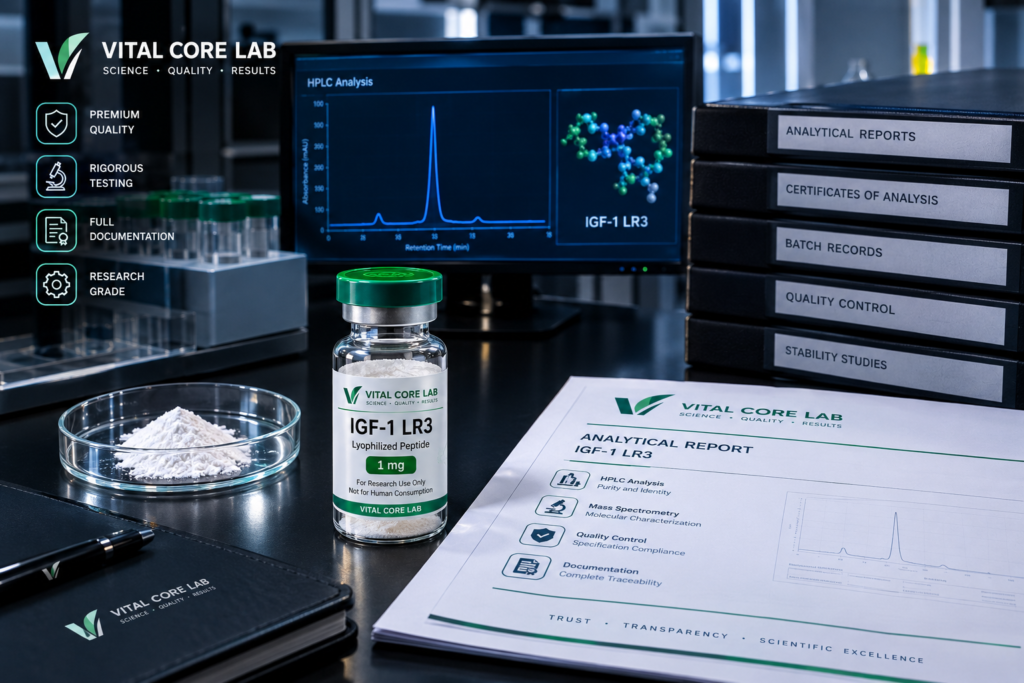
Documentation should always correspond to the actual product batch. Where analytical documentation is supplied, it should be reviewed alongside the product identification and applicable test method.
Choosing the Right IGF-1 LR3 Format
The available amount should be selected according to the needs of the intended experimental workflow. Smaller formats can be convenient for limited analytical work, while larger formats may be more suitable when multiple controlled experiments are planned.
The important point is to select a format based on the actual experimental requirement rather than simply choosing the largest available size.
IGF-1 LR3 is available across the 0.1mg–1mg range, giving laboratories several options for sample planning.
Because experimental protocols differ, Vital Core Lab does not present these product sizes as a universal dosing recommendation. Instead, the available formats are intended to provide flexibility for controlled laboratory workflows.
IGF-1 LR3 Product Summary
IGF-1 LR3 combines a defined peptide identity with a stated purity of >99% and multiple size options. Its modified structure makes it distinct from native IGF-1 and gives it a specific place within peptide and growth-factor studies.
The peptide is relevant to investigations involving molecular signaling, receptor interactions, cellular communication, and muscle-cell biology.
Most importantly, experimental interpretation should remain tied to the actual model, methodology, analytical technique, and conditions used.
Vital Core Lab presents IGF-1 LR3 with clear product information so that customers can identify the material and select an appropriate format more easily.
Key IGF-1 LR3 Specifications
- Product: IGF-1 LR3
- Description: Modified IGF-1 peptide
- Product positioning: Muscle hyperplasia / cellular signaling
- Available range: 0.1mg – 1mg
- Stated purity: >99%
- Presentation: Lyophilized peptide
- Primary scientific area: IGF-related molecular signaling
- Packaging: Professional peptide vial presentation
- Use context: Controlled laboratory and analytical applications
The combination of clear identification, high stated purity, and multiple size options makes IGF-1 LR3 a practical addition to a peptide-focused laboratory catalog.
Final Product Overview
IGF-1 LR3 is a specialized IGF-1 analog designed around a modified peptide structure. Its relationship to IGF signaling makes it relevant to studies examining growth-factor pathways and cellular communication.
The >99% purity specification provides an important quality benchmark. Meanwhile, the 0.1mg–1mg range gives customers flexibility when selecting a product format.
Rather than relying on broad claims, the product should be evaluated according to its molecular identity, analytical documentation, experimental model, and intended laboratory application.
For laboratories working with peptide signaling and IGF-related systems, IGF-1 LR3 provides a clearly defined peptide material in a professional Vital Core Lab format.
IGF-1 LR3 | Muscle Hyperplasia | 0.1mg – 1mg | >99% Purity offers a concise combination of peptide identity, size flexibility, and high-purity positioning for controlled laboratory workflows.

Reviews
There are no reviews yet.