
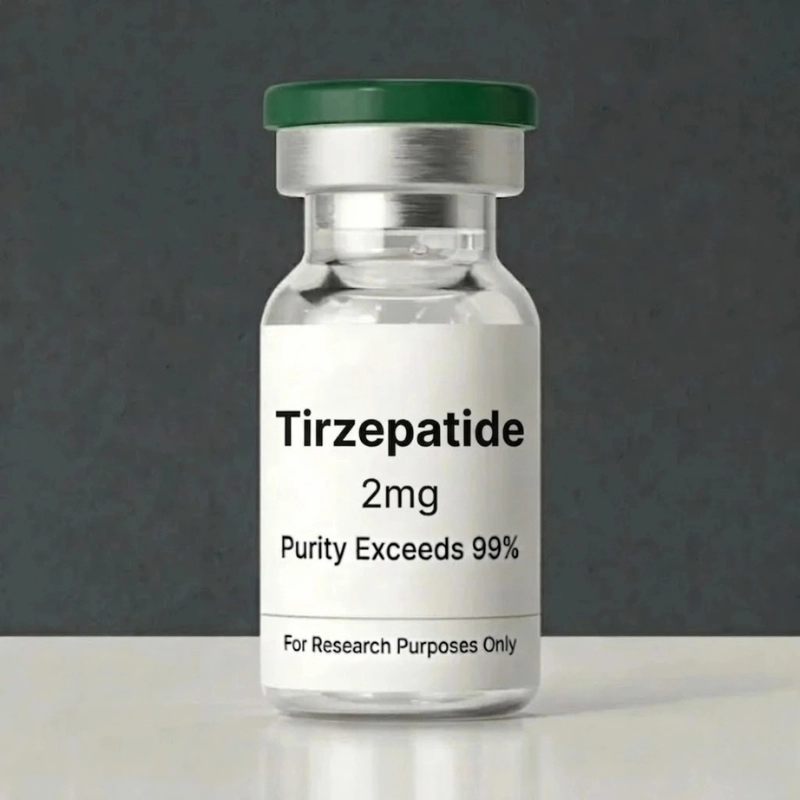



Tirzepatide | 2mg–120mg | >99% Purity | Research Peptide
🔬 Tirzepatide Research Peptide
Tirzepatide is a synthetic peptide compound widely studied in the field of metabolic and peptide research. Its molecular structure has made it an important subject for laboratory investigation involving peptide characterization, receptor-related research, analytical testing, and molecular studies.
This research material is presented in 2mg–120mg options with a stated purity of >99%. The available range provides researchers with flexibility when planning laboratory projects that require different material quantities.
Research Use Notice: This product description is intended for scientific and laboratory reference purposes. It does not provide medical advice, treatment instructions, dosage recommendations, or instructions for administration to humans or animals.
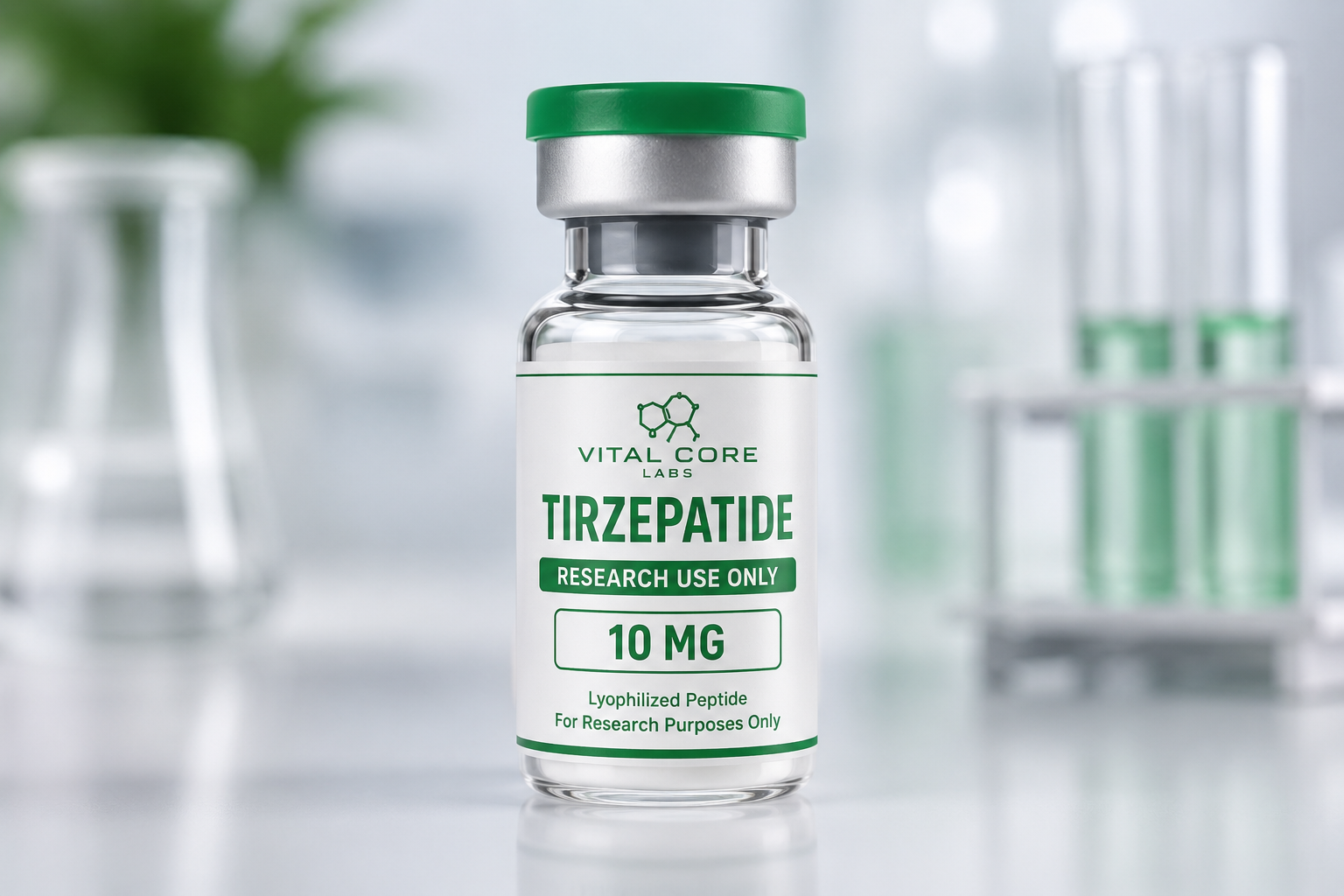
🧬 What Is Tirzepatide?
Tirzepatide is a peptide-based compound that has received extensive scientific attention because of its interaction with metabolic signaling pathways.
From a research perspective, tirzepatide can be examined through several areas. These include molecular structure, peptide integrity, analytical characterization, receptor-related investigations, and laboratory documentation.
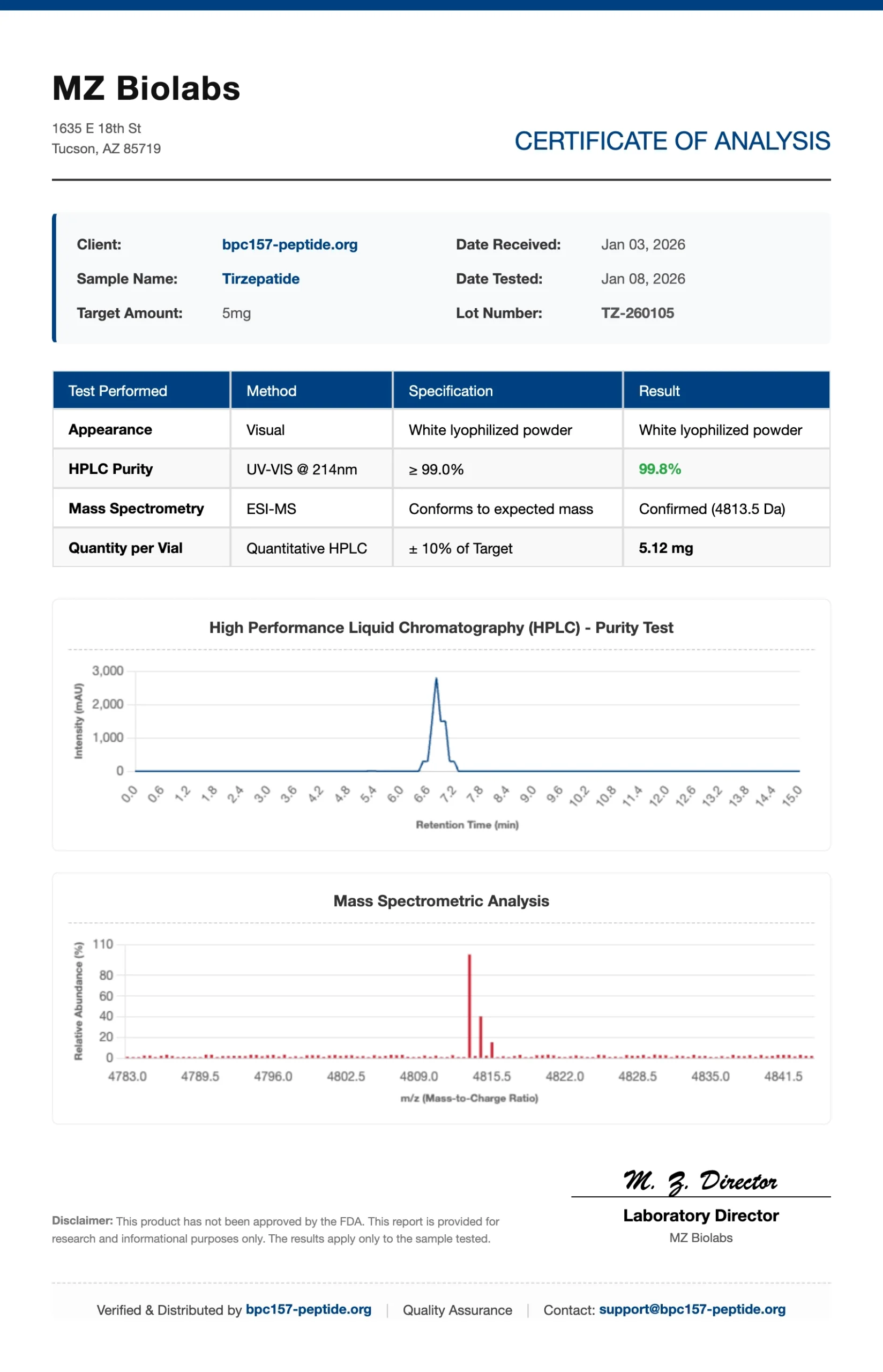
Because peptide research depends heavily on material identity and quality, researchers should consider the available analytical documentation when evaluating a research material.
Furthermore, peptide characterization can help researchers understand whether a material corresponds with the expected molecular profile.
For that reason, analytical information is an important part of responsible laboratory research.
🔎 Tirzepatide Molecular Research
The molecular characteristics of tirzepatide make it suitable for investigation in controlled research environments.
Researchers studying peptide compounds may examine factors such as:
- Molecular identity
- Peptide sequence
- Molecular mass
- Purity profile
- Structural characteristics
- Analytical response
- Sample integrity
- Storage stability
- Batch documentation
Each factor can contribute to a better understanding of the material under investigation.
In addition, analytical characterization helps researchers compare experimental observations against expected molecular properties.
Therefore, researchers should evaluate the complete documentation associated with the material rather than relying on a single specification.
⚗️ Analytical Characterization
Analytical characterization is an important part of peptide research.
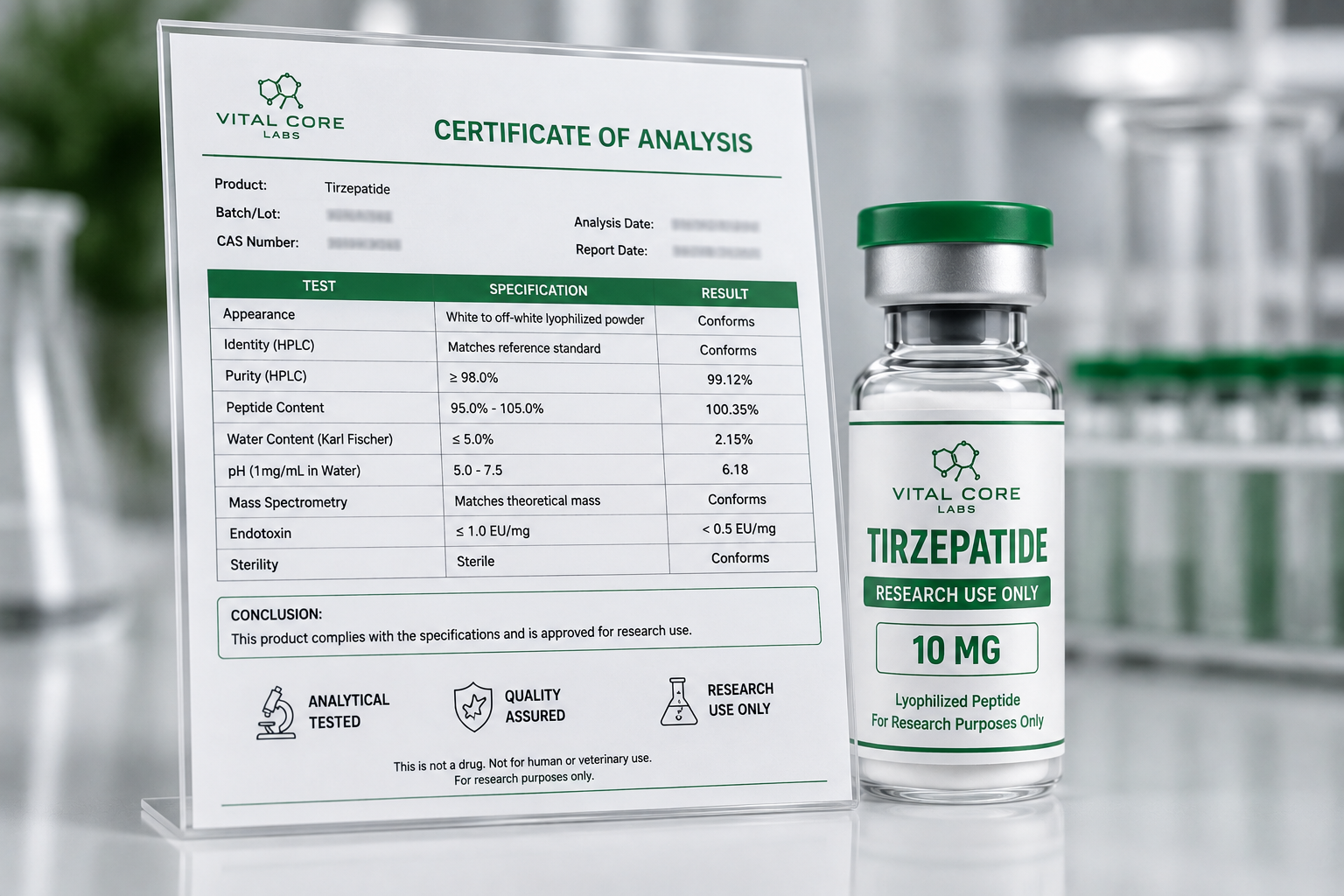
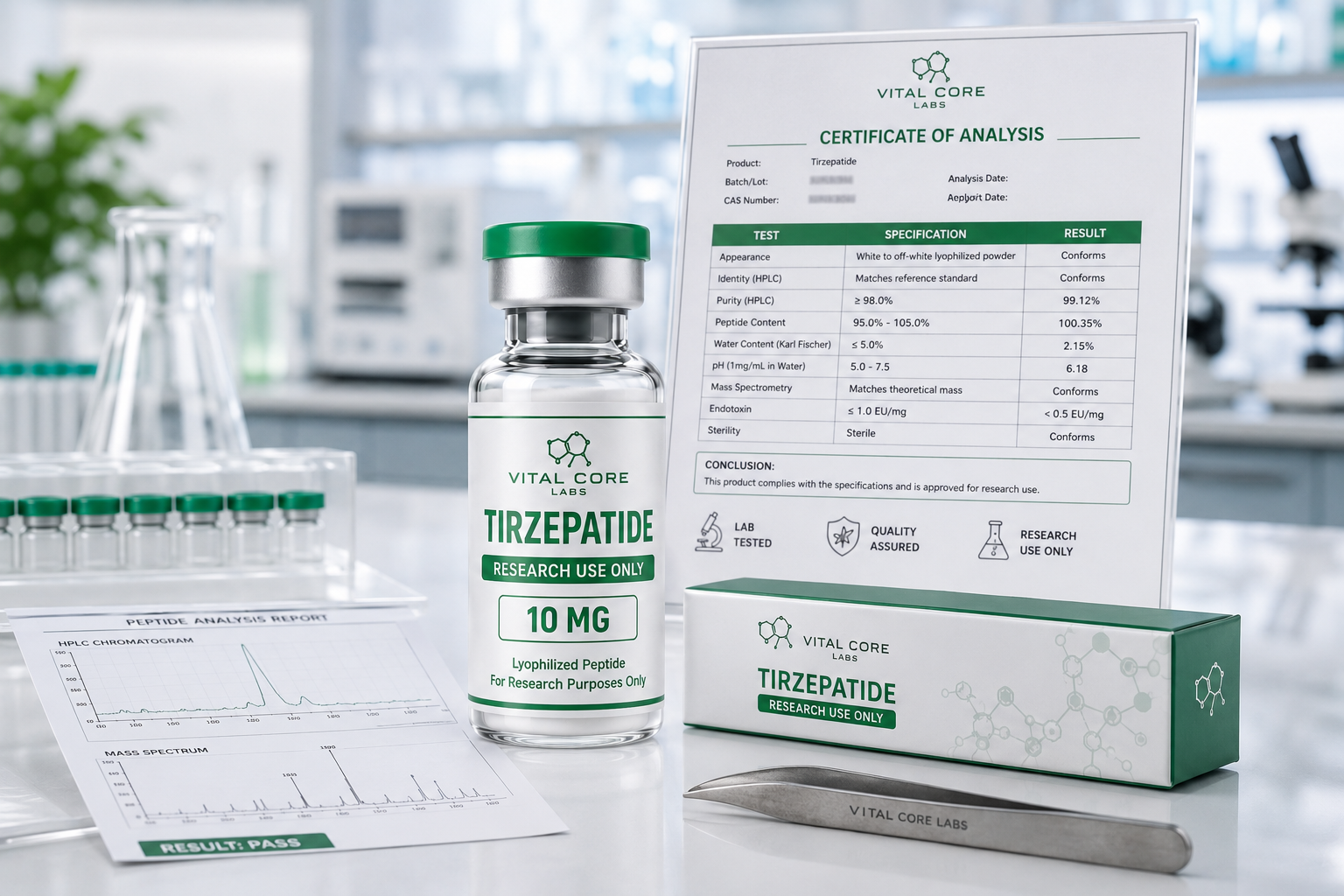
A stated purity value provides useful information, but it should be considered alongside appropriate analytical records and batch-specific documentation.
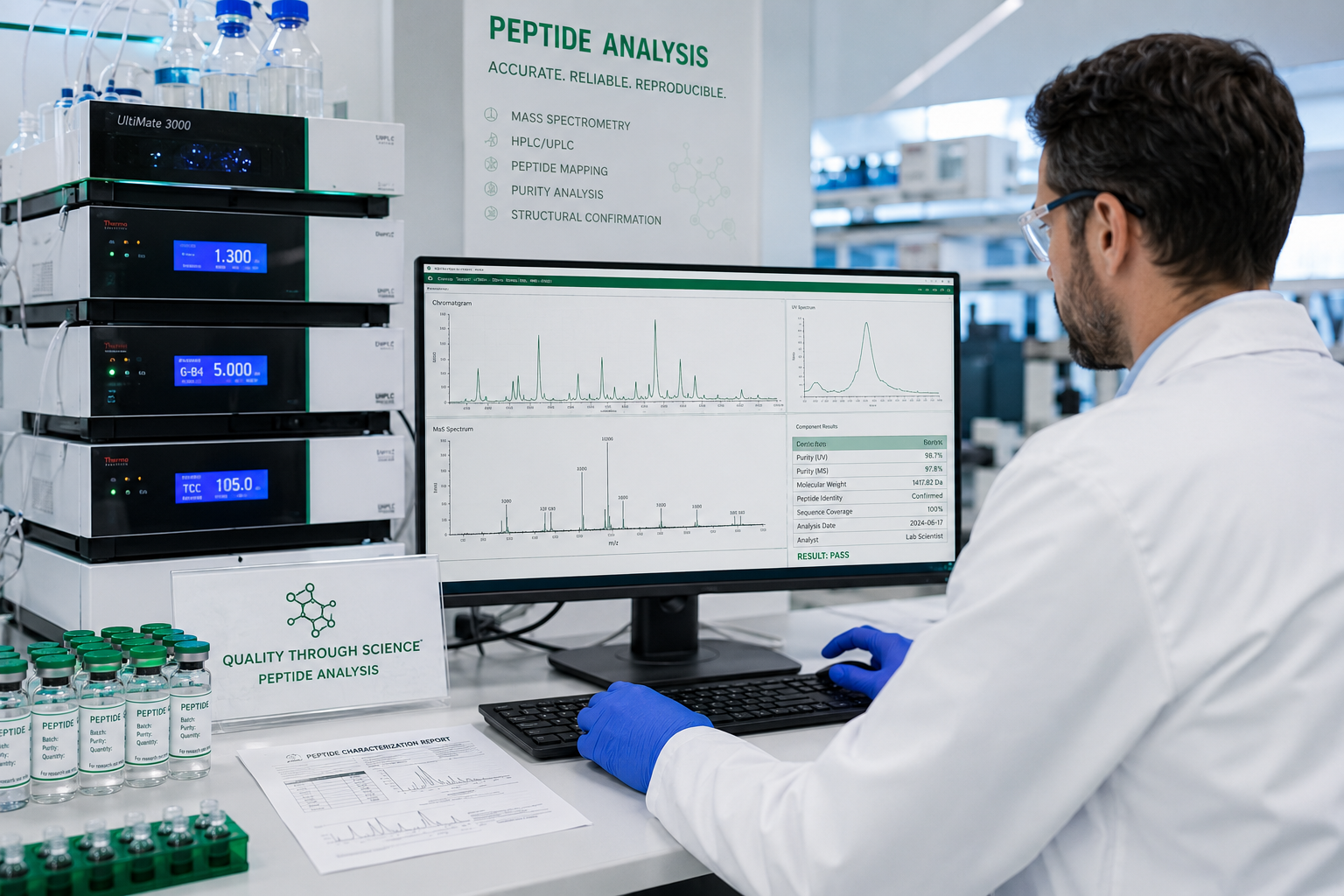
Depending on the research objective, laboratories may investigate peptide materials using established analytical techniques.
Examples can include:
- Mass spectrometry
- Chromatographic analysis
- Peptide identity testing
- Purity assessment
- Structural characterization
- Stability investigations
The exact analytical approach depends on the research question, laboratory equipment, and validated procedures being used.
Moreover, different analytical techniques provide different types of information. As a result, combining appropriate methods can provide a more complete characterization of a research material.
📊 Product Research Specifications
The following information summarizes the product specifications supplied for this research material.
| Specification | Details |
|---|---|
| Compound | Tirzepatide |
| Available quantities | 2mg–120mg |
| Stated purity | >99% |
| Material type | Research peptide |
| Intended context | Laboratory research and analytical study |
| Format | Research material |
Specifications should always be verified against the current product documentation and applicable batch records.
🧪 Why Purity Matters in Peptide Research
Purity is an important consideration when selecting materials for laboratory research.
A high-purity research material can help reduce uncertainty associated with unwanted components. However, purity alone does not describe every characteristic of a peptide.
For example, researchers may also need to consider identity, molecular mass, structural integrity, sample handling, storage conditions, and analytical documentation.
Consequently, a responsible research workflow should evaluate several pieces of information together.
The stated >99% purity specification is therefore best viewed as one part of the overall product characterization.
Researchers should consult available analytical documentation before incorporating a material into an experimental workflow.
🧾 Documentation & Batch Information
Good research practice begins with accurate documentation.
For peptide materials, researchers can record relevant information such as:
- Product name
- Batch or lot identification
- Stated purity
- Quantity received
- Date received
- Documentation supplied
- Storage information
- Laboratory project reference
Maintaining these records can make experimental work easier to reproduce and review.
Likewise, clear batch identification can help researchers connect laboratory observations with the exact material used in an experiment.
🧬 Research Areas for Tirzepatide
Tirzepatide research can involve several scientific areas.
Metabolic Signaling Research
Researchers may investigate peptide-related signaling pathways and their molecular characteristics in controlled experimental systems.
Receptor Research
Receptor-related research can examine molecular interactions and signaling behavior using appropriate laboratory models.
Peptide Characterization
Researchers can study the identity, purity, molecular mass, and other analytical properties of peptide materials.
Stability Research
Controlled laboratory studies may also examine how peptide materials behave under defined storage or experimental conditions.
Analytical Method Development
Tirzepatide can also serve as a research subject when laboratories evaluate or refine analytical approaches for peptide characterization.
These areas should be approached according to the laboratory’s established protocols and applicable research requirements.
🧫 Laboratory Considerations
Before beginning laboratory work, researchers should establish an appropriate workflow.
First, confirm the identity of the material.
Next, review the available documentation.
Then, verify the quantity and relevant batch information.
After that, researchers can establish their analytical or experimental procedures according to their laboratory’s requirements.
A simple preparation process may include:
1️⃣ Identity Check
Confirm the product name and associated documentation.
2️⃣ Quantity Check
Record the quantity received.
3️⃣ Documentation Review
Review available analytical and batch information.
4️⃣ Storage Review
Follow the applicable supplier documentation and laboratory procedures.
5️⃣ Experimental Planning
Define the research objective before beginning laboratory work.
6️⃣ Record Keeping
Maintain clear records throughout the research process.
This organized approach can improve traceability and help reduce avoidable errors.
🔬 Research-Only Product Positioning
Tirzepatide is a scientifically significant peptide research subject. However, research materials should be clearly distinguished from approved pharmaceutical products.
This product page therefore focuses on scientific research, analytical characterization, molecular study, and laboratory documentation.
It does not provide instructions for human or animal administration.
Likewise, it does not recommend a therapeutic use, dosage, treatment plan, or medical outcome.
Researchers should independently determine whether a material is appropriate for their specific laboratory application and should follow all applicable institutional, legal, and safety requirements.
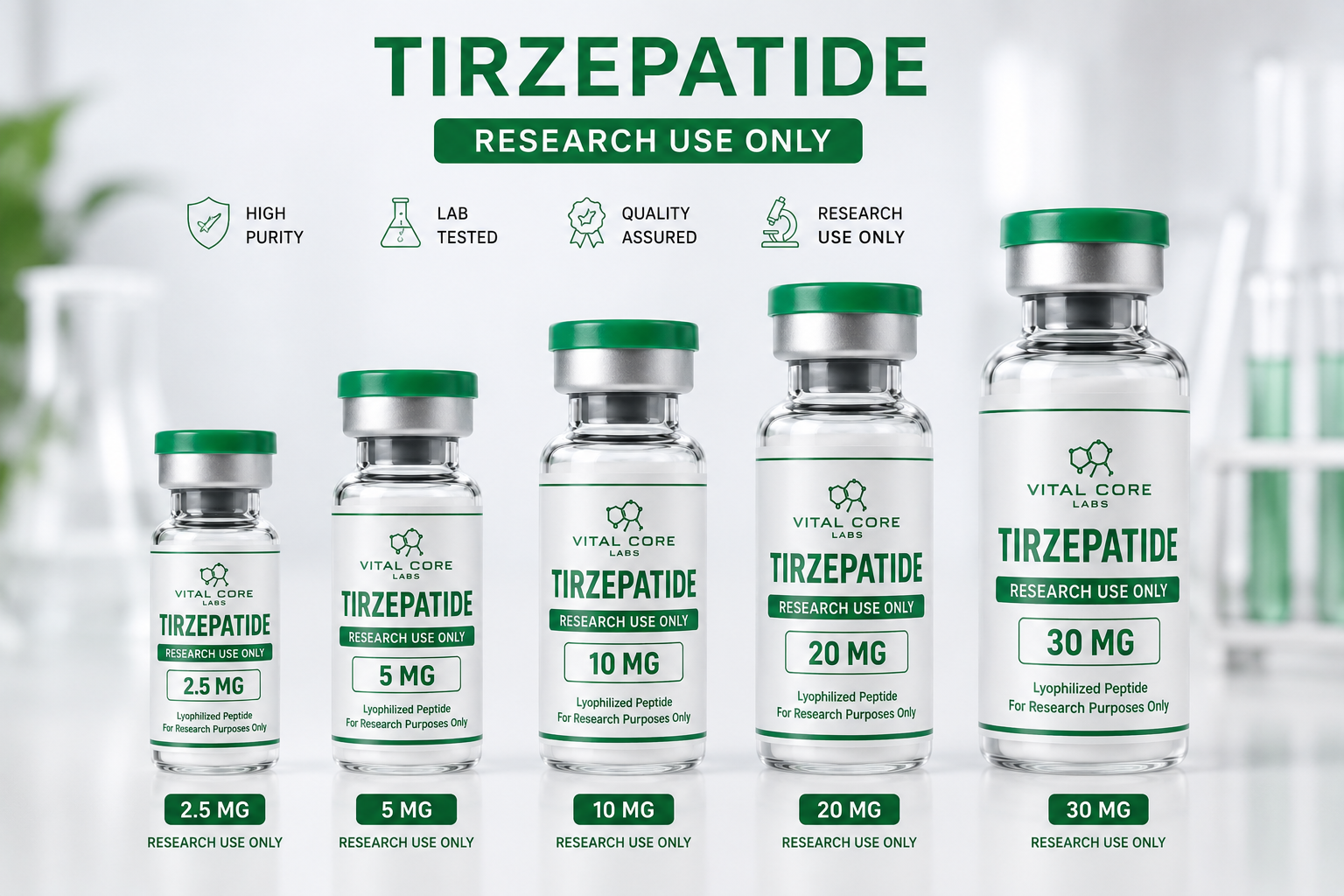
📦 Available Tirzepatide Quantities
The product is presented in a broad 2mg–120mg range.
Different research projects can require different quantities. Smaller quantities may be useful for limited analytical investigations, while larger quantities may support projects requiring additional research material.
However, the appropriate quantity depends entirely on the research design.
Researchers should determine material requirements before ordering and maintain accurate inventory records after receipt.
🧪 Quality-Conscious Research
Quality-conscious research involves more than selecting a high stated purity.
Instead, researchers should consider the entire information set surrounding a material.
This includes identity, purity, analytical documentation, batch information, storage requirements, and traceability.
Furthermore, documentation should be retained as part of the laboratory record.
When researchers combine careful documentation with appropriate analytical procedures, they can create a more consistent research workflow.
That approach is particularly valuable when peptide materials are compared across different experiments or batches.
📋 Research Material Checklist
Before laboratory work begins, researchers can use a simple checklist:
| Research Check | Status |
|---|---|
| Product identity confirmed | ✓ |
| Quantity recorded | ✓ |
| Batch information reviewed | ✓ |
| Purity information reviewed | ✓ |
| Documentation reviewed | ✓ |
| Storage information reviewed | ✓ |
| Research protocol established | ✓ |
This checklist is intended as a general organizational aid. Laboratories should use their own approved procedures and documentation requirements.
🧠 Understanding Peptide Research
Peptide research requires careful attention to molecular properties.
Unlike simple small-molecule compounds, peptides can involve structural characteristics that require specialized analytical consideration.
For this reason, researchers may examine multiple properties rather than relying on appearance or a single specification.
Additionally, sample handling can influence the quality of experimental observations.
Therefore, researchers should establish appropriate handling procedures before beginning work.
Clear documentation is equally important. When each research material is properly identified, experimental records become easier to interpret.
🔍 Tirzepatide and Scientific Investigation
The scientific interest surrounding tirzepatide has contributed to continued investigation into peptide structure, receptor-related mechanisms, metabolic signaling, and analytical characterization.
For laboratory researchers, the compound can therefore represent a useful subject for controlled scientific study.
However, research findings depend on experimental design.
Variables such as the research model, analytical method, sample condition, and experimental environment can influence results.
Accordingly, researchers should interpret experimental observations within the context of the specific methodology used.
🧪 Responsible Laboratory Research
Responsible research starts with appropriate material identification.
It also requires suitable laboratory controls, documentation, and validated analytical methods where applicable.
Researchers should work within facilities equipped for the intended research activity.
They should also follow institutional requirements for handling, storage, waste management, and laboratory safety.
Most importantly, research materials should not be represented as medical treatments simply because they are subjects of scientific investigation.
This distinction helps maintain clear scientific communication.
📌 Important Research Notice
Tirzepatide | 2mg–120mg | >99% Purity | Research Peptide is presented for laboratory and scientific research purposes.
The information on this page is educational and descriptive. It is not medical advice.
This page does not provide dosing instructions, administration guidance, treatment recommendations, or claims that the research material should be used to diagnose, prevent, or treat a medical condition.
Researchers are responsible for determining whether the material is suitable for their intended research environment and for following applicable institutional and regulatory requirements.
🧬 Summary of Tirzepatide Research Material
Tirzepatide is a peptide compound of significant interest in molecular and metabolic research.
This research material is offered in 2mg–120mg quantities with a stated purity of >99%.
Its potential research applications can include peptide characterization, analytical investigation, receptor-related studies, molecular research, and controlled laboratory analysis.
At the same time, researchers should evaluate the complete product documentation rather than relying on purity alone.
By combining appropriate analytical methods, careful sample handling, accurate documentation, and responsible laboratory procedures, researchers can establish a stronger foundation for peptide research.
🧾 Key Product Information
Compound: Tirzepatide
Research range: 2mg–120mg
Stated purity: >99%
Product type: Research peptide
Research focus: Molecular characterization, analytical research, peptide studies, and laboratory documentation
Research context: For controlled laboratory and scientific research only
🔬 Final Research Perspective
Tirzepatide provides researchers with an interesting peptide subject for molecular and analytical investigation.
Its study can involve several complementary areas, including structural characterization, purity assessment, receptor-related research, analytical methodology, and sample stability.
At every stage, however, reliable documentation remains important.
Therefore, researchers should verify product identity, review available analytical records, maintain batch traceability, and use appropriate laboratory procedures.
In conclusion, the 2mg–120mg Tirzepatide research peptide range provides a flexible research-material format for laboratories conducting appropriate scientific investigations. The stated >99% purity specification can serve as an initial quality reference, while complete analytical documentation provides additional context for responsible research evaluation.
For research use only. Not for human or animal consumption.



Reviews
There are no reviews yet.